
Pruning
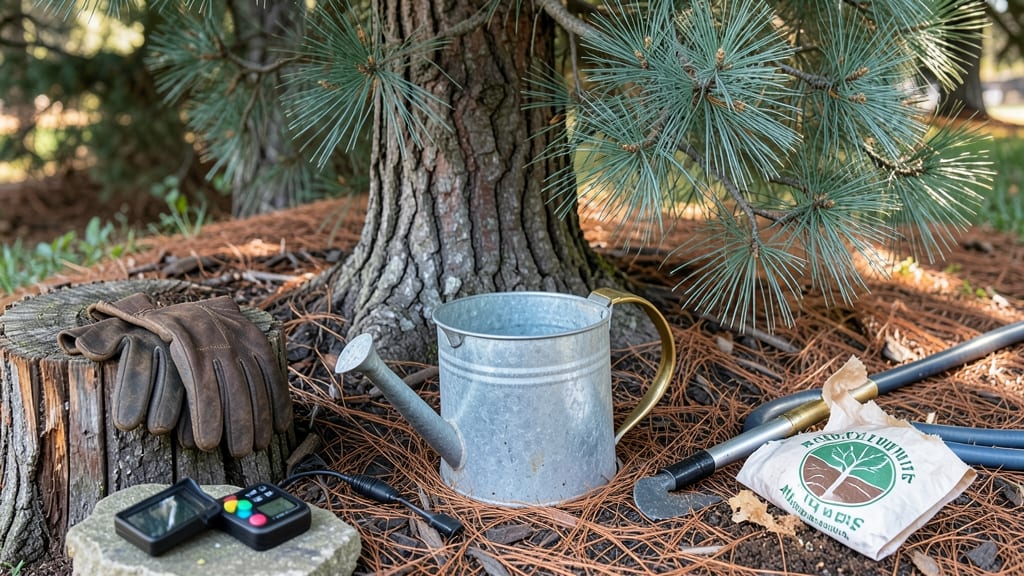
Your pine tree’s health starts with understanding its stubborn nature. 🌲 Unlike fussy ornamentals, pines thrive when you respect their slow growth and natural shape—but that doesn’t mean they’re care-free. The key? Pruning at the right time, avoiding overwatering, and shielding them from pests that love their needles.
Most pines hate soggy roots, so focus on deep watering once a week in dry spells (less in winter). They prefer well-draining soil—amend heavy clay with sand or gravel—and love full sun, though a few varieties tolerate partial shade.
Evergreens like white pine drop needles year-round, while species like ponderosa shed in spring. That’s normal!
Pruning is where beginners trip up. Never cut more than 25% of the branches at once, and avoid "topping" (stubbing the main trunk)—it stresses pines and invites disease.
Instead, remove dead branches just outside the branch collar, and thin crowded growth to improve airflow. A sharp pair of bypass pruners makes all the difference.
Seasonal care keeps them thriving: mulch in early spring to protect roots, check for spider mites in summer, and wrap young trunks in burlap if deer or rabbits are around. With these basics, your pine will stay lush for decades—no high-maintenance drama required.
📚 In This Guide
- What you need
- Instructions
- Tips and common mistakes
- Wrapping up and next steps
What you need
- ● Pruning shears – Bypass pruners (sharp, 6-8" blades) for clean cuts on small branches.
- ● Loppers – 8-10" bypass or anvil type for thicker branches (up to 2" diameter).
- ● Pruning saw – Curved-tooth saw for branches over 2" in diameter.
- ● Ladder or step stool – Sturdy, extendable (reach heights safely—pines can grow 30-100+ ft!).
- ● Gloves – Heavy-duty, cut-resistant (pines have sharp needles!).
- ● Disinfectant (70% isopropyl alcohol or bleach solution) – 1 part bleach to 9 parts water to sterilize tools between cuts.
- ○ Pruning sealant (optional) – Tree wound dressing (like Tanglefoot Tree Wound Pruning Seal) for large cuts.
- ● Fertilizer – Slow-release, acid-loving formula (e.g., 10-10-10 or pine-specific) (apply in early spring).
- ● Mulch – 3-4" layer of pine bark or wood chips (keep 6" away from the trunk).
- ● Pest control – Neem oil or horticultural oil (for spider mites/scale).
- ● Systemic insecticide (e.g., imidacloprid) (for borers—use sparingly!).
- ● Watering can or hose with nozzle – Adjustable for deep watering (pines hate soggy roots!).
- ○ Reflective tape or netting (optional) – For young trees to deter birds/squirrels from stripping bark.
- ● Weather check – Prune on a dry, calm day (avoid wind/rain for 24 hours post-pruning).
- ● Safety glasses & long sleeves – Protect against debris and sap.
- ● First-aid kit – For splinters or sap burns.
- ● Trash bags – Collect pruned branches for compost or disposal.
Tips & tricks for perfect pine tree care
These science-backed tips will help you keep your pines thriving year-round without the guesswork.
Root Development: The 2-inch soil moisture test in Step 1 is your best friend—it tells you exactly when roots need hydration without overdoing it. For newly planted pines, I create a shallow trench around the drip line and fill it with water to encourage roots to spread outward naturally. This mimics natural rainfall patterns and prevents shallow root systems that dry out quickly during summer heat.
Pruning Precision: When cutting branches in Step 2, look for the branch collar—the swollen area where the branch meets the trunk. This is your guide for clean cuts that heal properly. I always sterilize my pruners with rubbing alcohol between cuts, especially when dealing with diseased branches. This prevents spreading pathogens to healthy parts of the tree, which is particularly important during late winter when trees are vulnerable.
Pest Prevention: The monthly inspections in Step 3 are non-negotiable during late summer when bagworms and beetles are most active. I use a flashlight at dusk to spot early signs—bagworms are easier to remove when they're small. For beetles, I apply neem oil in the evening when bees and other beneficial insects are less active. This targeted approach protects your tree while minimizing harm to beneficial insects that help with pollination.
Seasonal Adjustments: The 90°F summer threshold in Step 4 is crucial—this is when pines start experiencing heat stress. I monitor my trees closely during heatwaves and adjust watering schedules accordingly. For container-grown pines, I move them to shaded areas during peak afternoon sun, which can reduce water loss by up to 30%. This simple adjustment makes a huge difference in drought-prone areas.
Pro Tips for Care For A Pine Tree
- These science-backed tips will help you keep your pines thriving year-round without the guesswork.
- Root Development: The 2-inch soil moisture test in Step 1 is your best friend—it tells you exactly when roots need hydration without overdoing it.
- Pruning Precision: When cutting branches in Step 2, look for the branch collar—the swollen area where the branch meets the trunk.
Frequently asked questions
How often should I water a pine tree?
Young pine trees need deep watering 1-2 times per week, while mature ones thrive with watering every 2-3 weeks—unless it’s extremely dry. Check soil moisture 2-3 inches down; if it’s dry, water thoroughly. Overwatering is worse than underwatering!
When is the best time to prune a pine tree?
Prune in late winter or early spring (before new growth starts) to avoid stressing the tree. Never prune in fall—it can invite pests. For shape adjustments, do light pruning in summer, but avoid heavy cuts during hot months.
Why are my pine needles turning brown? What should I do?
Brown needles often signal drought stress, pests (like spider mites), or fungal issues. First, check for dry soil or pests. Water deeply if needed, and spray with neem oil if bugs are present. If the problem persists, test for root rot or disease—a arborist can help!
Do pine trees need fertilizer? How often?
Most pine trees don’t need fertilizer if planted in well-draining soil. If growth is slow, use a slow-release, acidic fertilizer (like 10-10-10) in early spring. Avoid over-fertilizing—it can burn roots and attract pests.
Can I move a mature pine tree? What’s the process?
Moving a mature pine is risky but possible if done carefully. Best time: late fall or early spring when the tree is dormant. Dig a wide root ball (2-3x the trunk width), wrap roots in burlap, and replant immediately. Water deeply for 2+ months afterward to help it recover.
Wrapping up and next steps
Caring for your pine tree is all about patience, consistency, and a little know-how—and now, you’ve got the tools to make it thrive! 🌲 From pruning with precision to protecting it from pests and weather, every step you take will help your tree stay strong and beautiful for years.
Remember, even the tallest pines start as tiny seeds—your efforts today will shape its future.
Ready to put your new skills into action? Start by scheduling your next pruning session—whether it’s trimming dead branches in spring or giving it a health check after winter. Your pine tree will thank you with lush, vibrant growth! 🌿