
Propagation
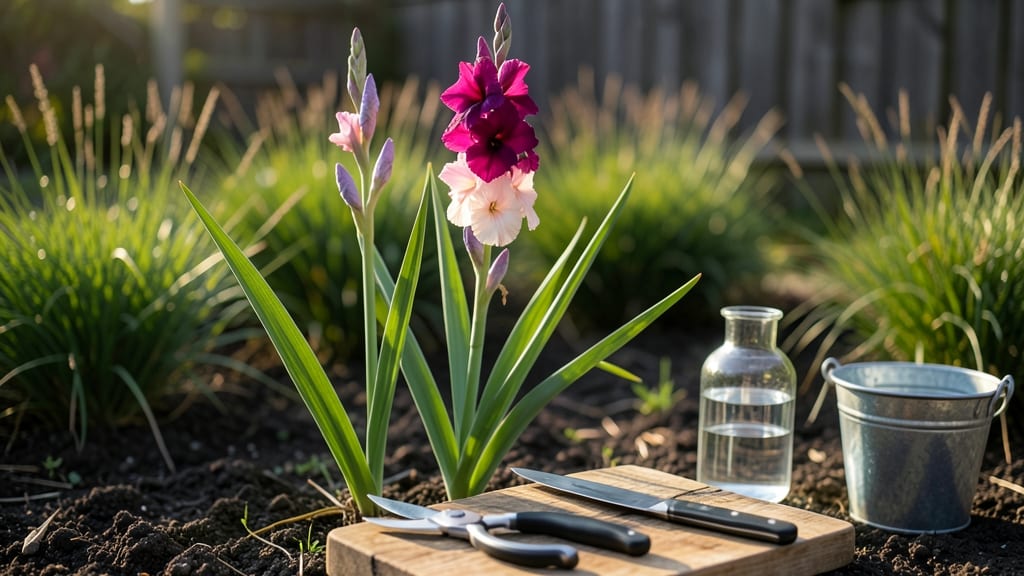
Your gladiolus bouquet just hit peak freshness—now capture it. ✨ Cutting stems at the right moment and angle transforms garden blooms into 2-week vase stars instead of wilting in days.
I’ve turned my garden’s boldest spikes into arrangements that outlast store-bought flowers, and the secret starts before you even pick them up.
Timing matters most: harvest when 2-3 buds are just opening, not when fully bloomed. Grab sharp scissors or a knife (never dull tools—they crush stems), then slice at a 45-degree angle about 2 inches above a leaf node.
This angle lets stems drink water like a straw, while the cut just above a leaf encourages new growth if you’re propagating.
Strip lower leaves that’ll sit underwater—they rot fast. Plunge stems immediately into lukewarm water with a drop of bleach or flower food, then trim another inch off the bottom. Change the water every 2 days, and your glads will stay vibrant, even as new buds unfurl.
The first day is critical: if you skip this step, you’ve lost a week of vase life.
Pro tip: Store uncut glads in the fridge overnight before arranging—they’ll last 5-7 days longer. And if you’re growing your own, save the corms: these beauties multiply yearly, giving you free bouquets for years. Now go snip those stems like a pro!
📚 In This Guide
- What you need
- Instructions
- Tips and common mistakes
- Wrapping up and next steps
What you need
- ● Fresh gladiolus blooms: Choose stems that are fully open or just starting to bloom (avoid fully wilted or overly mature flowers). Aim for at least 6-10 stems for a full vase arrangement.
- ● Sharp floral shears or pruning shears: A clean, sharp pair (avoid dull scissors—they crush stems and reduce vase life!).
- ● Clean vase or container: Size matters! For 6-10 stems, a 12-16 inch tall vase with a 3-4 inch diameter opening works best.
- ● Fresh, room-temperature water: 1-2 quarts (enough to submerge at least 2-3 inches of each stem).
- ○ Floral preservative (optional but recommended): A packet or liquid preservative (like Floralife or a DIY mix of 1 tsp sugar + 2 drops bleach per quart of water) to extend vase life.
- ● Aluminum foil or floral foam: For DIY arrangements or prepping stems in advance.
- ● Hydrogen peroxide (3%) or vinegar: A few drops in the water can prevent bacterial growth and keep stems crisp.
- ● Decorative elements: Greenery (eucalyptus, ferns), ribbon, or pebbles to elevate your centerpiece.
- ● Newspaper or towel: To protect surfaces while cutting and arranging.
Step-by-step instructions for cutting gladiolus for maximum vase life
Here's how to harvest and prep gladiolus stems for two weeks of vibrant blooms—no floral preservatives needed.
🌱 Step 1: Choose Mature Stems at Peak Readiness
Select stems when the lowest flower bud is just beginning to open but the rest remain tightly closed. This ensures the longest vase life by balancing maturity and freshness. Avoid cutting stems that already have open blooms—they'll wilt faster. I like to harvest in the early morning when stems are fully hydrated, giving them a head start in the vase.
Use clean, sharp pruners or shears to make a 45-degree angle cut about 2 inches above the ground level. This angled cut increases water uptake through the stem's surface. Avoid crushing the stem with dull tools, which blocks water flow and shortens vase life. If you're harvesting multiple stems, work sequentially to prevent wilting in the heat.
✂️ Step 2: Trim Stems and Prepare for Hydration
Once cut, immediately recut stems under water to remove any air bubbles that may have entered during the initial cut. This step is critical—it ensures maximum water absorption right away. Trim stems to a length of about 18-24 inches for standard vases, leaving enough stem for support but not so long that they flop. For shorter arrangements, 12-16 inches works well.
Remove any lower leaves that will sit below the waterline in the vase. These leaves can rot and introduce bacteria. Strip leaves gently by hand—don't tear them, as this damages the stem. I like to leave just a few leaves at the top to add visual interest while keeping the arrangement clean. This simple step prevents cloudy water and extends freshness.
💧 Step 3: Condition Stems for Longer Freshness
Fill a clean vase with lukewarm water (not cold or hot) and add 1 teaspoon of bleach or floral preservative per quart of water to prevent bacterial growth. Place stems immediately in the vase and trim another ½ inch from the ends under water to open the stem pores for better hydration. Change the water every 2-3 days to keep stems fresh.
Here's the thing—gladiolus stems are thirsty. Make sure the vase is deep enough to submerge at least 3-4 inches of stem in water. You'll notice the stems drink water quickly, especially in the first 24 hours. Top off the vase as needed to maintain this immersion. Avoid placing stems in direct sunlight immediately after cutting—they'll wilt faster from heat stress.
☀️ Step 4: Position and Maintain for Optimal Display
Place the vase in a location with bright, indirect light. Direct sunlight can cause the blooms to fade faster, while too little light makes them droop. A spot near an east-facing window is ideal—it provides gentle morning light without the harsh afternoon sun. Keep the vase away from heating vents, air conditioners, or drafts, which dry out the flowers quickly.
Watch for signs of dehydration: if the blooms start to droop or the edges of the petals curl, it's time to refresh the water. I change the water and recut the stems every 2-3 days to keep them vibrant. If the stems bend or lean, gently straighten them and add a small pebble or weight to the vase to anchor them. With this care, your gladiolus will stay fresh and beautiful for 10-14 days.
Tips & tricks for perfect gladiolus stem prep
Here's what nobody tells you about keeping your gladiolus blooms vibrant for weeks. The little details make all the difference!
Timing is Everything: Harvest gladiolus stems in the early morning when they're fully hydrated. This gives them a head start in the vase and prevents the wilting that happens when stems are cut during the heat of the day. I've found that stems harvested at dawn stay fresh for an extra 2-3 days compared to those cut in the afternoon.
The Angle Matters: That 45-degree angle cut in Step 1 isn't just for looks—it creates more surface area for water absorption. Use a sharp knife or pruners to make clean cuts, and avoid crushing the stem. If you're working with multiple stems, process them sequentially to prevent wilting from heat exposure. I always keep a bucket of water nearby to immediately submerge freshly cut stems.
Leaf Management: Removing lower leaves that will sit below the waterline prevents bacterial growth and cloudy water. But here's the thing: leave just a few leaves at the top—they help the stems absorb water through their surface. I like to strip leaves gently by hand rather than tearing them, which can damage the stem and reduce vase life.
Water Temperature Tip: Always use lukewarm water—not cold or hot. Cold water can shock the stems while hot water can cook them. The lukewarm temperature mimics the natural hydration process and helps prevent premature wilting. Plus, it's more comfortable for you to handle when changing the water every 2-3 days as instructed.
Pro Tips for Cut Gladiolus For Vase
- Here's what nobody tells you about keeping your gladiolus blooms vibrant for weeks.
- Timing is Everything: Harvest gladiolus stems in the early morning when they're fully hydrated.
- The Angle Matters: That 45-degree angle cut in Step 1 isn't just for looks—it creates more surface area for water absorption.
Frequently asked questions
When is the best time to cut gladiolus for a vase?
Cut gladiolus when the first bud at the top of the spike is just starting to open—about 1-2 inches below the bloom. Avoid cutting fully open flowers, as they’ll wilt faster. Morning cuts (after dew dries but before the heat peaks) yield the freshest stems with minimal stress.
How long should gladiolus stems be when cutting for a vase?
Aim for 18–24 inches of stem length when cutting. Longer stems (up to 30 inches) work for tall vases, but trim to 12–14 inches if using short containers. Always cut at a 45-degree angle to maximize water absorption and reduce air bubbles blocking the xylem.
Why do my cut gladiolus wilt so quickly in water?
Wilting often stems from blocked stems (air bubbles) or bacterial growth. To fix it:
Yes! Even mid-season blooms can be cut, but prioritize stems with closed buds over open flowers. Cutting from established plants won’t harm them—just avoid removing more than 1/3 of the spike per stem to preserve the plant’s energy for future blooms. If gladiolus aren’t available, try these long-lasting vase alternatives:
For gladiolus-like height, pair with delphiniums or tulips.
Can I cut gladiolus from a garden that’s already blooming?
What’s the best alternative if I don’t have fresh gladiolus?
Wrapping up and next steps
Cutting gladiolus for your vase doesn’t have to be complicated—just follow the stem-length secrets and timing tips you’ve learned here! With the right technique, you’ll enjoy stunning, long-lasting blooms for up to two weeks.
Now that you’re ready to transform your garden into a floral masterpiece, why not share your progress or explore more vase-life hacks for other flowers? Your next bouquet is just a snip away! 🌸✂️