
Planting
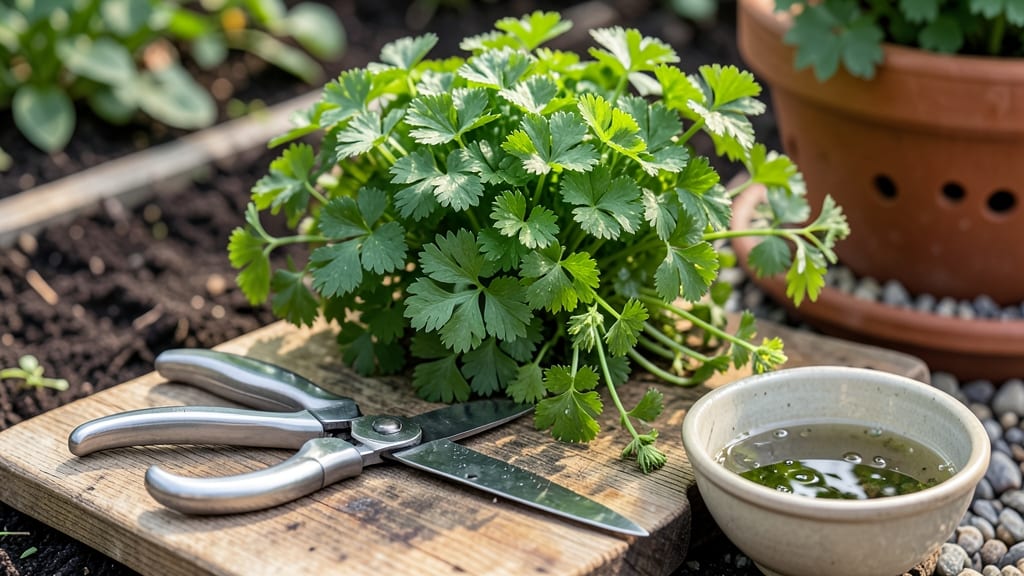
How to cut parsley off the plant wrong turns lush growth into leggy stems. ✂️ I’ve learned the hard way—snipping too close to the base or taking whole stems leaves you with bare patches and slow regrowth. The secret is precision trimming that keeps parsley bushy, productive, and ready for your next recipe.
You only need sharp scissors or pruners (clean them first!) and a steady hand—no fancy tools required. Harvest in the morning after dew dries, when oils are concentrated and stems are crisp.
Always cut just above a leaf node (that little bump where leaves grow), never the woody base, or you’ll stunt future growth.
What you’ll end up with is parsley that regrows faster than you can harvest, with dense, vibrant foliage instead of sparse stems. After trimming, give the plant a drink of water and place it in bright, indirect light—it’ll bounce back in 5-7 days with fresh new leaves.
Works for both flat-leaf and curly parsley in pots or garden beds. The same method keeps your plants thriving for months, not just a single harvest. Here’s how to do it right without sacrificing future growth.
📚 In This Guide
- What you need
- Instructions
- Tips and common mistakes
- Wrapping up and next steps
What you need
- ● Sharp pruning shears or clean kitchen scissors – Opt for bypass-style shears (not anvil-type) to avoid crushing stems. A 4-6 inch blade works best for precision.
- ○ Gloves (optional but recommended) – Lightweight gardening gloves protect your hands from sap and sharp stems. Choose breathable fabric like cotton or nitrile-coated.
- ● Clean container or bowl – A wide-mouth jar or shallow dish (at least 8 inches in diameter) to hold freshly cut parsley while you prep it.
- ● Water spray bottle (4-8 oz) – Keeps stems hydrated and helps rinse off debris after trimming.
- ○ Ruler or measuring tape (optional but helpful) – For precision trimming, especially if you’re harvesting for specific recipes (e.g., measuring 2-inch stems for garnishes).
- ● Disinfectant spray (70% isopropyl alcohol) – Wipe down shears before and after use to prevent bacterial spread.
- ● Plastic wrap or damp paper towel – Wrap freshly cut parsley to store in the fridge for up to 1 week.
- ● Labeling markers – If you’re growing multiple herbs, label your parsley plants to avoid mix-ups!
- ● Pruning sealant (for potted parsley) – A natural beeswax-based sealant can help heal larger cuts if your plant is potted.
Step-by-Step instructions for cutting parsley for bushier growth
Here’s how to harvest parsley without killing the plant—plus the secret to fluffier, more productive regrowth.
✂️ Step 1: Wait Until the Plant is Mature
Don’t snip too early. Wait until your parsley has at least 6-8 inches of growth and 6-8 true leaves (the second set after the initial seed leaves). This ensures the plant has enough energy to regrow. I always check for bright green, firm stems—yellowing or wilted leaves mean the plant is stressed and needs recovery time first.
If you’re growing curly parsley, wait until the curls are fully formed. Flat-leaf parsley can be harvested slightly earlier, but both types need that initial maturity to bounce back. The first harvest is your reward for patience—you’ll get the freshest flavor and encourage the plant to branch out.
✂️ Step 2: Use the Right Tools and Technique
Grab a sharp pair of clean scissors or pruning shears—never tear leaves by hand. Dull blades crush stems, which invites disease. Snip just above a leaf node (the point where leaves meet the stem) at a 45-degree angle. This small cut prevents water from pooling on the stem, reducing rot risk.
Leave the bottom 2-3 inches of the plant intact—this acts as the growth engine. If you cut too close to the base, the plant may not regrow. I like to make my cuts about 1 inch above the lowest set of leaves to keep the plant compact and encourage bushiness.
🌿 Step 3: Harvest Strategically for Bushier Growth
For curly parsley, cut the outer stems first, leaving the center intact. This mimics natural pruning and forces the plant to send out new side shoots. For flat-leaf parsley, you can trim 1/3 of the plant at a time, focusing on the oldest stems. The goal is to never remove more than 1/3 of the foliage in one go—this keeps the plant healthy and productive.
Watch for new side shoots within 7-10 days of your first cut. If you see leggy growth reaching toward light, your plant needs more sun—parsley thrives in 4-6 hours of morning sunlight. A little shade in the afternoon is fine, but too much shade leads to sparse regrowth.
💧 Step 4: Water and Fertilize After Harvesting
After cutting, water deeply to help the plant recover. The soil should be moist 1-2 inches down—stick your finger in to check. Overwatering now can drown the roots, so let the top inch dry out between waterings. I like to use a balanced liquid fertilizer (like 10-10-10) diluted to half strength right after harvesting to give the plant a nutrient boost.
If your parsley is in full sun, you might need to water more frequently after trimming. Container-grown parsley dries out faster than in-ground plants, so check daily in hot weather. The key is keeping the soil consistently moist but not soggy—parsley hates soggy roots.
⏰ Step 5: Repeat Every 4-6 Weeks for Continuous Harvest
Once you’ve mastered the first cut, you’ll see the rhythm: harvest every 4-6 weeks for the best flavor and growth. The plant will naturally fill in as you trim, creating a fuller, bushier clump over time. If you notice the stems getting woody or the leaves sparse, it’s time to replace the plant—parsley has a 2-year lifespan before it peters out.
Save the stems you cut off! Chop the leaves for cooking or use the stems in homemade parsley water (simmer stems in water for 10 minutes, then strain). The stems are packed with flavor and nutrients, so nothing goes to waste. With this method, you’ll have fresh parsley all season long—no need to buy it at the store.
Tips & tricks for perfect parsley harvesting
Here's what nobody tells you about keeping your parsley thriving after every cut.
The First Cut Matters: When you're ready to harvest that first time in Step 1, focus on the outer leaves rather than the center. This protects the plant's core growth point and encourages it to branch out. I've seen parsley plants triple in size after just three strategic cuts—it's like magic for leafy greens! The key is patience: those 6-8 inches of growth and 6-8 true leaves are non-negotiable for regrowth.
Tool Precision Pays Off: In Step 2, that 45-degree angle cut isn't just for looks—it's about water management. The angled cut prevents water from pooling on the stem, which drastically reduces rot risk. I keep a small pair of pruning shears exclusively for herbs in my kitchen. They're sharper than scissors and make cleaner cuts that heal faster. Pro tip: Wipe your blades with rubbing alcohol between cuts to prevent cross-contamination.
Sunlight Strategy: The 4-6 hours of morning sunlight mentioned in Step 3 is crucial, but here's the secret: parsley actually prefers gentle morning sun over harsh afternoon rays. If your parsley starts looking leggy (stems stretching toward light), it's begging for more sun. I've found that moving container-grown parsley to a south-facing windowsill in the morning gives it that perfect light balance without scorching the leaves.
Fertilizer Timing: That balanced liquid fertilizer in Step 4 should be applied right after harvesting when the soil is already moist. I've learned the hard way that fertilizing dry soil can burn roots. For container parsley, I mix my fertilizer with water first, then water the plant normally. This gives the roots a gentle nutrient boost without shocking them. Remember, parsley doesn't need much—just enough to keep it happy between harvests.
Pro Tips for Cut Parsley Off Plant
- Here's what nobody tells you about keeping your parsley thriving after every cut.
- The First Cut Matters: When you're ready to harvest that first time in Step 1, focus on the outer leaves rather than the center.
- Tool Precision Pays Off: In Step 2, that 45-degree angle cut isn't just for looks—it's about water management.
Frequently asked questions
Got questions about harvesting parsley like a pro? Here are some of the most common ones—plus quick, actionable answers to keep your parsley thriving!
How often should I cut parsley from the plant?
For flat-leaf parsley, trim every 3–4 weeks to encourage bushier growth. Curly parsley is more delicate—harvest every 4–6 weeks. Avoid over-trimming (never take more than ⅓ of the plant at once) to prevent stress. Regular cuts promote fresh, vibrant leaves!
When is the best time of day to harvest parsley?
Morning is ideal! Cut parsley in the early hours (after dew dries but before the heat of the day) for the freshest flavor and crispest texture. Avoid harvesting after rain or late in the day, as leaves may wilt faster or taste bitter.
Can I cut parsley stems too short? What happens if I do?
Yes, but avoid cutting stems below 2–3 inches. Trimming too short can stunt growth or kill the plant. If you’ve already done it, don’t panic—parsley is hardy! Just reduce future cuts and keep the soil moist while it recovers.
What if my parsley turns yellow or bolts after cutting?
Yellowing leaves often signal over-harvesting, nutrient deficiency (try a balanced fertilizer), or heat stress. Bolting (premature flowering) happens in hot weather or with age. To prevent it, harvest early, provide shade in summer, and choose slow-bolting varieties like ‘Moss Curled.’
Can I use scissors or should I pinch parsley by hand?
Both work! Scissors (clean, sharp ones) are great for thick stems or large batches. Pinching by hand is gentler for delicate leaves and lets you feel the plant’s health. Just avoid crushing stems—always cut at a 45° angle to prevent water pooling.
Wrapping up and next steps
Mastering the art of cutting parsley from your plant doesn’t just keep your kitchen stocked—it ensures your herb thrives!
With the right tools, timing, and technique, you’ll enjoy bushier growth and fresh, vibrant leaves all season long. 🌱 Whether you’re a seasoned gardener or just starting, every snip is a step toward a flourishing herb garden.
Now that you’re ready to trim like a pro, grab those shears and give your parsley the care it deserves! For extra tips, explore our guide on parsley care—happy harvesting! 🌿✨