
Pruning
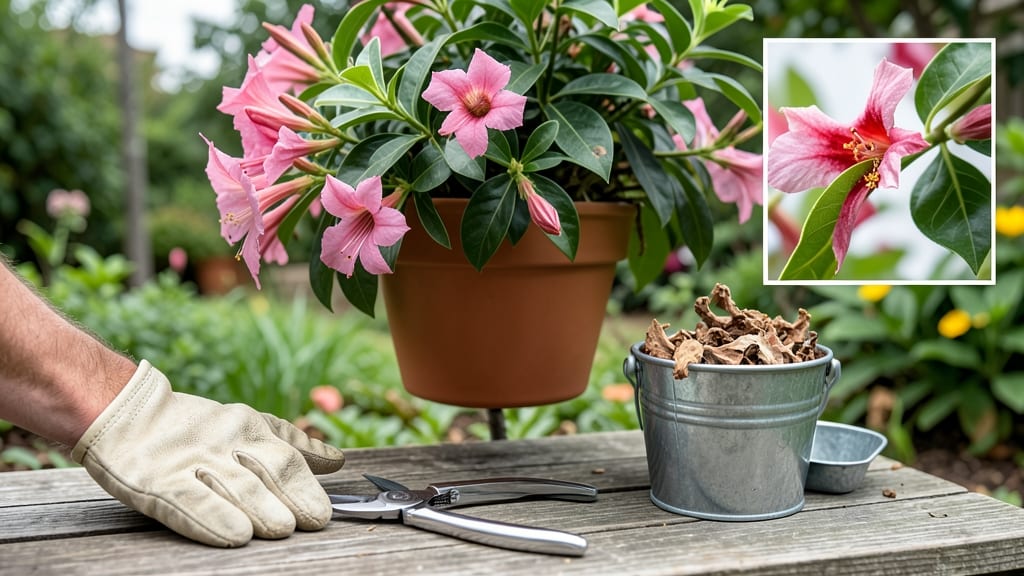
Deadheading mandevilla transforms your summer into a nonstop floral parade. ✨ I learned the hard way—skipping this step means fewer blooms and leggy stems by August, but once I started, my plants exploded with three times more flowers all season long.
You’ll need sharp pruners, gloves (those thorns are no joke), and maybe a bucket for spent blooms. The best time to deadhead is right after flowers fade—morning sunlight works perfectly.
Cut just above a leaf node or side bud, and avoid over-pruning in late summer when new growth won’t harden off before frost.
This simple habit keeps mandevilla bushy, encourages more buds, and extends your blooming season by 4-6 weeks. The key is consistency—5-10 minutes weekly makes all the difference. Just don’t trim back into old wood, or you’ll stunt next year’s growth.
Pro tip: Use the spent flowers as mulch or compost—they’ll break down fast and feed your plants. And if you’re in a cold climate, hold off on heavy pruning until spring to protect tender stems. Now grab those shears!
📚 In This Guide
- What you need
- Instructions
- Tips and common mistakes
- Wrapping up and next steps
What you need
- ● Pruning shears or sharp bypass pruners – Choose sterilized, bypass-style shears (not anvil-type) to make clean cuts. Size: 5–7 inches for precision.
- ● Rubbing alcohol (70% isopropyl) or bleach solution – For sterilizing tools between cuts. Quantity: Small bottle or 1 part bleach to 9 parts water.
- ● Garden gloves – Protect your hands from thorns and sap. Type: Heavy-duty, nitrile-coated gloves.
- ● Trash bag or bucket – For disposing of spent blooms and debris. Size: Medium to large (13+ gallons).
- ○ Garden twine or plant ties (optional but helpful) – If your Mandevilla needs support after pruning. Length: 12–18 inches.
- ● Hand lens or magnifying glass – For spotting hidden pests or disease on stems.
- ● Pruning sealant (e.g., tree wound dressing) – Only needed if cuts are large or woody.
- ● Water spray bottle – To mist leaves and reduce stress on the plant post-pruning.
- ● Notebook & pen – To track pruning dates and plant responses.
Step-by-Step instructions for deadheading mandevilla
Here's the simple method I use to keep my mandevillas flowering heavily all season long.
✂️ Step 1: Identify and Locate Spent Blooms
Start by scanning your mandevilla for blooms that have fully opened and now look wilted or drooping. These are ready for deadheading. I like to work in the morning when the flowers are still fresh—it makes spotting the spent ones easier. Look for blooms where the petals have fallen away or turned brown at the edges.
Gently grasp each spent bloom between your thumb and forefinger, being careful not to tug too hard. You'll feel a small node or bump where the bloom attaches to the stem. This is where you want to make your cut. Avoid grabbing the stem itself, as this can damage the plant.
✂️ Step 2: Make the Clean Cut
Using sharp pruning shears, make a clean cut just above the node where the bloom attached to the stem. I aim for about ¼ inch above the node—this encourages new growth from that spot. A clean cut prevents disease and helps the plant redirect its energy to producing new blooms instead of seed heads.
If you're working with a particularly large cluster of spent blooms, you can trim back the entire stem to just above a set of healthy leaves. This gives the plant a fresh start and often results in even more vigorous regrowth. Just be sure to leave at least 2-3 sets of leaves on the stem to maintain the plant's energy reserves.
✂️ Step 3: Encourage New Growth
After deadheading, take a moment to inspect the plant for any leggy or overgrown stems. These are often the result of old blooms that weren't removed in time. Trim these back by about ⅓ of their length to encourage bushier, more compact growth. This also helps the plant focus its energy on producing new flowers rather than maintaining long, weak stems.
Once you've finished deadheading, give your mandevilla a light application of balanced fertilizer. I use a 10-10-10 formula diluted to half strength. This gives the plant a gentle boost to support the new growth and blooms you've just encouraged. Water the plant thoroughly after fertilizing to help the nutrients absorb into the soil.
☀️ Step 4: Maintain for Continuous Blooms
Deadheading isn't a one-time task—it's an ongoing process to keep your mandevilla in peak blooming condition. I deadhead my plants every 2-3 days during their peak blooming season, which for me runs from late spring through early fall. This frequent attention keeps the plant focused on producing new flowers rather than setting seed.
Watch for signs that your mandevilla is ready for another round of deadheading: new buds forming at the tips of the stems or clusters of fresh, vibrant flowers. These are your cues that the plant is responding well to your efforts. With consistent deadheading, your mandevilla can produce blooms almost continuously throughout the growing season.
Tips & tricks for perfect mandevilla pruning
These simple tricks will help you keep your mandevilla blooming like a pro all season long.
Timing is Everything: I can't stress enough how much morning deadheading makes a difference. The flowers are still firm and easier to identify, and you'll avoid the frustration of working with wilted blooms that might snap off in your hands. Plus, morning light helps you spot the subtle color changes that signal a bloom is ready to be removed.
Tool Tip: Always use clean, sharp pruning shears—dull blades can crush stems and create jagged cuts that invite disease. I keep a small bottle of rubbing alcohol handy to wipe down my shears between cuts. This prevents cross-contamination between plants and keeps your tools ready for the next garden task.
Visual Cues Matter: In Step 1, when you're identifying spent blooms, look for the telltale "V" shape where the petals meet the stem. This is your perfect cutting point. The node just above this "V" is where new growth will emerge, so aim for that ¼-inch mark above it. If you're unsure, gently squeeze the stem—you'll feel where the bloom attaches, and that's your guide.
Fertilizer Follow-Up: After deadheading in Step 3, I like to wait about 24 hours before fertilizing. This gives the plant time to recover from the pruning stress. The diluted 10-10-10 formula works wonders, but I've also had great success with a slow-release granular fertilizer applied to the soil. Just be consistent—over-fertilizing can lead to lush foliage but fewer flowers.
Pro Tips for Deadhead Mandevilla
- These simple tricks will help you keep your mandevilla blooming like a pro all season long.
- Timing is Everything: I can't stress enough how much morning deadheading makes a difference.
- Tool Tip: Always use clean, sharp pruning shears—dull blades can crush stems and create jagged cuts that invite disease.
Frequently asked questions
about deadheading Mandevilla—because even the pros need a little extra help sometimes! Here are answers to the most common queries to keep your vines blooming like crazy.When is the best time of day to deadhead Mandevilla?
Early morning is ideal! Deadheading in the cool hours (before 9 AM) reduces stress on the plant and minimizes sap oozing. If you must prune later, avoid peak afternoon heat to prevent wilting or shock. Pro tip: Always use clean, sharp tools to avoid tearing stems.
How often should I deadhead Mandevilla for continuous blooms?
Deadhead every 2–3 days during peak bloom (spring/summer) to encourage new flowers. Skip deadheading in late fall/winter—let the plant rest. Over-pruning can stress the vine, so balance frequency with plant health. Watch for bud clusters; if they’re forming, your timing’s spot-on!
What if I accidentally cut too much off my Mandevilla?
Don’t panic! Mandevilla is resilient. If you’ve pruned back too hard, focus on watering consistently and fertilizing lightly (half-strength) for 2 weeks. New growth should sprout within 3–4 weeks. Prevent future mishaps by marking stems with a ribbon before cutting.
Can I deadhead Mandevilla with scissors instead of pruning shears?
Yes, but only for small stems (under ¼ inch thick). Scissors work in a pinch, but pruning shears give cleaner cuts and reduce disease risk. For thick vines, always use shears—scissors can crush stems, slowing recovery. Bonus tip: Disinfect tools with rubbing alcohol between cuts!
What should I do if my Mandevilla stops blooming after deadheading?
Check these 3 culprits:
- Light: Mandevilla needs 6+ hours of sunlight daily—move it if shaded.
- Water: Over/under-watering stresses the plant. Aim for consistently moist (not soggy) soil.
- Fertilizer: Low phosphorus (middle number on NPK) = fewer blooms. Switch to a bloom-specific formula like 10-30-20.
Pro Tip: Save your spent blooms! Dry them in a book for homemade potpourri or compost them to feed your garden.
Wrapping up and next steps
Deadheading your Mandevilla is a simple yet powerful way to keep those vibrant blooms coming all season long! 🌸 With just a few tools and a little patience, you’ll transform your plant into a nonstop floral showstopper.
Remember, timing and technique are everything—so grab those pruners and enjoy the process!
Ready to take your Mandevilla game to the next level? Try experimenting with fertilizing right after pruning to give your plant a nutrient boost. Your garden (and your neighbors!) will thank you for the extra love—and those stunning flowers. Happy pruning! 🌿✨