
How To
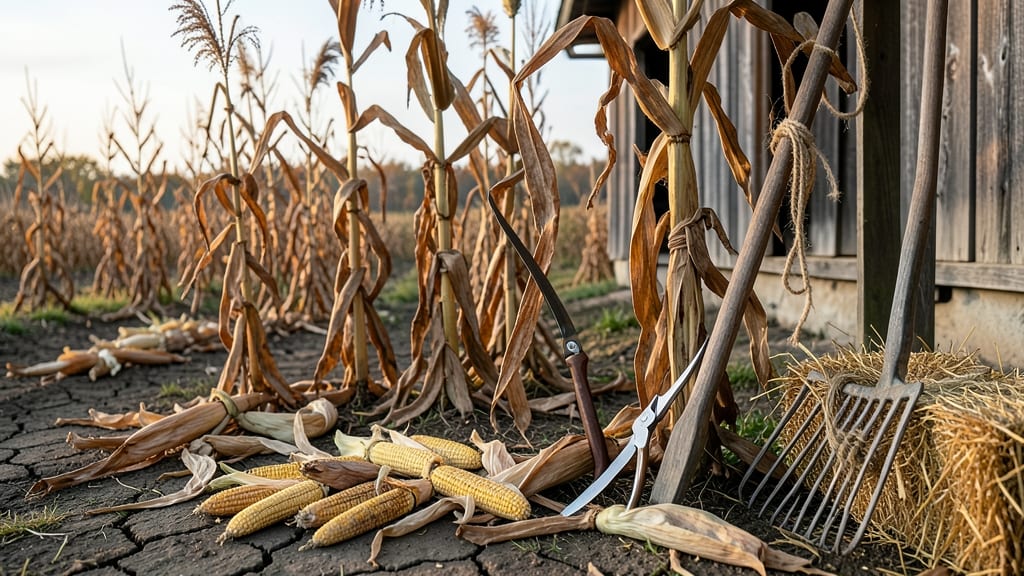
Dry corn stalks by cutting them at ground level, bundling 10-15 stalks, and hanging them upside down in a well-ventilated area (field or barn) for 2-4 weeks. For indoor drying, use a dehydrator at 135°F (57°C) for 4-6 hours or a fan-assisted space with 10-20% humidity. Ensure stalks are completely dry before storage to prevent mold.
Drying corn stalks properly preserves their structure for crafting or storage, and the method you choose depends on your climate and available space. 🌾 Field drying works best in dry, warm conditions—ideal between 75°F and 85°F—where natural airflow prevents moisture buildup.
If you're working indoors, a dehydrator speeds up the process dramatically, but you'll need to monitor humidity closely to avoid uneven drying. The key to success is consistency: whether outdoors or in, stalks should reach a crisp, brittle texture before bundling for long-term use.
One common mistake I see is rushing the drying process, which can lead to mold or pests taking hold. Always test a few stalks by bending them—if they snap cleanly, they're ready.
For indoor drying, place a small fan nearby to circulate air and check for moisture with a hygrometer if possible. This attention to detail makes all the difference in achieving the best results for your project.
💡 In This Article
- Field Drying Corn Stalks: Climate and Timing Factors
- Indoor Corn Stalk Drying: Equipment and Space Setup Guide
Field drying corn stalks: climate and timing factors
Field drying relies on three critical environmental factors: temperature, humidity, and airflow. Ideal conditions occur when daytime temperatures hover between 75°F and 85°F with nighttime lows above 60°F. At these levels, the moisture in corn stalks evaporates efficiently without encouraging bacterial growth.
Humidity below 50% accelerates drying—think of it like a natural dehydrator where warm air acts as the heat source and wind as the fan.
Timing is everything—late summer to early fall provides the perfect window because corn stalks are fully mature but haven't yet absorbed autumn rains. A stalk's thickness determines drying duration: thinner stalks (under 1 inch diameter) dry in 2 weeks, while thicker ones may need 4 weeks.
For example, a 1.5-inch stalk from a dent corn variety will take nearly twice as long as a 0.75-inch stalk from a flint corn plant. The key visual cue is when the stalks snap cleanly when bent—this indicates moisture content has dropped below 10%, the safe threshold for storage.
Wind plays a surprising role—gentle breezes (5-10 mph) create constant airflow, preventing stagnant moisture pockets. However, strong winds (> 15 mph) can damage stalks by breaking them or scattering bundles.
To mitigate this, I recommend securing bundles with twine at 18-inch intervals along the length. This creates a "sausage-link" effect that maintains bundle integrity while allowing airflow.
Rain poses the biggest threat—even a light shower can reintroduce moisture, creating ideal conditions for fungal growth like Aspergillus, which produces aflatoxins harmful to humans and livestock. To combat this, elevate bundles on wooden pallets (at least 12 inches off ground) and cover with waterproof tarps during forecasts.
The tarps should allow airflow (use vented fabric or prop them up with sticks) to prevent condensation buildup inside.
One advanced technique I've used is the "staggered bundle method": hang bundles at different heights (from 3 to 6 feet) to create a vertical airflow pattern.
This ensures even drying across all stalks, as lower bundles benefit from the warm air rising from the ground while upper bundles get direct sunlight. For large operations, this can reduce drying time by 20-30% compared to uniform hanging.
Always monitor for pests like earwigs or weevils—these thrive in partially dried stalks. A quick inspection with a flashlight at dusk reveals their presence. If found, treat bundles with food-grade diatomaceous earth (sprinkle lightly between stalks) or hang them in a mesh screen enclosure until fully dry.
The goal is to reach complete dryness before storage, where any remaining moisture becomes a magnet for mold and insects.