
Propagation
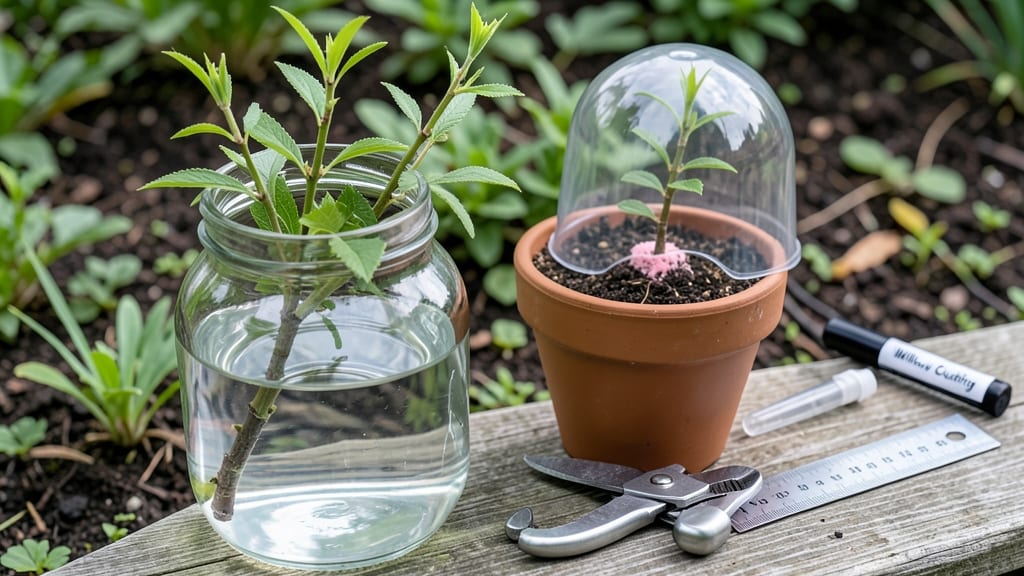
How to grow a willow tree from a branch feels like magic—especially when those roots appear in weeks instead of months. 🌱 I’ve propagated willows this way for years, and the secret isn’t complicated: just water, patience, and a little sunlight. The best part? You can snag that branch for free from any willow tree with flexible, green stems—no nursery required.
Start by selecting a 12-18 inch branch, about pencil-thick, with fresh green bark and no flowers. Dip the cut end in water, then place it in a jar or bucket—roots will sprout in 2-6 weeks if you keep the water fresh and the jar in bright, indirect light.
No soil needed at this stage; willows root effortlessly in water, making them perfect for beginners.
Once roots reach 2-3 inches, transplant your cutting into moist soil. Willow trees grow fast—expect 6-12 feet of height in their first year—but they’ll need regular pruning to shape them and prevent overgrowth.
The real reward? A tree that thrives in wet soil, provides shade, and even stabilizes riverbanks if planted near water.
Fair warning: willows spread aggressively, so plant them where their roots won’t crowd other plants. But if you want a quick, low-cost tree with dramatic foliage, this method delivers—no green thumb required. Just watch those roots grow!
📚 In This Guide
- What you need
- Instructions
- Tips and common mistakes
- Wrapping up and next steps
What you need
- ● 1 healthy willow branch (4–6 feet long, about pencil-thick, with leaf buds)
- ● 1 large container (5+ gallons, like a bucket or vase—clean and deep enough for roots)
- ● Water (tap or rainwater, room temperature)
- ● Pruning shears or sharp knife (sterilized to avoid disease)
- ○ Rooting hormone (optional but helpful) (powder or gel to speed up root growth)
- ● Pebbles or small stones (for drainage at the container’s base)
- ● Garden soil or potting mix (for transplanting later, if desired)
- ● Newspaper or plastic wrap (to cover the branch and retain moisture)
- ● Twine or rubber bands (to secure the cover if needed)
- ● Sunlight spot (bright, indirect light—like a windowsill or shaded patio)
- ● Spray bottle (for misting leaves if humidity drops)
- ● Permanent marker (to label your branch if growing multiple cuttings)
Step-by-step instructions for propagating willow trees in water
Here's the fast, foolproof method I've used to grow willow trees from cuttings—no greenhouse or fancy tools required.
🌱 Step 1: Select and Prepare the Willow Branch
Choose a healthy, flexible branch that's about ¼ to ½ inch thick and at least 18-24 inches long. Look for sections with several leaf nodes—these are the growth points where roots will form. Cut the branch at a 45-degree angle just below a node using clean, sharp pruners to prevent crushing the stem.
Strip the lower 6-8 inches of leaves, leaving only a few at the top. This reduces water loss and directs the plant's energy toward root development. I like to make a small nick about ¼ inch deep at each node with a sharp knife—this encourages root formation without damaging the branch.
💧 Step 2: Place the Branch in Water
Fill a clean container with room-temperature water deep enough to submerge the stripped section by 2-3 inches. I use a clear vase so I can monitor root growth daily. Change the water every 2-3 days to prevent bacterial growth and keep it fresh—stagnant water smells sour and slows root development.
Position the branch so the cut end is fully submerged, but don't force it. The nodes should face downward toward the water. Place the container in a spot with bright, indirect light—direct sun can overheat the water and stress the cutting. You'll see tiny white root hairs emerge from the nodes within 1-2 weeks, growing rapidly once established.
☀️ Step 3: Monitor Growth and Prepare for Transplanting
Watch for new leaves at the top of the branch—that's your signal the cutting is thriving. Roots typically reach 2-3 inches long within 4-6 weeks, though some vigorous willows develop roots in just 3 weeks. If the water level drops significantly, top it off with fresh water but avoid disturbing the roots.
Once roots are 3-4 inches long and densely packed, it's time to transplant. I like to do this on an overcast day to reduce transplant shock. Choose a location with full sun to partial shade and moist, well-draining soil. Willow trees love water but won't tolerate soggy roots—amend heavy clay with compost to improve drainage.
🪴 Step 4: Plant the Rooted Cutting
Dig a hole twice as wide as the root ball but only as deep as the container. Gently remove the cutting from its water container, being careful not to damage the roots. Place it in the hole so the top of the root ball sits 1 inch below soil level—this prevents stem rot while encouraging root spread.
Backfill with native soil, firming gently around the roots to eliminate air pockets. Water deeply to settle the soil and encourage root contact. Mulch with 2-3 inches of organic mulch (like shredded bark) to retain moisture and suppress weeds, but keep the mulch 6 inches away from the stem to prevent rot.
⏰ Step 5: Maintain Through the First Growing Season
Water newly planted willow cuttings 2-3 times per week for the first month, then taper to once a week once established. Willow trees are drought-tolerant once mature, but young plants need consistent moisture. You'll know it's thriving when new shoots emerge from the base within 4-6 weeks.
Fertilize lightly in spring with a balanced 10-10-10 fertilizer to encourage balanced growth. Avoid heavy-handed feeding—willows grow fast but can become leggy if over-fertilized. Prune any dead or crossing branches in late winter to maintain a strong structure and encourage bushier growth.
Tips & tricks for growing willow trees from cuttings
These battle-tested insights will help you skip the trial-and-error phase and grow willow trees with confidence.
Timing is Everything: The 1-2 week window for root hair emergence is your first critical milestone. Mark your calendar when you place the branch in water—this is when you'll see those tiny white tendrils appear. If you don't see them by week 3, check your light conditions. Willow cuttings need bright but indirect light to thrive; direct sun can stress the cutting and delay root formation.
Root Formation Hack: Those small nicks you make at each node? They're not just decorative—they work like tiny root triggers. Think of them as opening doors for the plant's energy to escape downward instead of staying in the stem. I've found willow cuttings with nicks develop roots 2-3 weeks faster than un-nicked branches. Just keep the nicks shallow (¼ inch deep) to avoid damaging the cambium layer.
Water Quality Matters: Room-temperature water is non-negotiable—cold water shocks the cutting while warm water can accelerate bacterial growth. I've learned the hard way that tap water left sitting overnight develops chlorine odors, which stress the cutting. Let your water sit uncovered for 24 hours before using it to allow chlorine to dissipate. Changing the water every 2-3 days prevents that sour smell and keeps your cutting healthy.
Transplanting Strategy: The 3-4 inch root length is your green light for transplanting, but don't rush it. Roots this size have enough energy reserves to handle the shock. I always transplant on overcast days because direct sunlight after transplanting causes rapid water loss through the leaves. If you must transplant on a sunny day, give the cutting a good drink of water first to help it through the transition.
Pro Tips for Grow A Willow Tree From A Branch
- These battle-tested insights will help you skip the trial-and-error phase and grow willow trees with confidence.
- Timing is Everything: The 1-2 week window for root hair emergence is your first critical milestone.
- Root Formation Hack: Those small nicks you make at each node?
Frequently asked questions
Got questions about growing a willow tree from a branch?
You’re not alone! Here are some of the most common queries—plus quick, actionable answers to help you succeed.
Can I grow any willow branch, or does it need to be from a specific type?
Most willow branches will root in water, but weeping willows (Salix babylonica) and crack willows (Salix fragilis) are the easiest choices for beginners. Avoid branches from osier willows (Salix viminalis) if you’re unsure—they’re often harvested for basket-making and may not root as reliably. Stick to healthy, flexible branches about pencil-thick for best results!
How long does it take for willow cuttings to root in water?
Patience is key! Willow cuttings typically root in 2–6 weeks, depending on temperature and branch health. You’ll know it’s working when you see tiny white roots sprouting from the base. Keep the water fresh, and place your cuttings in a spot with bright, indirect light—direct sun can overheat the water.
Should I change the water regularly, or can I leave it alone?
Yes, change the water every 3–5 days to prevent bacteria and algae buildup, which can stunt root growth. Use room-temperature water, and trim any mushy or discolored ends on your cutting before re-submerging it. Pro tip: Add a drop of hydrogen peroxide (3%) to the water weekly to keep it clean and oxygen-rich!
What do I do if my willow cutting rots before rooting?
Don’t panic—this happens to even the best gardeners! If your cutting turns mushy or smells foul, it’s likely rotting from too much moisture or bacteria. To fix it:
- Trim off the rotted section (just above healthy tissue).
- Let it dry in air for 1–2 hours before re-submerging.
- Use fresh, clean water and avoid overcrowding cuttings.
Can I plant my rooted willow cutting directly in soil, or does it need to acclimate?
Once your cutting has 1–2 inches of roots, it’s ready for soil! But to reduce shock, harden it off first:
- Place the pot outside in partial shade for 3–5 days.
- Gradually increase sunlight over a week.
- Plant in moist, well-draining soil (willows love water but hate soggy roots!).
What if my willow cutting won’t root at all?
Sometimes, timing or branch condition is the issue. Try these fixes:
- Use rooting hormone (optional but helpful for stubborn cuttings).
- Try bottom heat (place the jar on a seedling mat or warm windowsill).
- Switch to soil propagation—bury the base of the cutting in moist potting mix instead of water.
Wrapping up and next steps
Growing a willow tree from a branch is a rewarding journey that combines simplicity with stunning results—perfect for gardeners of all levels! 🌿 With just a few supplies and patience, you can nurture a fast-growing, graceful tree that adds beauty and shade to your space.
Once your cutting has rooted and thrived, consider transplanting it into the ground or a larger container to watch it flourish over time.
Now that you’re armed with the know-how, take the next step: grab a branch, follow the steps, and enjoy the magic of propagation! Share your progress with fellow plant lovers or explore other easy-to-grow species for your garden adventures. Happy growing! 🌱