
Propagation
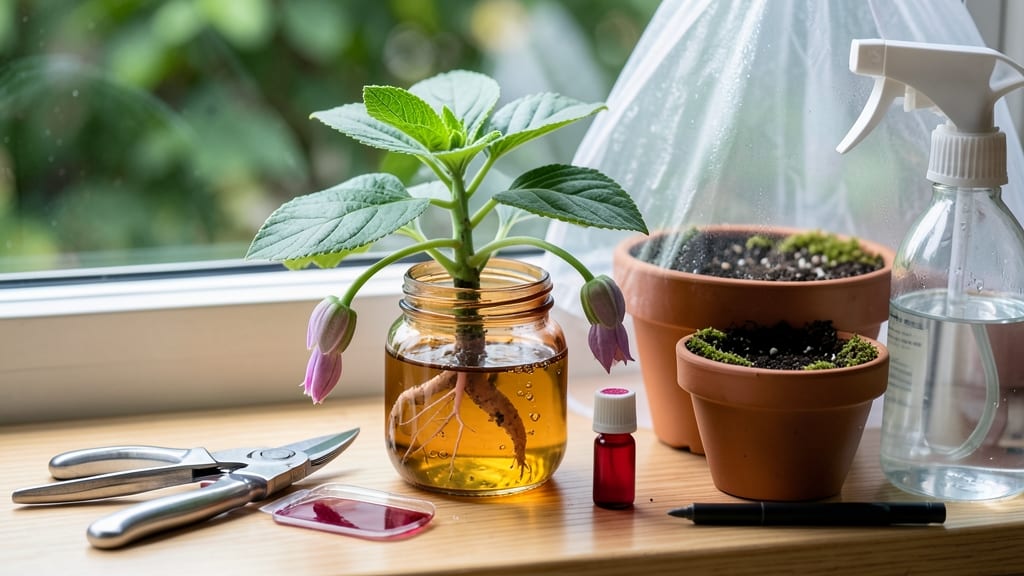
How to grow fuchsias from cuttings saves you money and multiplies your favorite varieties. ✨ I’ve propagated dozens of fuchsias this way, and the secret isn’t complicated—it’s about choosing the right cuttings, creating the perfect humidity, and being patient. These tender plants reward you with lush foliage and vibrant blooms that last all summer.
Start with 4-6 inch healthy stems from the current season’s growth, just below a leaf node. Use sharp scissors to avoid crushing the stem, then strip the lower leaves to expose the nodes where roots will form.
You can root them in water or soil, but soil keeps them stronger and more stable once transplanted. The key is keeping them warm and humid—think of a mini greenhouse effect.
Within 3-4 weeks, you’ll see tiny roots forming, and new leaves will tell you it’s working. Transplant carefully to avoid disturbing the roots, and give them bright, indirect light to prevent legginess.
The first year might be slower, but by the second season, you’ll have bushy plants bursting with blooms—exactly like the mother plant.
Timing matters: spring and early summer are ideal, but you can also root cuttings in late summer for fall blooms. Avoid taking cuttings from overripe or diseased plants, and never let them dry out.
With this method, you’ll have a fuchsia army in no time—ready to share with friends or fill your garden with color.
📚 In This Guide
- What you need
- Instructions
- Tips and common mistakes
- Wrapping up and next steps
What you need
- ● Healthy fuchsia cuttings: 4–6 semi-ripe (not fully mature) stems, 3–4 inches long
- ● Cut just below a leaf node (where leaves grow) at a 45° angle
- ● Remove lower leaves (leave 2–3 at the top)
- ● Rooting hormone: 1 small bottle (e.g., Clonex or similar)
- ● Small pots or containers: 4–6 (3–4 inches deep) with drainage holes
- ● Well-draining potting mix: 1 bag (sterilized or seed-starting mix)
- ● Spray bottle: 8–12 oz (for misting)
- ● Clear plastic bag or propagator: 1 (to create humidity)
- ● Scissors or pruning shears: Clean, sharp pair (sterilized with rubbing alcohol)
- ● Bottom heat mat: 1 (speeds up rooting, ~70–75°F)
- ● Hydrogen peroxide (3%): Small bottle (to sterilize cuttings)
- ● Grow lights: 1–2 (if natural light is weak)
- ● Label markers: 6–10 (to track varieties)
Step-by-Step instructions for growing fuchsias from cuttings
Here's the foolproof method I use to turn fuzzy fuchsia stems into thriving plants.
🌱 Step 1: Select and Prepare Healthy Cuttings
Choose non-flowering stems with at least 3-4 sets of leaves and no signs of disease. I always pick from the current season's growth—the younger, the better. Use clean, sharp scissors to cut 4-6 inches below a leaf node, making the cut at a 45-degree angle to increase surface area for rooting.
Remove the lower set of leaves, leaving only the top two or three. This prevents rot and directs the plant's energy toward root growth. Dip the cut end in rooting hormone to boost success rates—it's worth the small investment for fuchsias, which can be finicky starters.
💧 Step 2: Root in Water or Moist Medium
Place the cuttings in a jar of room-temperature water, ensuring only the bottom 1-2 inches are submerged. Change the water every 3-4 days to prevent bacterial growth. You'll see roots forming in 2-4 weeks—watch for tiny white tendrils emerging from the cut end.
For faster results, I sometimes use a mix of perlite and peat moss instead of water. Keep the medium consistently moist (not soggy) and cover with a plastic bag to maintain humidity. The key is patience—fuchsias root slower than some plants, so don't give up if progress seems slow.
☀️ Step 3: Transition to Soil and Encourage Growth
Once roots reach 1-2 inches long, transplant into 4-inch pots filled with a light, airy potting mix. I like to add a bit of perlite or sand to improve drainage—fuchsias hate wet feet. Water gently after planting to settle the soil without disturbing the roots.
Place the new plants in bright, indirect light for the first week to reduce transplant shock. Gradually introduce more sunlight over 10 days as the cuttings establish themselves. You'll know they're adapting when new leaves appear—this is your cue to start fertilizing lightly with a balanced liquid fertilizer.
🪴 Step 4: Maintain Through First Season
Keep the soil evenly moist but never waterlogged. Fuchsias thrive in 60-70°F temperatures and appreciate occasional misting on their leaves. Pinch back the tips of new growth to encourage bushier plants—this is where those signature fuzzy stems come from.
By late spring, your cuttings should be ready to bloom. Deadhead spent flowers regularly to redirect energy into new growth. With proper care, each cutting can produce 2-3 new plants within a season—now you've got a fuchsia army for next year's garden.
Tips & tricks for growing fuchsias from cuttings
Here's what I've learned after propagating dozens of fuchsias—these little details make all the difference.
Timing is Everything: When selecting cuttings in Step 1, aim for morning hours when stems are full of water. This makes them more resilient during the cutting process. I've found that cuttings taken after midday often wilt faster in water, slowing root development. Also, avoid taking cuttings during extreme heat or cold—stick to mild, overcast days for best results.
Rooting Hormone Hack: While the instructions mention rooting hormone, here's my secret: crush the hormone powder directly onto the cut end of your fuchsia stem before dipping it in water. This ensures maximum contact with the rooting zone. For an extra boost, I sometimes add a tiny pinch of cinnamon to the hormone—it acts as a natural antifungal and helps prevent rot in the moist environment.
Lighting Secrets: During the bright, indirect light phase in Step 3, position your cuttings near an east-facing window if possible. Morning sunlight is less intense than afternoon rays, which can scorch tender new leaves. If you don't have ideal windows, a simple grow light on a timer (12-14 hours daily) works wonders. Just keep it 6-12 inches above the plants to avoid heat stress.
Transplanting Transition: When moving your rooted cuttings to soil in Step 3, I've discovered a trick to reduce shock: water the soil thoroughly before planting, then let it drain completely. This prevents waterlogged conditions that fuchsias despise. After transplanting, give the pots a gentle tap on the counter—this helps settle the soil around delicate roots without compacting it too much.
Pro Tips for Grow Fuchsias From Cuttings
- Here's what I've learned after propagating dozens of fuchsias—these little details make all the difference.
- Timing is Everything: When selecting cuttings in Step 1, aim for morning hours when stems are full of water.
- Rooting Hormone Hack: While the instructions mention rooting hormone, here's my secret: crush the hormone powder directly onto the cut end of your fuchsia stem before dipping it in water.
Frequently asked questions
Got questions about growing fuchsias from cuttings?
You’re not alone! Here are answers to the most common queries to help you propagate like a pro.
When is the best time to take fuchsia cuttings?
The ideal time is late spring to early summer (May–June in most climates), when fuchsias are actively growing. Avoid winter dormancy—cuttings taken then struggle to root. If you’re in a warm region, you can also try late summer (August–September) for a second round.
How do I know if my cutting is healthy enough to root?
Look for non-flowering stems with 3–4 sets of leaves and a 45-degree angle cut just below a leaf node. Avoid woody or mushy stems—these won’t root well. Healthy cuttings should feel firm but pliable, like a fresh green bean.
Why aren’t my fuchsia cuttings rooting?
Common culprits: overwatering (roots rot in soggy soil), low humidity (use a plastic bag or propagator), or old/woody cuttings. Try hormone rooting powder for stubborn types, and keep temps 65–75°F. Patience is key—some varieties take 4–8 weeks to root!
Can I grow fuchsias from cuttings indoors?
Use a south-facing windowsill or a grow light for 12+ hours/day. Maintain high humidity (a pebble tray helps) and keep soil moist but not waterlogged. Indoor cuttings may root slower than outdoors, so be extra gentle with watering.
How do I encourage my rooted cuttings to flower?
Once rooted, wait until new growth appears (signs of health!). Then, pinch back the top set of leaves to promote bushiness. Provide bright, indirect light and balanced fertilizer (half-strength) every 2–3 weeks. Flowers typically appear 8–12 weeks after rooting—patience pays off!
Wrapping up and next steps
Growing fuchsias from cuttings is a rewarding way to expand your garden with vibrant blooms—no fancy tools or expertise required! 🌱 With the right timing, materials, and care, you’ll soon have thriving plants ready to brighten up pots, borders, or hanging baskets.
The key? Patience and consistency, paired with a little love for these delicate beauties.
Now that you’re armed with the know-how, why not take the plunge? Start with just a few cuttings this season, and before you know it, you’ll be sharing (or gifting!) your new fuchsia babies. Happy rooting—your garden’s next masterpiece is waiting! 🌸