
Size
How to grow sequoia trees requires space—and patience. 🌲 These towering trees aren’t your typical backyard plants, but with the right conditions, you can nurture one from seed or sapling. I’ve watched my own sequoia seedlings grow from a few inches to over 6 feet in just five years, and the journey is as rewarding as the result. The key is matching their native habitat: cool, moist climates with well-draining soil and full sun. Coastal redwoods (Sequoia sempervirens) thrive near the ocean, while giant sequoias (Sequoiadendron giganteum) prefer inland mountain slopes. Most gardeners start with a nursery-grown sapling—growing from seed takes 10+ years just to reach transplant size. Once planted, keep the soil consistently moist (but not soggy) for the first few years. Mulch heavily to mimic their forest floor home, and avoid pruning—these trees grow best when left alone. In ideal conditions, they can reach 200+ feet in their natural habitat, but even a small backyard can support a young tree with proper care. They’re slow growers, so think decades—not seasons—but the payoff is worth it. Your future great-grandkids might get to walk under the branches you planted today.
📚 In This Guide
- What you need
- Instructions
- Tips and common mistakes
- Wrapping up and next steps
What you need
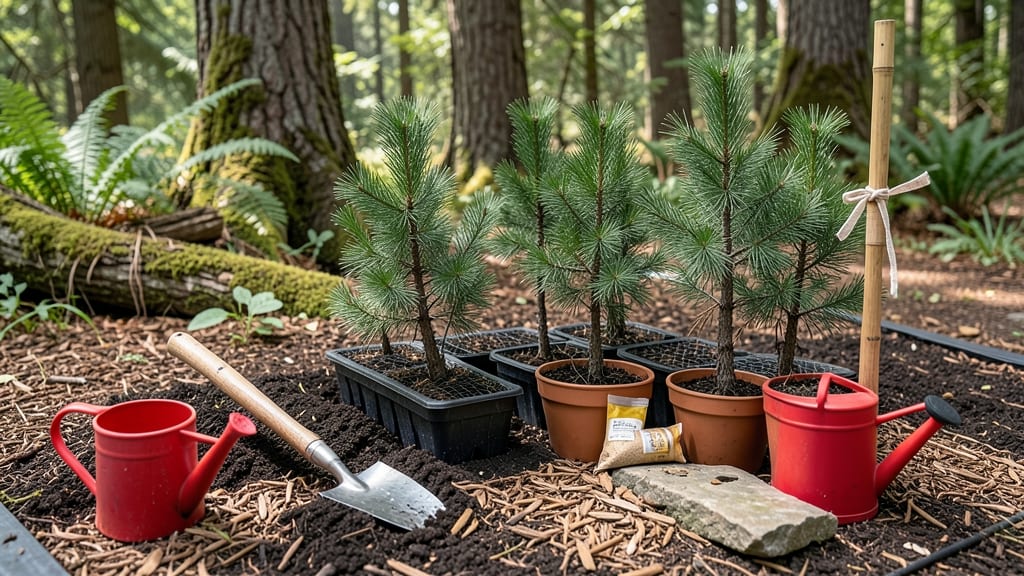
- ● Sequoia seedling or seed: 1–3 Sequoiadendron giganteum (giant sequoia) or Sequoia sempervirens (coast redwood) seedlings (3–6 ft tall for faster growth).
- ● OR 5–10 fresh sequoia cones (for seed extraction; collect in fall/winter).
- ● Planting site: Sunny location (6+ hours of direct sunlight daily).
- ● Well-draining, acidic soil (pH 5.5–7.0). Mix in 3–5 gallons of peat moss or compost per planting hole.
- ● Space: 20–30 ft apart (sequoias grow 3–7 ft/year when young!).
- ● Tools: Shovel or trowel (for digging holes 2x wider and as deep as the root ball).
- ● Garden hose or watering can (5–10 gallons per watering for seedlings).
- ● Mulch (3–4 inches of wood chips or pine straw; keep 6 inches away from the trunk).
- ● Soil amendments: Slow-release fertilizer (e.g., 10-10-10 NPK, 1 tbsp per hole).
- ● Mycorrhizal fungi (boosts root growth; mix into soil).
- ● Protective gear: Tree stakes + ties (for young seedlings in windy areas).
- ● Frost cloth (if planting in Zone 5 or colder).
- ● Monitoring tools: pH test kit (to check soil acidity).
- ● Moisture meter (sequoias hate soggy roots!).
Step-by-step instructions for growing sequoia trees
Here's how I start these majestic giants—with patience, precision, and a few tricks to ensure survival.
🌱 Step 1: Source Healthy Sequoia Seeds or Saplings
Sequoias grow from seeds or 1-2 year-old saplings—never from cuttings. For seeds, order from a reputable supplier specializing in native California species. I recommend coast redwood (Sequoia sempervirens) for coastal climates or giant sequoia (Sequoiadendron giganteum) for inland areas. Soak seeds in lukewarm water for 24 hours before planting to soften the hard outer shell.
If buying saplings, choose container-grown trees with well-developed root systems—avoid balled-and-burlapped specimens over 3 feet tall, as they struggle with transplant shock. Look for straight trunks and vibrant green needles—yellowing or sparse foliage signals stress or disease.
☀️ Step 2: Prepare the Planting Site
Sequoias demand full sun (6+ hours daily) and well-draining soil with high organic matter. Test your soil—sequoias hate soggy roots. Amend heavy clay with 3-4 inches of compost or leaf mold and mix in 10% perlite or coarse sand to improve drainage. The ideal pH range is 5.0-7.0.
Dig a hole twice as wide as the root ball but no deeper—sequoias dislike having their roots buried too deeply. Loosen the sides of the hole with a shovel to encourage root spread. For seeds, plant in a nursery bed with 12 inches of loose, fertile soil—they germinate slowly and need consistent moisture.
💧 Step 3: Plant with Care and Mulch Properly
For saplings, place the tree in the hole so the root flare (where roots meet trunk) sits at soil level. Backfill with native soil, tamping gently to remove air pockets. Water deeply to settle the roots. For seeds, plant ½ inch deep in spring after the last frost—sequoias need warm soil to germinate.
Spread 3-4 inches of wood chips or bark mulch around the base, keeping it 6 inches away from the trunk to prevent rot. Mulch retains moisture and mimics the forest floor's natural conditions. Water twice weekly for the first month until the soil 6 inches deep stays consistently moist—but never soggy.
✂️ Step 4: Protect and Maintain Young Trees
Sequoias grow 2-3 feet annually when young, but they're vulnerable to deer, rabbits, and rodents. Install a 6-foot tall wire cage around saplings until they reach 10 feet tall. Prune only to remove dead or crossing branches—never "thin" the canopy, as sequoias develop their iconic shape naturally.
Fertilize lightly in early spring with ½ cup of 10-10-10 fertilizer per year of tree age (e.g., ½ cup for a 1-year-old). Over-fertilizing causes weak, fast growth that snaps in storms. Monitor for aphids or spider mites—spray with neem oil if you see sticky residue on needles or fine webbing.
🪴 Step 5: Transplant Mature Trees (If Needed)
Sequoias hate being moved after 5 years old, so plan your location carefully. If transplanting a young tree, dig a 3-foot-wide hole and water the tree 24 hours before moving to reduce shock. Lift the root ball with a wide spade or transplanting fork, keeping as much soil intact as possible.
Place the tree in its new hole at the same depth as before, backfill with native soil, and water deeply. Stake only if the site is windy, using two stakes and soft ties to avoid girdling the trunk. Mulch heavily and water daily for 2 weeks to help roots establish.
Tips & tricks for growing healthy sequoia trees
These practical insights will help you avoid common pitfalls and maximize your sequoia's chances of thriving for centuries.
Seed Soaking Secret: The 24-hour lukewarm water soak isn't just about softening the shell—it's also a germination test. If seeds sink immediately, they're viable; if they float after 12 hours, discard them. I've found that pre-soaking in a mesh bag (not plastic) prevents mold while maintaining oxygen flow. For best results, use distilled water to avoid chlorine exposure that can inhibit germination.
Soil Preparation Insight: When amending your planting site with 3-4 inches of compost and 10% perlite, mix it thoroughly with the native soil—don't just layer on top. Sequoias develop deep taproots that need consistent texture throughout. I recommend using a broadfork to aerate compacted soil before adding amendments, which creates better root pathways. For heavy clay soils, consider adding 20% coarse sand to improve drainage without altering the soil structure too dramatically.
Planting Depth Caution: Getting the root flare at soil level is critical—burying it too deep can cause the tree to suffocate while planting too shallow exposes roots to drying. I use a simple trick: after placing the sapling, gently pull on the trunk. If it resists, the flare is at the right level; if it wiggles, you've buried it too deep. For seeds planted ½ inch deep, mark their location with small flags to avoid disturbing them during watering.
Watering Strategy: The twice-weekly watering for the first month should be done deeply—aim for 1-2 gallons per watering session to encourage deep root growth. I've seen many growers make the mistake of frequent light watering, which keeps roots shallow. Use a moisture meter to check that the soil stays consistently moist 6 inches deep, but never soggy. Mulching with 3-4 inches of wood chips helps maintain this moisture balance while preventing soil compaction.
Pro Tips for Grow Sequoia Trees
- These practical insights will help you avoid common pitfalls and maximize your sequoia's chances of thriving for cent...
- Seed Soaking Secret: The 24-hour lukewarm water soak isn't just about softening the shell—it's also a germination tes...
- Soil Preparation Insight: When amending your planting site with 3-4 inches of compost and 10% perlite, mix it thoroug...
Frequently asked questions
Got questions about growing sequoia trees?
Here are some of the most common ones—plus straightforward answers to help you get started on your giant forest adventure!
How long does it take for a sequoia tree to reach maturity?
A sequoia tree grows slowly but steadily—expect it to take 300–500 years to reach full height (up to 300 feet!). In its first decade, it may grow just 1–2 feet per year, but with ideal conditions (sunlight, water, and soil), it’ll gain momentum over time. Patience is key—these giants are built for the long haul!
Can I grow a sequoia tree in a pot or small yard?
Sequoias need space—their roots spread widely, and they thrive in full sun with deep soil. A pot is possible for young seedlings (use a 5+ gallon container), but they’ll outgrow it quickly. For a small yard, consider dwarf varieties like Sequoiadendron giganteum ‘Pendulum’**, which stay compact (10–15 feet tall). Otherwise, plan for at least 50+ feet of clearance!
Are sequoia trees cold-hardy? Can they survive winter?
Yes! Mature sequoias are highly cold-resistant, tolerating temperatures down to -20°F (-29°C). Young seedlings, however, may need winter protection (like mulch or burlap wraps) in their first few years, especially in Zone 5 or colder. Avoid planting in frost pockets where cold air settles—sequoias prefer well-draining slopes for airflow.
What pests or diseases should I watch for when growing sequoias?
Sequoias are naturally resistant to most pests, but keep an eye out for:
- Portuguese bark beetles (can stress weak trees—ensure your sequoia stays healthy with proper watering).
- Root rot (from overwatering—sequoias hate soggy soil! Aim for deep but infrequent watering).
- Fungal issues like needle blight (prune affected branches and improve airflow).
What’s the best alternative if I can’t grow a true sequoia?
If sequoias seem too challenging, try these fast-growing, large-tree alternatives with similar drama:
- Redwood (Sequoia sempervirens)
- Douglas fir (Pseudotsuga menziesii)
- Bald cypress (Taxodium distichum)
- Dwarf Alberta spruce (Picea glauca ‘Conica’) for compact options
Wrapping up and next steps
Growing a majestic sequoia tree is a rewarding journey that blends patience, care, and a deep connection to nature. 🌲 By choosing the right location, nurturing young saplings with proper watering and soil conditions, and protecting them from pests, you’re already setting the stage for a future giant.
Remember, these trees thrive over decades—so embrace the process and celebrate each milestone, no matter how small!
Ready to take the next step? Start small:
- 🌱 Plant a seedling today—even a tiny start can grow into something extraordinary.
- 📅 Join local gardening groups for tips and inspiration from fellow tree enthusiasts.
- 📖 Research native species in your area to ensure your sequoia has the best chance to flourish.