
Picking
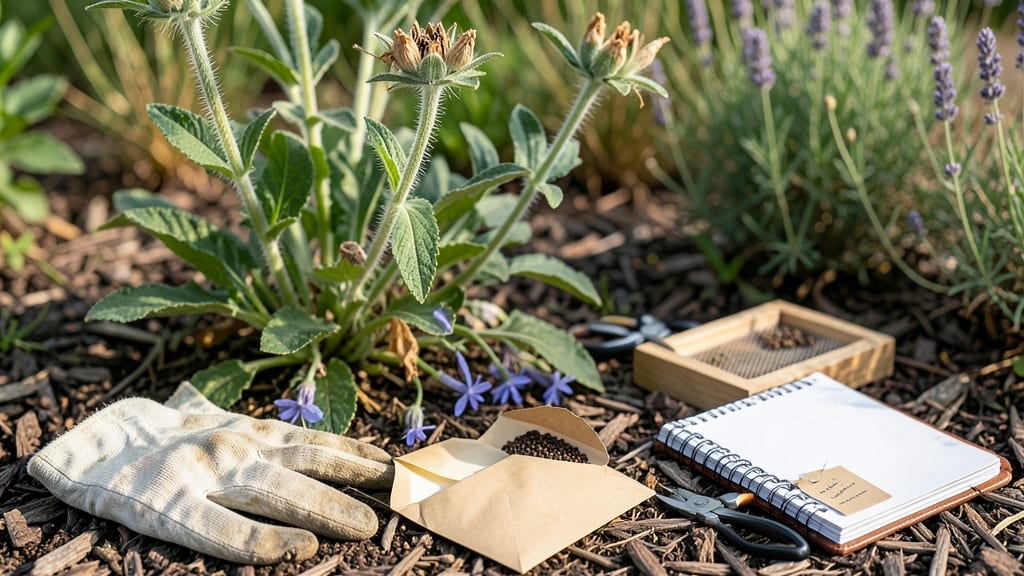
Late summer’s golden borage blooms hide a secret: the seeds inside are your ticket to next year’s self-sustaining plants. ✨ Harvesting them at the right moment—when the seed heads turn brown but haven’t yet burst open—ensures strong germination and saves you from buying new plants every season.
The dry and shake method is foolproof: snip the seed heads just before they release naturally, then hang them upside-down in a paper bag. After 10-14 days, gentle shaking releases the tiny black seeds—no fancy tools required.
Borage’s biennial nature means these seeds will grow into lush, blue-flowered plants that thrive for two full seasons.
Store the seeds in an airtight container in a cool, dark place, and they’ll stay viable for 3-4 years. The payoff? A garden that keeps producing fragrant, bee-friendly blooms year after year without replanting. No more rushing to the nursery—just shake, store, and sow.
Timing is everything: harvest too early, and the seeds won’t mature; too late, and they’ll scatter on their own. Watch for the seed heads to split naturally—that’s your cue to act. With this method, you’ll have a self-replenishing supply of borage for salads, teas, and pollinator gardens.
📚 In This Guide
- What you need
- Instructions
- Tips and common mistakes
- Wrapping up and next steps
What you need
- ● Mature borage plants: Allow flowers to fully bloom and wilt (usually 4–6 weeks after flowering). Aim for 10–15 plants for a good seed yield.
- ● Pruning shears or sharp scissors: Use clean, sterilized tools to avoid spreading disease. A pair with 5–7-inch blades works best.
- ● Brown paper bags or breathable seed-saving envelopes: Choose 10–12 bags (one per plant or cluster) to collect seeds. Opt for unbleached, kraft paper for airflow.
- ● Drying rack or mesh screen: A flat, elevated surface (like a wire cooling rack or hardware cloth) to spread seed heads for drying.
- ● Labeling tags or masking tape + marker: Label each bag with the plant variety and harvest date to track maturity.
- ● Glove: Protect your hands from prickly stems and potential skin irritation.
- ● Fine mesh sieve or colander: Sift dried seed heads to separate seeds from chaff (great for bulk harvests!).
- ● Food-safe storage containers: Airtight jars or mason containers to store seeds long-term (add silica gel packets for extra dryness).
- ● Hair dryer (low heat): Speed up drying for humid climates—keep it on cool setting to avoid scorching seeds.
Step-by-Step instructions for Harvesting borage seeds
Here's how I reliably gather seeds from healthy borage plants for next season's garden.
🌿 Step 1: Identify and Select Seed Heads
Wait until the borage flowers have fully bloomed and begun to develop seed pods—these appear as small, round, green capsules that start turning brown and papery. I look for clusters where at least 50% of the flowers have transitioned from blue to seed heads. Harvesting too early means immature seeds that won't store well.
Gently grasp the entire seed head cluster (about 2-3 inches of stem) with one hand while supporting the plant with the other. Avoid pulling individual flowers—they'll snap off too easily, leaving stems behind. Cutting with clean scissors just above a leaf node prevents damage to the plant.
💧 Step 2: Dry the Seed Heads Properly
Spread the harvested seed heads in a single layer on a clean, dry surface in a well-ventilated area away from direct sunlight. I use a wire mesh screen or a baking sheet lined with parchment paper—this allows air to circulate freely and prevents mold. The drying process takes 7-14 days, depending on humidity levels in your space.
Check daily for signs of moisture—if the seed heads feel damp to the touch or show any dark spots, they need more drying time. Once completely dry, the seed pods will feel lightweight and brittle, and the stems will snap easily when bent. Store them in a paper bag (not plastic) to allow airflow until ready for shaking.
✂️ Step 3: Shake Out the Seeds
Hold the dried seed head cluster over a clean white bowl or tray and gently shake or rub the pods between your fingers. The seeds will fall out easily once fully dry—you'll see small, triangular, nut-like seeds with a slightly rough texture. I repeat this process with multiple clusters to ensure I collect all viable seeds.
After shaking, inspect the seeds for debris or chaff. I use a fine mesh strainer to separate any remaining plant matter, leaving only the clean seeds behind. Store the seeds in a glass jar with a tight-sealing lid in a cool, dark place—they'll remain viable for 2-3 years if kept dry.
⏰ Step 4: Test Germination (Optional but Recommended)
Before storing seeds long-term, I test a small batch to confirm viability. Moisten a paper towel with water, sprinkle 10-15 seeds evenly, and fold it into a packet. Place the packet in a ziplock bag and keep it in a warm (70-75°F) spot. Check daily—seeds should sprout in 3-7 days. If fewer than 50% sprout, store the remaining seeds in the freezer for another viability test next year.
This step gives me confidence that my seeds are ready for next season's planting. Even if germination rates are lower, borage is so prolific that a few good seeds will still yield a bountiful harvest. I label each jar with the harvest date to track freshness.
Tips & tricks for perfect borage seed Harvesting
Here's what I've learned after years of perfecting this method—these small details make all the difference when saving borage seeds for next season.
Timing is Everything: In Step 1, those seed pods need to be fully brown and papery—not just slightly brown. I test by gently pressing a pod between my fingers: if it crumbles easily, it's ready. Harvesting too early means seeds won't dry properly or store well. The 50% transition rule is key—wait until at least half the flowers in a cluster have developed these brown capsules before cutting.
Drying Strategy: For Step 2, I've found that humidity is the biggest variable in the 7-14 day drying window. If your space feels muggy (like after a rain), move to a drier area or even a dehumidifier for a few hours each day. The "lightweight and brittle" test is foolproof—if stems snap cleanly, you're good to go. I also avoid plastic bags entirely during drying; paper allows just enough airflow to prevent mold while keeping pests out.
Seed Extraction Technique: When shaking in Step 3, I use two bowls—a clean white one for catching seeds and a second one for debris. This two-bowl system makes cleanup effortless and helps you spot any remaining seeds in the chaff. For stubborn pods, I gently crush them with my fingers over the bowl, but never force it—this can damage seeds. The fine mesh strainer is worth its weight in gold for removing plant matter without losing seeds.
Germination Test Insight: The 3-7 day sprouting window in Step 4 can vary wildly based on seed age. I've had seeds from the same jar sprout in 2 days and others take 10—this is normal! What matters is that at least half sprout. If you're impatient, place the ziplock bag near a sunny window (but not in direct light) to speed up germination slightly. The warm 70-75°F spot is crucial—too cold and they'll take weeks to sprout.
Pro Tips for Harvest Borage Seeds
- Here's what I've learned after years of perfecting this method—these small details make all the difference when saving borage seeds for next season.
- Timing is Everything: In Step 1, those seed pods need to be fully brown and papery—not just slightly brown.
- Drying Strategy: For Step 2, I've found that humidity is the biggest variable in the 7-14 day drying window.
Frequently asked questions
Got questions about harvesting borage seeds?
You’re not alone! Here are some of the most common concerns—and their answers—to help you master the process like a pro.
When is the best time to harvest borage seeds?
Harvest seeds when the borage flowers have fully dried on the plant and turned brownish-gray (usually late summer to early fall). Wait until the seed pods are crispy and rattling—this means they’re ready to shake! Harvesting too early can result in damp, moldy seeds.
How long do harvested borage seeds take to dry indoors?
Spread seeds on a flat surface in a warm, dry, and well-ventilated area for 1–2 weeks. Avoid direct sunlight or heat sources (like radiators), as this can damage the seeds. Stir them gently every few days to ensure even drying. Patience is key—rush it, and you risk poor germination!
What if my borage plants don’t produce seeds?
If your borage isn’t flowering or setting seeds, check these factors:
- Sunlight: Borage needs 6+ hours of full sun daily—move it to a sunnier spot if needed.
- Water: Overwatering can stress the plant; let soil dry slightly between waterings.
- Age: Young plants (under 6 months) may not flower yet. Give them time!
- Pollinators: If bees are scarce, hand-pollinate by gently shaking flowers.
How should I store borage seeds for next year?
Once fully dry, store seeds in a cool (50–60°F), dark, and airtight container (like a glass jar or envelope). Label with the date—they’ll stay viable for 2–3 years. Avoid plastic, as it can trap moisture and cause mold. A pinch of silica gel can help absorb extra humidity!
Can I harvest borage seeds from store-bought plants?
Yes! Even store-bought borage plants can produce seeds if they’re healthy and pollinated. However, save seeds from heirloom or organic sources for the best germination rates. If your plant is from a big-box store, it might be a hybrid with lower seed viability. When in doubt, ask the nursery!
Wrapping up and next steps
Harvesting borage seeds is a rewarding way to ensure next year’s vibrant blooms—plus, you’ll enjoy fresh, homegrown greens and flowers! 🌱 By following the dry-and-shake method, you’ll save money, reduce waste, and connect with nature’s cycle.
Start small, stay patient, and soon you’ll be sharing your borage bounty with fellow gardeners.
Ready to take it further? Experiment with seed-saving techniques or try growing borage from store-bought seeds to compare results. Happy gardening!