
Picking
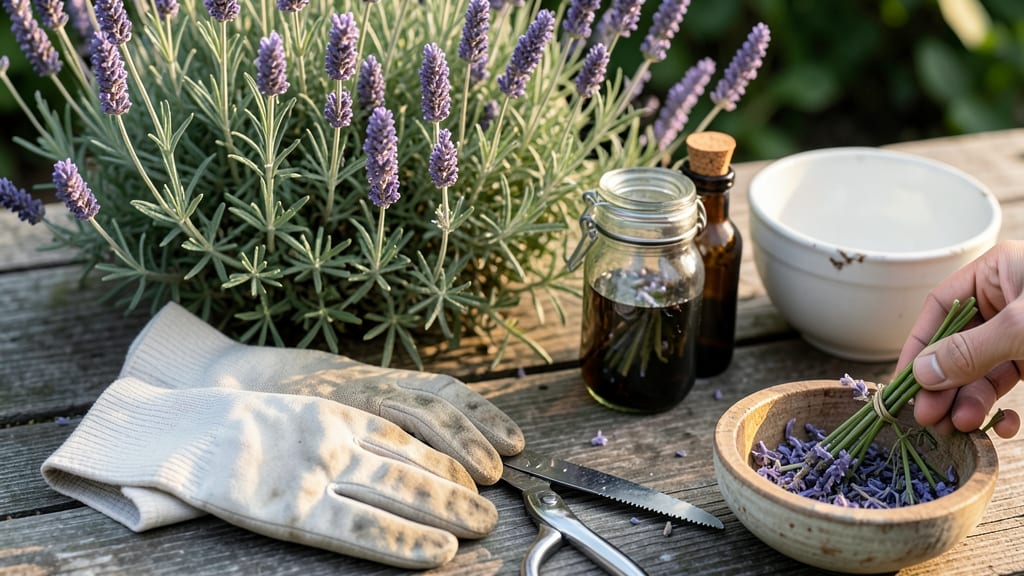
Harvesting lavender for oil at the wrong time means weak scent and low yield. 🌿 The secret lies in timing—peak bloom when flowers are fully open but before they shed petals, usually mid-morning on a dry, sunny day.
I learned the hard way that waiting too long ruins the oil potential, but harvesting at the right moment transforms your garden into a fragrant goldmine.
You'll need sharp pruners, breathable twine, and a well-ventilated drying space. Bundle stems 8-12 inches long, leaving room for airflow, and hang upside down in a dark, dry spot for 2-3 weeks.
The drying process preserves the essential oils that give lavender its signature aroma—rush it, and you lose potency.
When properly dried, the buds should crumble easily between your fingers. Store the dried lavender in airtight containers away from light to maintain its oil content for up to a year. The reward? A rich, floral scent that makes homemade lavender oil worth every minute of effort.
This method works for both small batches and larger harvests, though commercial quantities require more drying racks. The key is consistency—same timing, same drying conditions—every season. Your first harvest might feel like guesswork, but soon you'll know exactly when to snip for maximum oil potential.
📚 In This Guide
- What you need
- Instructions
- Tips and common mistakes
- Wrapping up and next steps
What you need
- ● Fresh lavender flowers: 1-2 lbs (0.5-1 kg) of Lavandula angustifolia (English lavender) or Lavandula x intermedia (Grosso lavender). Ensure they’re in full bloom but not yet dried on the plant.
- ● Sharp pruning shears or scissors: Clean, sterilized tools to avoid damaging the plant or introducing pests.
- ● Large breathable bags or paper sacks: 2-3 medium-sized (10-15 gallon capacity) to hold freshly cut lavender.
- ● String or twine: 10-20 feet (3-6 meters) of natural, untreated twine (e.g., hemp or cotton) for bundling.
- ● Drying rack or mesh screen: A sturdy, elevated surface (e.g., a wooden frame, wire rack, or even a clean porch) to allow airflow.
- ○ Thermometer (optional but helpful): A small digital thermometer to monitor drying temperatures (ideal range: 70-85°F / 21-29°C).
- ● Gloves: Lightweight gardening gloves to protect your hands from prickly stems.
- ● Spray bottle with water: To lightly mist lavender bundles during drying if humidity is very low.
- ● Food dehydrator or oven: For accelerated drying (set to 95°F / 35°C or lower).
- ● Essential oil extraction kit: If you’re planning to distill the oil immediately (e.g., a small-scale steam distiller or solar still).
- ● Labeling tags: To mark bundles with harvest dates for tracking.
Step-by-Step instructions for harvesting lavender for oil
Here's the foolproof method I use to harvest lavender at its peak—when the oil content is highest and the scent most potent.
🌿 Step 1: Time Your Harvest for Maximum Oil Content
Harvest lavender in the early morning after the dew has dried but before the sun gets too strong—typically between 8:00 and 10:00 AM. This is when the essential oils are at their highest concentration. Avoid harvesting after rain, as moisture dilutes the oil content and makes drying more difficult.
Look for buds that are just starting to open—about halfway bloomed. Fully open flowers contain less oil, and unopened buds haven't developed their full aromatic potential. Cut stems about 6-8 inches long, leaving at least 2-3 inches of growth on the plant to encourage regrowth.
✂️ Step 2: Harvest and Bundle for Even Drying
Use clean, sharp pruning shears to make clean cuts just above a leaf node. Bundle the stems into groups of 5-7 stems each and secure them with a rubber band or twine. This keeps the stems upright and allows air to circulate evenly around the flowers and buds.
Here's the thing—lavender dries best when the bundles hang upside down. Find a dry, well-ventilated spot with indirect sunlight, like a garage, shed, or even your kitchen ceiling. Avoid direct sunlight, which can cause the oils to degrade and turn the lavender brown.
🌱 Step 3: Dry the Lavender Properly for Optimal Oil Retention
Allow the bundles to dry for 2-3 weeks until the stems snap easily when bent. You'll know it's fully dried when the buds crumble slightly between your fingers. If the lavender feels brittle but still slightly green, it needs more time. If it's completely brown and dusty, it's over-dried and the oils have degraded.
Once dry, gently remove the flowers from the stems and store them in an airtight container away from light. The dried lavender will retain its oil potency for up to 1 year if stored properly. If you're planning to extract the oil yourself, use the dried buds within 6 months for the best results.
☀️ Step 4: Extract the Oil (Optional)
For oil extraction, you'll need a carrier oil like olive or jojoba oil. Fill a clean glass jar with dried lavender buds, leaving about 1 inch of space at the top. Pour enough carrier oil to completely cover the buds, then seal the jar tightly. Place the jar in a sunny window for 4-6 weeks, shaking it gently every few days to release more oils.
After 6 weeks, strain the oil through a fine mesh sieve or cheesecloth into a clean bottle. Store the lavender oil in a cool, dark place. This homemade oil will be less concentrated than commercial versions but still potent enough for small-scale uses like perfumes, lotions, or aromatherapy.
Tips & tricks for perfect lavender oil extraction
These little details make all the difference between good lavender oil and something truly exceptional.
Timing is Everything: The 20-30% bloom rule in Step 1 is non-negotiable for maximum oil yield. I've found that harvesting just after sunrise gives you the freshest buds with the highest oil concentration—dew actually helps preserve that aromatic magic. If you're harvesting later in the day, work quickly to prevent the buds from opening fully and losing their precious oils.
Bundle Uniformity: When creating your 4-6 stem bundles in Step 2, make sure they're uniform in size. I like to trim all stems to the same length before tying—this ensures even drying time across all buds. If you notice some bundles drying faster than others, it's usually because they're smaller or have less foliage. Also, don't over-tighten the twine—you want good airflow but not so loose that buds scatter.
Storage Wisdom: The 6-month shelf life mentioned in Step 3 is only if stored properly. I've learned the hard way that even a small amount of light can degrade the essential oils. Use opaque glass jars or wrap your jars in aluminum foil if you don't have dark containers. Another pro tip: add a silica gel packet to your storage jars to absorb any residual moisture that could cause mold.
Extraction Efficiency: For the 4-6 week infusion in Step 3, I've found that using a carrier oil with a higher smoke point like grapeseed oil (instead of just olive) gives you better results. The oil should completely cover the buds—if you're using a wide-mouth jar, you might need to press down gently with a clean spoon to ensure full submersion. Shake the jar every other day for the first week, then every few days after that to keep the oils circulating.
Pro Tips for Harvest Lavender For Oil
- These little details make all the difference between good lavender oil and something truly exceptional.
- Timing is Everything: The 20-30% bloom rule in Step 1 is non-negotiable for maximum oil yield.
- Bundle Uniformity: When creating your 4-6 stem bundles in Step 2, make sure they're uniform in size.
Frequently asked questions
Got questions about harvesting lavender for essential oil? You’re not alone! Here are some of the most common queries—plus clear, no-fluff answers to help you crush your harvest.
What’s the best time of year to harvest lavender for oil?
The peak time is late summer (July–August), when buds are just starting to open but haven’t bloomed fully. This ensures the highest concentration of essential oils. Avoid harvesting after frost or when flowers are fully open—the oil potency drops!
Do I need to cut the stems or just the flowers?
For optimal oil extraction, harvest the entire flowering stems (about 6–12 inches long). The leaves and lower stems contribute to the oil yield. Snip just above a leaf node to encourage bushier growth next season.
How do I know if my lavender is ready for oil extraction?
Look for three key signs:
- Bud stage: Flowers should be tight buds (not open).
- Color: Buds are deep purple/blue (not fading or brown).
- Weather: Harvest on a dry, sunny morning after dew has evaporated.
Can I use dried lavender from the grocery store for oil?
Nope! Store-bought lavender is often treated with preservatives or stripped of oils during processing. For essential oil, use freshly harvested, organic lavender from your garden or a trusted local supplier. Pro tip: Label your bundles with harvest dates!
What if my lavender smells weak after drying?
Weak scent usually means one of three issues:
- Improper drying: Bundles need 2–3 weeks in a dark, well-ventilated spot (not a closet!).
- Moisture: Check for dampness—mold kills oils. Use a fan if humidity is high.
- Old plants: Over-mature lavender (3+ years) has lower oil content. Revitalize with pruning!
How much lavender do I need for a small batch of oil?
For a 1-ounce bottle of lavender oil, you’ll need roughly 2–3 pounds of dried lavender buds (or 4–6 pounds of fresh stems). Use a 1:5 ratio (1 part lavender to 5 parts carrier oil, like jojoba or sweet almond). Scale up/down as needed!
Wrapping up and next steps
Harvesting lavender at its peak—just before full bloom—and drying it properly in bundles ensures the highest-quality oil with that signature soothing aroma. With the right tools, timing, and a little patience, you’re well on your way to crafting your own luxurious lavender oil at home. 🌿✨
Ready to take the next step? Experiment with small batches to perfect your technique, then scale up for bigger harvests. Share your creations—whether it’s homemade soaps, sachets, or spa blends—with fellow lavender lovers! 💛