
Blooming
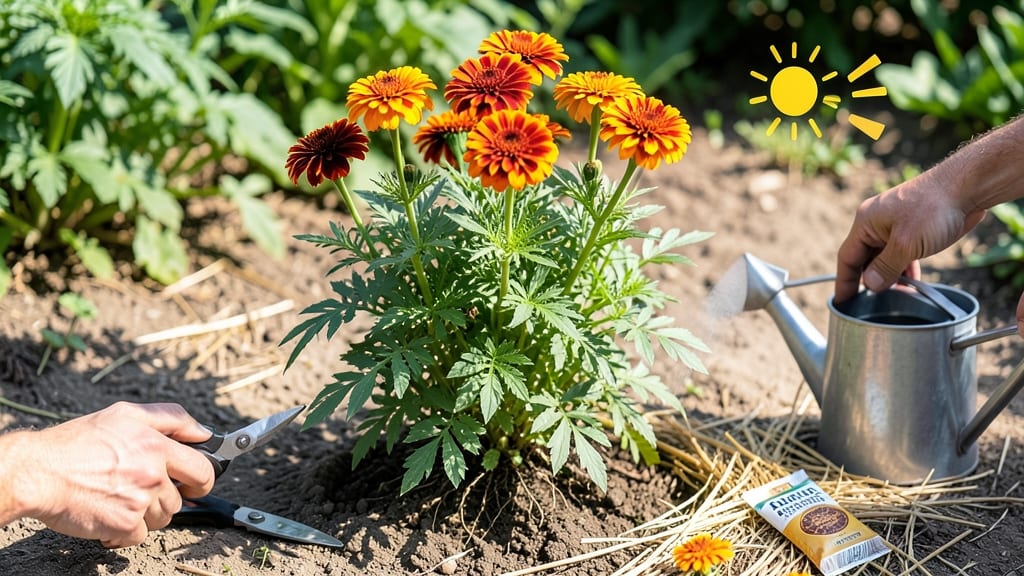
How to keep marigolds blooming is all about two simple secrets: deadheading and feeding. ✨ The trick lies in removing spent flowers and feeding them consistently—my orange French marigolds have been flowering nonstop since May because of these two simple habits. Start by snipping off the faded blooms just above a set of leaves, which encourages new buds to form. Add a balanced fertilizer every 3-4 weeks during the growing season, and you'll see a surge of fresh flowers within weeks. The key is consistency—don't skip either step, or you'll end up with leggy plants full of leaves but few blooms. You'll end up with marigolds that look like they're on a perpetual parade of color, attracting pollinators and keeping your garden vibrant. The plants stay compact, healthy, and productive all season long, far outlasting their store-bought counterparts. Works for both annual and perennial varieties, and even thrives in containers. Here's how to make it happen without the guesswork!
📚 In This Guide
- What you need
- Instructions
- Tips and common mistakes
- Wrapping up and next steps
What you need
- ● Marigold plants – Healthy, established plants (French, African, or signet varieties work best).
- ● Pruning shears or sharp scissors – Clean, sterilized tools to avoid disease (1 pair).
- ○ Garden gloves – A pair to protect your hands from thorns (optional but recommended).
- ● Balanced, water-soluble fertilizer – Look for a 10-10-10 or 20-20-20 NPK ratio (1 lb or enough for 2-3 applications).
- ● Watering can or hose with a gentle nozzle – For post-fertilizer hydration.
- ○ Compost or organic mulch – Optional but highly recommended to retain moisture (2-3 inches, spread evenly).
- ● Slow-release granular fertilizer – Mix into soil at planting for steady nutrients (e.g., Osmocote or Miracle-Gro Shake 'n Feed).
- ● Epsom salt – 1 tablespoon per gallon of water for magnesium boosts (especially for yellowing leaves).
- ● Copper fungicide – Preemptive measure against powdery mildew (spray if humidity is high).
- ● Plant markers or labels – To track fertilizer schedules if you’re multitasking with other flowers!
- ● Sunlight – 6+ hours of full sun daily (marigolds thrive in warmth!).
- ● Well-draining soil – Amend clay soil with compost or sand if needed.
- ● Consistent moisture – Water at the base (avoid wetting leaves to prevent mildew).
- ● Patience & timing – Deadhead every 2-3 days during peak bloom (spring/summer).
Step-by-Step instructions for keeping marigolds blooming
Here's how I keep my marigolds flowering all season—no fancy tools, just consistent care.
🌿 Step 1: Deadhead Regularly for Continuous Blooms
As soon as a bloom fades and turns brown, pinch it off with your fingers or clean pruners. This prevents the plant from wasting energy on seed production and redirects it to new buds. I check my plants every 2-3 days in peak bloom season—you'll see fresh buds forming within a week of consistent deadheading.
Use sharp pruners to cut just above the next set of leaves or the first healthy leaf below the bloom. Avoid tearing stems, which can invite disease. If you're growing French marigolds, be extra gentle—they have delicate stems. The key is to remove the entire spent flower head, not just the petals.
💧 Step 2: Water Deeply at the Base
Marigolds need 1-1½ inches of water weekly, but they hate wet foliage. Water at the soil base in the morning so leaves dry completely by evening. I use a watering wand to direct the stream exactly where the stem meets the soil—this prevents fungal issues that can stop blooming.
Check soil moisture by sticking your finger 1 inch deep. If it feels dry, water again. Overwatering causes yellow leaves and weak stems, while underwatering leads to small, sparse blooms. Mulch with 1-2 inches of organic mulch around the base to retain moisture and keep roots cool.
✂️ Step 3: Prune for Bushier Growth
When plants get leggy, cut back the longest stems by one-third to encourage branching. I do this in early summer when plants are about 6-8 inches tall. Use clean pruners and make cuts at a 45-degree angle just above a leaf node to promote new growth.
This pruning shock sounds scary, but it works—within 2-3 weeks, you'll see bushier plants with more blooms. Avoid cutting into woody stems, which won't regrow. For dwarf varieties, just pinch off the tips of the main stems to encourage side shoots instead of full pruning.
☀️ Step 4: Feed Monthly for Strong Blooms
Start with a balanced 10-10-10 fertilizer when flowers first appear, then switch to a low-nitrogen, high-phosphorus (5-10-10) formula every 4-6 weeks to boost blooming. I mix fertilizer into the soil at the base, then water deeply to distribute it evenly.
Too much nitrogen makes plants grow leaves instead of flowers, so I avoid high-nitrogen feeds. Organic options like compost tea or fish emulsion work well too. Always follow package rates—over-fertilizing burns roots and stops blooming entirely.
🌱 Step 5: Watch for Pests and Disease
Remove any yellowing or spotted leaves immediately—they signal powdery mildew or aphids. I spray plants with neem oil weekly as a preventative, especially in humid weather. For aphids, I blast them off with water from a hose nozzle set to a strong stream.
Marigolds are naturally pest-resistant, but stressed plants attract problems. Keep the area around plants clear of weeds and debris, which harbor pests. If you see whiteflies, cover plants with fine netting for a few days to smother them.
Tips & tricks for keeping marigolds blooming all season
These little tricks will turn your marigolds into nonstop bloomers with minimal effort.
Timing is Everything: The 2-3 day deadheading schedule in Step 1 might seem frequent, but it's what keeps those buds coming. I set a phone reminder every Monday and Thursday during peak season—it takes just 5 minutes to check all my plants. The key is consistency; if you miss a day, you'll see buds drop off instead of opening. For French marigolds, I do this even more often—every other day—because their stems are so delicate they can't handle the extra weight of fading blooms.
Watering Wisdom: That 1-1½ inches of water weekly in Step 2 is a perfect balance, but timing matters just as much as quantity. I water right after sunrise so the foliage has all day to dry out. If your mornings are cloudy or rainy, move your watering to early afternoon instead. And here's what nobody tells you—if you're using a sprinkler system, marigolds hate getting water on their leaves. A simple soaker hose at the base does wonders for preventing those yellow leaves from overwatering.
Pruning Pro Tip: When you're cutting back those leggy stems in Step 3, save the clippings! Dry them out and crush them into a powder for a natural pest repellent. I keep a jar by my garden gate and add fresh clippings weekly. The strong scent deters aphids and other pests naturally. And for those woody stems you're told to avoid cutting, I've found you can actually make a clean cut through them if you sterilize your pruners with rubbing alcohol first—just don't expect new growth from that section.
Fertilizer Finesse: That switch from 10-10-10 to 5-10-10 in Step 4 is crucial for continuous blooming. I make my own "bloom booster" by mixing equal parts compost and a low-nitrogen fertilizer like bone meal. This gives you that phosphorus boost without risking nitrogen overload. And here's my secret: I always fertilize after watering, not before. This prevents fertilizer burn and lets the nutrients soak into the soil where the roots can access them properly.
Pro Tips for Keep Marigolds Blooming
- These little tricks will turn your marigolds into nonstop bloomers with minimal effort.
- Timing is Everything: The 2-3 day deadheading schedule in Step 1 might seem frequent, but it's what keeps those buds coming.
- Watering Wisdom: That 1-1½ inches of water weekly in Step 2 is a perfect balance, but timing matters just as much as quantity.
Frequently asked questions
Got questions about keeping your marigolds in full, vibrant bloom? You’re not alone! Here are answers to the most common queries—so you can enjoy those cheerful flowers all season long.
How often should I deadhead marigolds to keep them blooming?
Deadhead marigolds every 2–3 days during peak bloom (spring/summer) to encourage nonstop flowers. For French marigolds, trim spent blooms at the first flower head; for African marigolds, cut back to the next set of leaves. Pro tip: Morning deadheading prevents pests from hiding in spent blooms!
Why are my marigolds blooming but not producing new buds?
Lack of blooms often signals nutrient imbalance or overcrowding. Feed with a balanced bloom booster (10-10-10) every 3–4 weeks and prune leggy stems to redirect energy. Bonus: Too much nitrogen = leafy growth, not flowers!
When is the best time of day to deadhead marigolds?
Deadhead in the early morning (before 9 AM) when blooms are dry but dew has evaporated. This minimizes stress on plants and gives them the whole day to recover. Avoid evening deadheading—wet stems can invite fungal issues.
What should I do if my marigolds stop blooming and just grow leaves?
Leafy marigolds usually need less water and more phosphorus. Reduce irrigation slightly and switch to a phosphorus-rich fertilizer (5-10-5) to boost flowering. Also, check for overcrowding—thin plants to 12–18" apart for better airflow.
Can I use coffee grounds or eggshells to keep marigolds blooming?
Yes! Coffee grounds (used sparingly) add nitrogen for foliage, while crushed eggshells provide calcium to prevent blossom-end rot. For blooms, focus on phosphorus-rich compost or a fish emulsion instead.
Will marigolds bloom again after a hard frost?
Most marigolds are annuals and won’t recover after frost. However, French marigolds (hardier varieties) might regrow from the base if roots survive. For next year, plant in late spring after frost risk passes.
Wrapping up and next steps
Keeping your marigolds in full, vibrant bloom is all about consistent care—deadheading spent blooms, feeding them regularly, and giving them the right conditions to thrive. With a little attention to water, sunlight, and soil health, you’ll enjoy those cheerful Tagetes flowers all season long! 🌼
Now that you’re armed with the know-how, grab your pruners and get growing—your garden (and pollinators!) will thank you. Ready to try it out? Start your marigold care routine today and watch your garden glow!