
How To
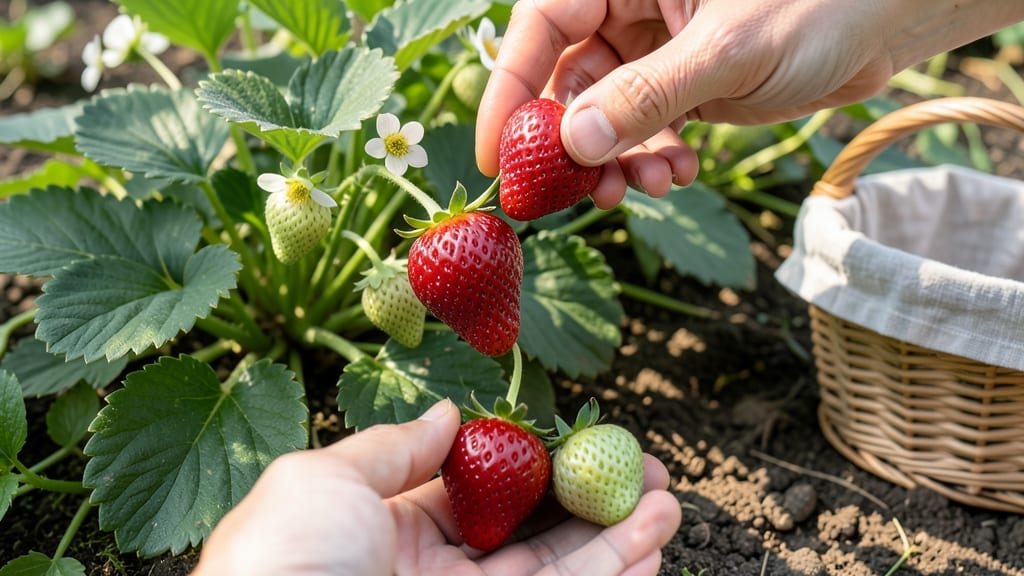
How to know when strawberries are ready to pick can turn a mediocre harvest into a sweet, juicy feast—or leave you with bland, underripe fruit. The difference often comes down to three simple checks most gardeners miss.
Picture this: you’re reaching for what looks like a perfect strawberry, only to find it’s still hard or mealy inside. That’s a common mistake, and I’ll show you exactly how to avoid it.
Whether you’re a first-time planter or a seasoned gardener, these 3 foolproof signs will help you pick at peak flavor every time.
From the color shift that signals ripeness to the subtle texture change that means "don’t wait another day," we’ll break it down. Plus, I’ll share the best times of day to harvest for maximum sweetness—because even the sun plays a role in when your strawberries are truly ready.
Ready to go from guessing to knowing? Let’s dive into the easiest way to tell when your strawberries are begging to be picked—before they spoil on the vine.
The 3 key signs strawberries are perfectly ripe for picking
Strawberries ripen quickly, so knowing the exact moment to pick ensures maximum sweetness and flavor. The three key indicators—color, smell, and texture—work together to confirm ripeness. Ignoring even one can lead to underripe or overripe fruit that lacks the perfect balance of sugar and acidity.
First, focus on the color of the berry. Most strawberries, like Jewel or Chandler varieties, turn a deep, uniform red when ripe. For white or yellow varieties (like White Soul or Golden Queen), look for a pale, even hue.
Uneven coloring or green patches mean the fruit needs more time on the vine.
Next, give the berry a gentle sniff. Ripe strawberries release a sweet, fragrant aroma that’s hard to miss. If it smells sour or fermented, it’s overripe. A lack of scent? It’s not ready yet. This olfactory cue is especially useful for hidden berries tucked under leaves.
Finally, test the texture with a light squeeze. A ripe strawberry should yield slightly to pressure but still feel firm—like a soft tennis ball. If it’s rock-hard, it’s unripe; if it’s mushy or leaking juice, it’s past its prime.
This tactile check is your best defense against underripe or overripe fruit.
🌱 Strawberry Ripeness Summary
| Sign | Ready Strawberry | Not Ready |
|---|---|---|
| 🎨 Color | Uniform deep red/yellow/white | Green or patchy |
| 👃 Smell | Sweet, fragrant | No scent or sour |
| 🤲 Texture | Slightly yielding but firm | Hard or mushy |
| 🍓 Size | 1-2 inches in diameter | Smaller than 1 inch |
The cap (green top) also holds clues. A ripe strawberry’s cap should easily detach from the fruit when pulled gently. If it resists, the berry isn’t ready. This trick works best for June-bearing varieties, which ripen all at once, unlike everbearing or day-neutral types that produce fruit in waves.
Regional differences matter too. In cooler climates (like USDA Zone 5), strawberries may ripen slower, so wait for full color even if the season feels late. In hotter zones (like Zone 8+), berries can overripe faster—check them every 2-3 days once they start coloring up.
Avoid the common mistake of picking strawberries based on size alone. A large but green berry won’t taste sweet, while a small but fully red one might be the juiciest of the bunch. Always combine color, smell, and texture for the best results.
Pro tip: Harvest in the morning when temperatures are cooler. This preserves flavor and firmness, especially if you’re storing them for later. Skip picking after rain—wet berries bruise easily and can develop gray mold.
🌱
The 3 key signs strawberries are perfectly ripe for picking
Strawberries ripen quickly, so timing your harvest is everything. The three key signs of ripeness—color, texture, and aroma—will help you avoid picking fruit too early or too late.
For example, June-bearing varieties like 'Chandler' turn deep red, while everbearing types like 'Seascape' may stay lighter. Always check these cues together for accuracy.
First, examine the color. Fully ripe strawberries should be uniformly colored—no green patches. Red varieties like 'Honeoye' turn bright red, while yellow or white varieties like 'Albion' or 'Pineberry' develop their signature hues.
If the berry still has green tips or streaks, it needs more time on the vine. Cap color also matters: a ripe strawberry’s cap (the leafy top) will turn greenish-yellow.