
How To
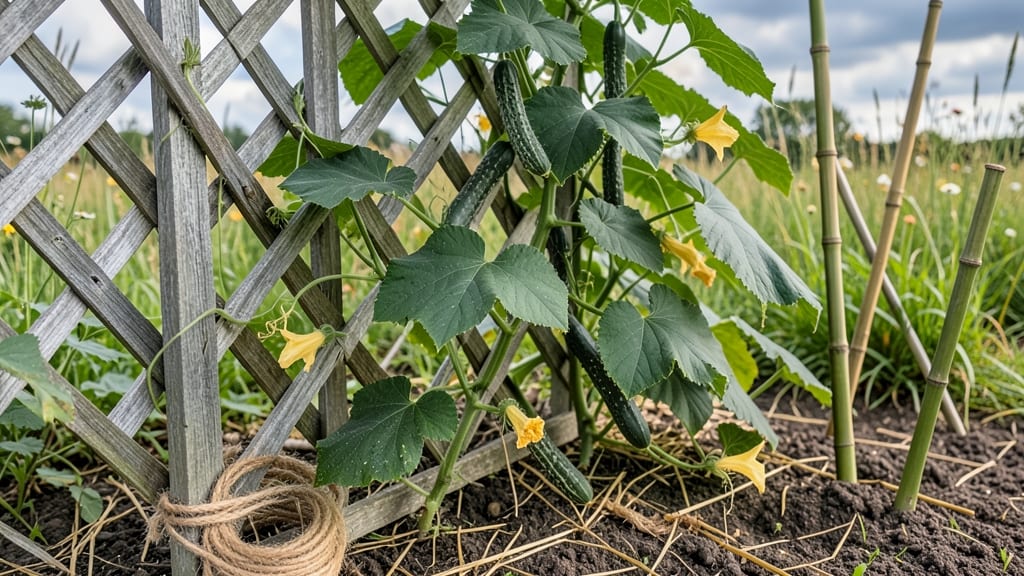
Cucumbers refuse to climb? That’s about to change. 🌱 The right trellis turns sprawling vines into vertical powerhouses—bigger harvests, cleaner fruit, and zero garden bed takeover. I’ve tested everything from simple stakes to elaborate cages, and these tricks work even for beginners.
Start with the right variety—bushy, climbing types like 'Straight Eight' or 'Marketmore' handle trellises best. Set up supports before planting: 4- to 6-foot tall stakes or a sturdy wire trellis works.
The key is early training—when vines hit 6 inches, gently weave them through the trellis or tie them with soft twine.
Pruning isn’t optional—pinch off side shoots to encourage upward growth, and remove yellow leaves to keep air flowing. With proper support, you’ll harvest 20-30% more cucumbers, all cleaner and less prone to rot. The vines stay neater, healthier, and easier to manage—no more digging through tangled messes.
Works for containers, small spaces, or large gardens. Even my black-thumb neighbor nailed this last summer. Ready to transform those rambling vines into a vertical feast? Let’s get climbing!
📚 In This Guide
- What you need
- Instructions
- Tips and common mistakes
- Wrapping up and next steps
What you need
- ● Cucumber plants: 2–4 healthy seedlings or seeds (choose climbing varieties like ‘Straight Eight,’ ‘Marketmore,’ or ‘Armenian’ for best results).
- ● Trellis or support structure: 1–2 wooden, metal, or PVC trellises (6–8 ft tall, spaced 3–4 ft apart).
- ● OR a sturdy cattle panel, fence, or A-frame trellis (minimum 5 ft wide).
- ● OR a DIY trellis made from bamboo stakes + twine or chicken wire.
- ● Garden twine or soft plant ties: 1–2 rolls (3–4 mm width, biodegradable preferred).
- ● Pruning shears: 1 pair (for trimming vines and removing suckers).
- ● Gloves: 1 pair (to protect hands while handling plants).
- ● Well-draining potting mix or garden soil: 1–2 bags (enriched with compost for nutrients).
- ● Watering can or hose with a gentle spray nozzle: 1 (cucumbers need consistent moisture!).
- ● Mulch: Straw or shredded leaves (to retain soil moisture and suppress weeds).
- ● Fertilizer: Balanced organic fertilizer (e.g., 10-10-10) or compost tea (apply every 2–3 weeks).
- ● Shade cloth: Lightweight (30–50% coverage) for hot climates (prevents sunscald on vines).
- ● Drip irrigation system: For automated watering (saves time and ensures steady growth).
- ● Cucumber cages (small): 1–2 (as temporary support for early growth before trellising).
Step-by-Step instructions for training cucumbers to climb
Here's the method I rely on to transform sprawling vines into productive vertical gardens.
🪴 Step 1: Select and Install the Right Trellis Structure
Choose a sturdy trellis that's at least 5-6 feet tall—cucumbers need vertical space to develop properly. I prefer A-frame or pyramid designs because they distribute weight evenly and prevent vines from bending under fruit load. Install it in full sun where the soil drains well, and anchor it securely so it won't topple when vines get heavy.
Position the trellis within 12 inches of the planting site—this prevents vines from stretching too far to reach support. If using a wire trellis, space horizontal wires 12-18 inches apart so vines can weave between them naturally. For wooden lattice, leave 6-inch gaps between slats to allow easy vine attachment.
🌱 Step 2: Plant Cucumbers Near the Trellis for Immediate Support
Sow seeds or transplant cucumbers 2-3 feet from the trellis base, close enough that young vines can reach upward without excessive stretching. Plant 4-5 seeds per hill (or 1-2 plants per hill for transplants) and thin to 2-3 strongest vines once they're 4-6 inches tall. This ensures you have multiple stems to train upward.
I always add a handful of compost to the planting hole—cucumbers are heavy feeders, and vertical growth demands extra nutrients. Water deeply after planting to settle the soil and encourage root establishment. The goal is to have vines touching the trellis within 7-10 days so they can start climbing naturally.
✂️ Step 3: Train Vines Upward Using Gentle Techniques
When vines reach 12-18 inches tall, guide the main stem upward along the trellis using soft plant ties or twine. Avoid metal staples—they can damage tender vines. Wrap the tie loosely around the vine and trellis, then secure it with a figure-eight knot that allows the vine to thicken over time. Check ties weekly and loosen them as the vine grows.
Here's the thing—don't force vines upward. If a vine resists, let it grow naturally until it finds purchase. You'll see side shoots forming at leaf junctions—these are your secondary vines. Train one strong side shoot per node to continue upward, pruning the rest to focus energy on vertical growth. This creates a bushier structure that supports more fruit.
☀️ Step 4: Maintain Growth with Pruning and Support
Prune excessive side shoots that grow horizontally or downward—they drain energy from fruit production. Leave only 2-3 strong lateral branches per main vine, cutting others back to 1-2 inches from the main stem. This redirection encourages more upward growth and larger cucumbers. I do this every 2-3 weeks during peak growing season.
As fruit develops, tie heavy cucumbers to the trellis using soft fabric strips to prevent breakage. You'll know it's time when cucumbers reach 6-8 inches long—they're too heavy to stay suspended in midair. Water at the base 1-2 inches deep every 2-3 days to prevent vines from becoming stressed and dropping fruit.
🌿 Step 5: Harvest and Encourage Continued Climbing
Harvest cucumbers when they're firm and fully colored—this prevents the vine from diverting energy to overripe fruit. I pick every 2-3 days during peak production to keep vines climbing. After harvesting, gently guide the vine upward again if it's sagging. The key is consistent training—vines that stop climbing often produce smaller yields.
If you notice yellowing leaves on lower stems, it's normal—this is the plant's way of redirecting nutrients upward. Just remove only the most affected leaves to maintain airflow. With proper training, a single cucumber vine can produce 2-3 times more fruit than one left to sprawl, and the cucumbers themselves will be straighter, cleaner, and less prone to rot.
Tips & tricks for perfect vertical cucumber growth
Here's what I've learned after years of experimenting with cucumber trellising—these tricks make all the difference between sprawling vines and productive vertical gardens.
Trellis Selection Matters: For best results, choose a trellis with 12-18 inch wire spacing (as mentioned in Step 1) that's at least 5-6 feet tall. I've found that pyramid designs work better than simple vertical poles because they distribute weight more evenly when vines get heavy with fruit. Look for materials like galvanized metal or sturdy PVC—they won't rust or warp under summer sun exposure like some plastic options. The key is creating a structure that won't topple when your cucumbers reach their peak production.
Planting Position is Critical: The 2-3 feet distance from trellis to planting site (Step 2) is ideal because it gives vines enough room to establish roots while still allowing them to reach upward quickly. I've noticed that planting too close can cause vines to grow toward the trellis too aggressively, creating weak stems that struggle to support fruit later. For maximum upward momentum, plant your cucumbers on the north side of the trellis if you're in the northern hemisphere—this gives them a natural shadow to grow toward, encouraging vertical growth from day one.
Pruning Strategy for Maximum Yield: When you're pruning those excessive side shoots every 2-3 weeks (Step 4), focus on leaving only the strongest lateral branches that grow at a 45-degree angle upward. I've found that these branches produce the largest cucumbers because they're positioned to receive maximum sunlight. The 1-2 inch pruning rule is perfect—it prevents bleeding sap while still allowing new growth. One trick I use is to prune in the early morning when the plant is still hydrated, which helps it recover faster.
Harvesting Technique to Keep Vines Climbing: The every 2-3 days harvesting schedule (Step 5) is non-negotiable for vertical growth. I've seen vines completely stop climbing when cucumbers are left on the vine too long—they become a weight that drags the plant downward. When harvesting, always leave one small cucumber on each vine to encourage continued flowering. Another pro move: after harvesting, gently twist the vine upward again if it's sagging—this reinforces the climbing habit and keeps the plant focused on vertical growth rather than trying to support heavy fruit.
Pro Tips for Make Cucumbers Climb
- Here's what I've learned after years of experimenting with cucumber trellising—these tricks make all the difference between sprawling vines and productive vertical gardens.
- Trellis Selection Matters: For best results, choose a trellis with 12-18 inch wire spacing (as mentioned in Step 1) that's at least 5-6 feet tall.
- Planting Position is Critical: The 2-3 feet distance from trellis to planting site (Step 2) is ideal because it gives vines enough room to establish roots while still allowing them to reach upward quickly.
Frequently asked questions
Got questions about growing cucumbers vertically? You’re not alone! Here are some of the most common queries—and their straightforward answers—to help you master the climbing cucumber game.
How soon after planting should I set up a trellis?
Set up your trellis as soon as seedlings have 2-3 true leaves (about 1-2 weeks after transplanting). This gives vines a sturdy structure to latch onto early, preventing sprawl and encouraging upward growth. If you wait too long, cucumbers may already be sprawling, making retraining harder.
Can I use any trellis, or do cucumbers need something special?
Cucumbers thrive on strong, breathable supports like A-frame trellises, netting, or sturdy wire cages. Avoid flimsy materials—they’ll sag under heavy vines or fruit. For bushier growth, opt for open-weave netting (3"–4" squares) to let vines twine naturally.
How long does it take for cucumbers to start climbing?
With proper training, cucumbers begin climbing within 3–5 days of touching the trellis. Use soft ties or twine to gently guide vines upward at first. Once established, they’ll climb 6–12 inches per day! Patience pays off—consistent support leads to longer vines and more fruit.
Will trellising reduce my cucumber yield?
Not at all! In fact, trellised cucumbers often produce 20–30% more fruit by improving airflow (reducing disease) and directing energy upward. Just ensure your trellis is tall enough (5–7 feet) to support heavy vines. Prune suckers (side shoots) to focus energy on main stems and fruit.
What if my cucumbers won’t climb—what’s going wrong?
Check these fixes:
- Weak support: Upgrade to a sturdier trellis or add cross-bracing.
- Overcrowding: Thin plants to 12–24" apart for better airflow.
- Lack of training: Gently tie vines to the trellis every few days.
- Pests/disease: Inspect for aphids or powdery mildew—treat promptly.
Wrapping up and next steps
Growing cucumbers vertically isn’t just a space-saving hack—it’s a game-changer for healthier, more productive vines and juicier harvests! 🌱 With the right trellis, support, and a little patience, you’ll transform your garden into a thriving vertical oasis.
Whether you’re a beginner or a seasoned gardener, these tricks will help you master the climb and enjoy bigger, cleaner cucumbers all season long.
Ready to take the next step? Try experimenting with different trellis styles or share your progress with fellow gardeners—your success might inspire someone else to grow upward too! 🌟