
Pests
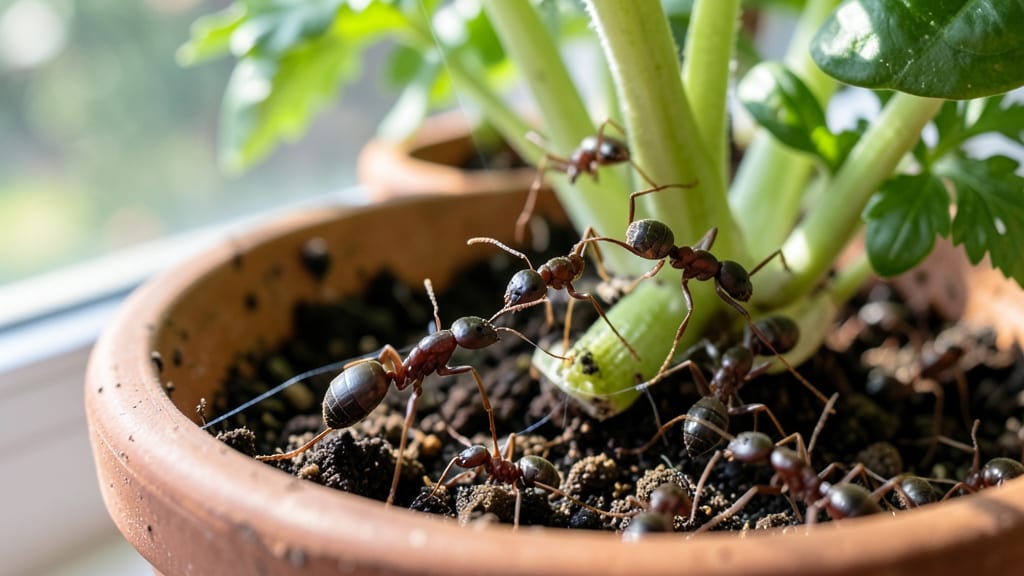
How to get rid of ants in my plant pots—they’re not just a nuisance, they’re stealing nutrients and creating chaos in your containers. 🐜 I’ve battled these tiny invaders in my own pots, and the solution isn’t complicated: a simple, natural barrier that stops them in their tracks before they even start. The root cause? Ants love sweet soil from decaying plant matter or overwatered pots. They’re not just pests—they’re scouts for bigger problems like aphids. My go-to fix uses common household items, no chemicals, and works in 10 minutes with zero mess. The best part? It keeps ants out for weeks without harming your plants. You’ll create a dry, granular shield around pot edges that ants can’t cross—no repellents, no traps, just physics. By the end, your pots stay ant-free while your plants thrive, and you’ll finally sleep through summer nights without hearing tiny footsteps in the soil. This method works for all pot sizes, from tiny succulent containers to large raised beds. Let’s reclaim your garden—one ant-free pot at a time.
Root Causes Of Ant Infestations
Ants don’t just wander into your plant pots by accident—they’re following a trail of clues left by nature (and sometimes, your gardening habits). Understanding why they show up in the first place is the key to stopping them for good.
Let’s break down the science behind their behavior and how your setup might be inviting them over.
Ants are drawn to plant pots like bees to honey—because, well, your plants are producing honey. 🍯 Not the edible kind, but nectar, sap, and honeydew, a sticky sugar-rich secretion left by aphids, mealybugs, and other plant-sucking pests.
Here’s how it works: - Aphids and scale insects feed on plant sap, excreting honeydew as waste. - Ants love honeydew—it’s their fast food—and they’ll farm these pests like tiny, six-legged farmers. - Once they find a food source, they leave pheromone trails to recruit thousands more workers.
Actionable insight: If your pots have sticky residue or tiny white bugs (like aphids), ants will keep returning. 🚨 Break the cycle by treating pests first—neem oil or insecticidal soap can disrupt this food chain.
Ants need water, food, and a safe nesting spot—and potted plants provide all three.
Here’s why your setup is a five-star ant hotel: - Overwatering creates damp soil, which ants adore for hydration and nesting. - Organic potting mix (especially peat or coconut coir) gives them easy access to tunnels and food particles. - Cracks in pots or saucers offer entry points, while mulch or bark chips on top mimic their natural forest floor.
Science deep dive: Ants prefer moisture gradients—they’ll follow the dampest path from the soil surface to underground nests. If your pots stay soggy, they’ll treat them like a buffet with a built-in bed.
You might not realize it, but crumbs, spilled drinks, or even pet food near your pots can trigger an ant invasion.
Here’s the chain reaction: - Protein-rich scraps (like meat or dairy) attract sugar-ant hybrids, which split tasks—some steal food, others tend to pests. - Starches and sugars (coffee grounds, fruit peels, or even fertilizer granules) act like ant superglue, making them linger. - Open compost bins nearby release CO₂ and organic scents that ants detect from yards away.
Pro tip: 🕵️ Ants scout in straight lines—if you see one, there are hundreds more on the way. Clean up spills immediately and store food in sealed containers.
Not all plants are equal when it comes to ant magnetism.
Some species naturally produce scents or sugars that attract them: - Citrus, roses, and hibiscus have sweet nectar or fragrant oils that lure ants. - Succulents and cacti might seem safe, but their root exudates (chemicals released by roots) can still draw foraging workers. - Fungal connections: Some ants (like Lasius species) farm fungi in their nests—if your soil has fungal spores, they’ll see your pots as prime real estate.
Quick fix: 🌿 Rotate ant-repelling plants like basil, mint, or lavender near your pots—their strong scents mask the inviting smells of your main plants.
Here’s the kicker: ants don’t just visit—they move in. If you’ve spotted them in your pots, a queen and her workers are likely already nesting nearby:
- Undisturbed soil (especially in terracotta or unglazed pots) lets them dig tunnels undetected.
- Outdoor pots near sidewalks, patios, or mulch beds are high-risk—ants use these as highways.
- Seasonal swarms: In spring/summer, ants bud off new colonies and seek moist, sheltered spots—your pots are perfect.
Warning sign: 🐜 If you see winged ants (reproductives), they’re scouting for new homes. Act fast—a colony can explode from 100 to 10,000 in weeks.
Ants don’t just follow food—they follow chemical messages. Once one ant finds a resource (like your pots), it leaves a pheromone trail that acts like a neon sign for the colony.
Here’s how it escalates: - Trail pheromones guide workers in a direct line to the food source. - Alarm pheromones recruit soldiers if they sense threats (like your DIY traps). - Queen pheromones keep the colony organized—disrupt them, and the whole system collapses.
Game-changer: 🧪 Break the trail with vinegar, lemon juice, or cinnamon—these scents mask pheromones and confuse the ants, making them lose their way.
Ants are weather-dependent—their activity spikes under specific conditions:
- Warm, humid days (70–85°F) make them more active and thirsty.
- After rain, soil moisture rises, and ants emerge to forage.
- Drought stress in plants makes them leak more sugars (like a plant sweating nectar).
Seasonal schedule:
| Season | Ant Behavior | Your Move |
|---|---|---|
| Spring | Queens lay eggs; scouts search for nests | Seal pots, use barriers |
| Summer | Peak foraging; trails are strongest | Monitor daily, disrupt trails |
| Fall | Ants stockpile food for winter | Remove food sources early |
| Winter | Dormant, but may nest in warm pots | Check heated greenhouses |
Ants are opportunistic—once they conquer one pot, they’ll expand to others in a matter of days. Here’s how:
- First pot gets colonized (food + moisture).
- Pheromone trails spread to nearby pots.
- Bridging behavior: Ants build physical bridges (like silk threads) between pots.
- Secondary infestations: They recruit from underground colonies yards away.
Stop the spread: 🛡️ Isolate infested pots immediately—move them away from other plants and treat them first.
Ant-Proof Your Pots Today
Ants invading your plant pots aren’t just a nuisance—they can harm your plants by disturbing roots, attracting pests, and even stealing nutrients. But don’t worry! With the right targeted fixes, you can kick them out for good.
Below, we’ve mapped common causes to easy, effective solutions, plus prevention tips to keep those tiny intruders out.
Cause: Ants follow water trails—whether from overwatered soil, saucers, or condensation.
Fix:
- 🍳 Reduce Watering: Let the top 1–2 inches of soil dry out between waterings. Ants avoid dry conditions!
- 👨🍳 Drain Excess Water: Empty saucers under pots immediately after watering to cut off their highway.
- ⏰ Water in the Morning: Wet soil cools overnight, attracting ants. Morning watering lets soil dry faster.
💡 Pro Tip: Use terracotta pots—they wick moisture away naturally, making them less appealing to ants.
Cause: Ants raid pots for sugar, protein, or oils from plant debris, fertilizer, or even your hands.
Fix:
- 🔪 Clean Up Debris: Remove dead leaves, fallen fruit, or spilled fertilizer near pots. Ants scavenge like vultures!
- 🌡️ Switch Fertilizers: Use slow-release or organic fertilizers (like worm castings) instead of liquid feeds that spill.
- 🎯 Seal Food Sources: Store compost bins far from plants and avoid over-ripe fruit near pots.
✨ Prevention Hack: Sprinkle diatomaceous earth (DE) around pot edges—it’s a natural desiccant that dehydrates ants on contact.
Cause: Ants march in straight lines along smooth surfaces (like glazed pots) to reach food inside.
Fix:
- 🔥 Create a Barrier: Draw a line of sticky tape (like Tanglefoot) or crushed eggshells around the pot’s rim. Ants can’t cross it!
- 🥘 Use Natural Repellents: Rub cinnamon, cloves, or citrus peels on the pot’s edge. Ants hate these scents.
- 🔪 Rough Up the Surface: Scratch or sand glazed pots to disrupt their trail-following instincts.
💡 Pro Tip: Place pot feet (like ceramic spacers) under pots to lift them off surfaces—ants avoid climbing vertical gaps.
Cause: Some species (like fire ants) build nests in potting soil, especially in warm, undisturbed pots.
Fix:
- 🍳 Drown the Colony: Mix 1 part vinegar to 3 parts water, pour it into the soil, and let it sit for 24 hours. Vinegar disrupts their scent trails and weakens the nest.
- 👨🍳 Relocate the Soil: If ants are deep in the pot, replace the top 3–4 inches of soil with fresh, ant-free potting mix.
- ⏰ Solar Heat Treatment: Place pots in direct sun for a few hours—ants cannot survive high temps (above 95°F).
✨ Prevention Hack: Add orange or lemon peels to fresh potting mix—ants avoid citrus-scented soil.
Once you’ve evicted the ants, keep them out with these low-maintenance strategies:
| Method | How to Do It | Why It Works |
|---|---|---|
| Coffee Grounds | Sprinkle used grounds around pot edges | Ants hate the smell and avoid crossing it |
| Chalk or Rock Salt | Draw a ring around the pot’s base | Disrupts their scent trails |
| Essential Oils | Mix peppermint or tea tree oil with water, spray lightly | Ants flee strong scents |
| Beneficial Nematodes | Add to soil (sold at garden centers) | Kills ant larvae naturally |
💡 Pro Tip: Rotate pots occasionally—ants follow familiar paths, so changing their location confuses them!
Final Reminder: Ants are opportunists, so combine 2–3 methods for the best results. Start with removing food sources, then block entry points, and finally repel them with natural scents. With these steps, your plant pots will stay ant-free—and your plants will thrive! 🌿🚫🐜
Frequently asked questions
Will vinegar really kill ants in my pots?
Vinegar won't kill ants directly, but it's a powerful disruptor! The acetic acid breaks down their pheromone trails, making them lose their way and abandon the area. For best results, mix 1 part vinegar to 3 parts water and spray around pot edges and soil surface. Reapply after rain—ants will return to their old trails if the scent fades.
Can I use diatomaceous earth inside my plant pots?
Yes, but with caution! Lightly sprinkle food-grade diatomaceous earth (DE) on the soil surface—it dehydrates ants on contact. However, avoid overapplying (just 1 teaspoon per pot) as it can dry out soil. Water it in lightly to prevent dust from harming plants. For heavy infestations, reapply every 2-3 weeks.
Why do ants keep coming back after I treat my pots?
Persistent ants usually mean one of three things:
- Undisrupted trails—clean surfaces thoroughly with vinegar or soapy water
- Hidden nests nearby—check mulch, cracks in pavement, or other pots
- Ongoing food sources—inspect for aphids, overripe fruit, or spilled liquids
Start with removing food sources, then create physical barriers like crushed eggshells or sticky tape.
Are there any plants that naturally repel ants?
Try these ant-repelling companions:
- Mint (strong scent confuses their trails)
- Lavender (ants avoid its oils)
- Basil (contains compounds toxic to ants)
Plant these around (not in) your pots—their roots compete with ants for space while their scent deters them.
How long until I see results from natural remedies?
Most methods show improvement within 24-48 hours, but full elimination takes 1-2 weeks of consistent application. For example:
- Barriers (DE, chalk): Noticeable reduction in 3-5 days
- Repellents (citrus, cinnamon): Effects last 3-7 days
- Trail disruption (vinegar): Immediate confusion, but requires reapplication
Combine 2-3 methods for fastest results.