
How To
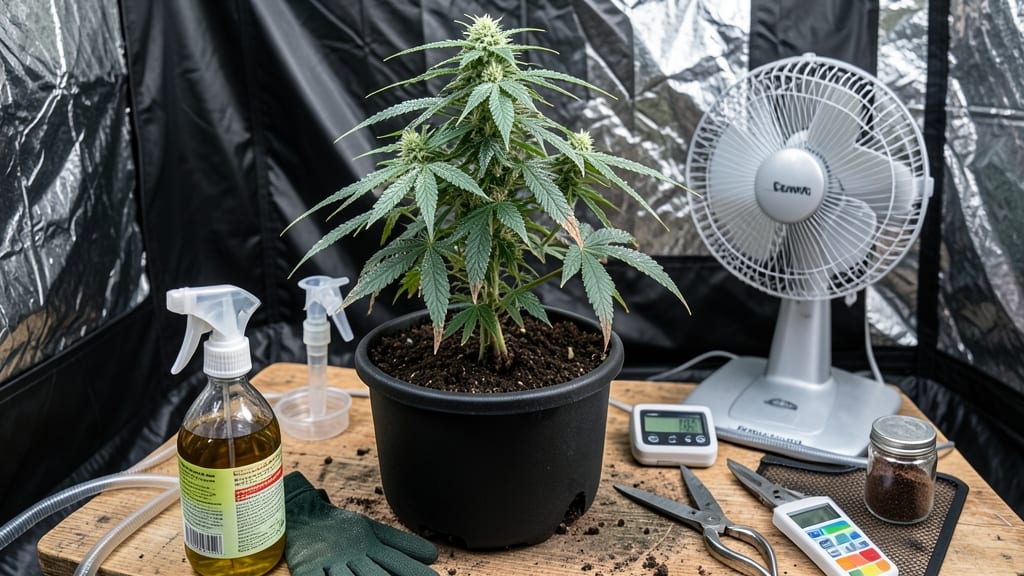
How to get rid of mold on weed plants can save your garden from disaster—if you act fast. 🌱 I’ve stopped mold in its tracks using a simple hydrogen peroxide spray that clears it within 24 hours, without harsh chemicals. The key is catching it early and treating it right.
Most mold appears as fuzzy white, gray, or green spots on leaves or buds, often in humid conditions. Overwatering, poor airflow, or contaminated soil are usually the culprits. My plants used to suffer from this until I learned to adjust watering schedules and improve ventilation—game-changers for prevention.
With the right spray, you’ll see mold retreat within a day, leaving your plants vibrant and healthy again. The solution is easy to mix, non-toxic, and works on other plants too. No more wasting weeks of growth—just a quick fix and back to business.
If mold keeps coming back or spreads aggressively, it’s time to call in a pro. But for most home gardens, this method works like a charm. Let’s get those plants breathing easy again.
Root Causes Of Fungal Growth
Mold on weed plants isn’t just an eyesore—it’s a silent threat that can cripple your harvest if left unchecked. Understanding why it happens is the first step to stopping it before it spreads.
Below, we break down the science behind the most common triggers, so you can identify the problem and fix it fast.
Mold thrives in moist, stagnant air—think of it like a fungal party where humidity is the DJ and poor airflow is the slow dance. Weed plants naturally love humidity (60-70% is ideal for growth), but when levels creep above 80%, spores explode in activity.
- Why it happens: High humidity creates a perfect breeding ground for mold spores (like Botrytis or Powdery Mildew) to land on leaves and germinate. Without airflow, spores can’t dry out, so they multiply uncontrollably.
- Science breakdown:
- Mold spores need free water (not just humidity) to activate. If leaves stay damp for more than 12 hours, spores germinate within 24-48 hours.
- Poor airflow = higher CO₂ levels near leaves, weakening plant defenses and making them more susceptible to infection.
- Actionable red flags:
- Condensation on leaves or buds in the morning.
- White, gray, or fuzzy spots appearing in low-light areas (like the bottom of leaves or between branches).
- A musty smell in your grow space (mold releases volatile organic compounds as it feeds).
Water is the #1 fuel source for mold—it’s like pouring gas on a fire. Even if your grow room has great airflow, wet leaves (from overwatering, poor drainage, or misting) create micro-climates where mold can colonize in days.
- Why it happens:
- Weed plants absorb water through roots, not leaves. When you water too much or mist, you’re bathing the fungus instead of the plant.
- Poor drainage (compacted soil, no perlite/coco coir) causes waterlogging, which drowns roots and forces the plant to transpire more—leaving leaves damp longer.
- Science breakdown:
- Mold spores stick to water droplets like glue. A single Botrytis cinerea spore can infect a leaf within 6 hours if moisture lingers.
- Overwatered soil raises humidity near the plant (evaporation = free moisture in the air).
- Actionable red flags:
- Yellowing leaves (a sign of root stress from overwatering).
- Buds or leaves staying wet for hours after watering.
- Mold appearing first on lower leaves (closest to the soil).
Stressed plants are weakened plants, and weakened plants are mold magnets. When your weed isn’t getting the right light or nutrients, its cuticle (natural protective layer) weakens, making it easier for spores to invade.
- Why it happens:
- Light stress: Too little light = leggy, thin stems with weak cell walls. Too much light (especially heat stress) burns leaves, creating open wounds for mold to enter.
- Nutrient imbalances: Excess nitrogen (burns roots) or deficiencies in calcium/magnesium make cell walls porous, letting mold spores slip right in.
- Science breakdown:
- Weakened cuticles lose their antifungal properties. A healthy plant’s waxy layer repels spores; a stressed one? Welcome mat.
- Stress triggers ethylene gas production, which accelerates mold growth by softening plant tissues.
- Actionable red flags:
- Leaves with yellow edges or brown spots (nutrient burn or deficiency).
- Plants stretching toward light (light deprivation).
- Mold appearing first on new growth (stressed areas are prime targets).
Sometimes mold isn’t just invading your plants—it’s already living in your setup. Contaminated soil, reused tools, or even old grow medium can introduce spores that wait silently until conditions are perfect to strike.
- Why it happens:
- Old soil: Soil holds millions of spores from previous grows. If you reuse soil without sterilizing it, you’re reintroducing mold every time.
- Dirty tools: Pruners, scissors, or fans can carry spores from plant to plant. Even one infected leaf can contaminate an entire room.
- Compost or organic amendments: While great for nutrients, unsterilized compost can be a mold bomb.
- Science breakdown:
- Mold spores can survive for years in dormant form. When you add water or nutrients, they wake up and multiply.
- Some spores (like Aspergillus) produce mycotoxins, which suppress plant immunity before mold even appears.
- Actionable red flags:
- Mold appearing suddenly on multiple plants (suggests soil/tool contamination).
- Black or green fuzzy spots in soil (not just on leaves).
- Mold reappearing after treatment (sign of a hidden reservoir).
Now that you know what’s fueling the mold, the next step is cutting off its supply lines. In the following sections, we’ll cover how to treat it
Mold on your weed plants isn’t just unsightly—it can ruin your harvest if left unchecked. The good news? With the right approach, you can reverse the damage fast and prevent future outbreaks. Below, we’ve mapped out cause-specific solutions, from quick fixes to long-term strategies, so you can save your plants without stress. Cause: Mold thrives in damp, stagnant air—common in grow tents with low ventilation or overwatered soil. How to Treat It: 💡 Pro Tip: If humidity spikes at night, run a dehumidifier on low overnight to prevent condensation on leaves. Cause: Dead or dying leaves (especially from pests or nutrient burn) create mold hotspots. How to Treat It: ✨ Quick Fix: Spray remaining leaves with a 1:9 hydrogen peroxide (3%) to water mix to kill surface spores. Cause: Soggy soil = mold paradise. Overwatering suffocates roots and promotes fungal growth. How to Treat It:Practical Fixes for Moldy Cannabis
Cause: Cool, dark conditions slow evaporation, letting moisture linger on leaves.
How to Treat It:
- 🔥 Keep temps between 70–85°F (21–29°C). Use a space heater (with guard) in winter or a cooling pad in summer.
- 🍳 Increase light intensity (but avoid leaf burn). A full-spectrum LED with proper spacing helps dry leaves faster.
- ⏰ Extend light cycles slightly (e.g., 18/6 instead of 12/12) to speed up evaporation during flowering.
✨ Quick Fix: A heat mat under pots (on low) can gently dry soil from the bottom up.
Once your plants are mold-free, lock in those gains with these habits:
- 🌿 Rotate leaves occasionally to expose all sides to air.
- 🔄 Sterilize the grow space monthly with a vinegar spray (1:1 water ratio) or UV light.
- 🎯 Monitor humidity with a hygrometer—don’t rely on guesswork.
- 💡 Use mycorrhizal fungi (like Trichoderma) as a preventative spray to outcompete mold spores.
**Final
Frequently asked questions
Can I still use my plants if mold is only on the buds?
If mold is only on buds and hasn't spread to leaves or stems, you can trim off the infected areas—but be cautious. Mold on buds can still produce mycotoxins, which may affect quality. Always wear a mask when handling, and consider saving the clean buds for personal use only if you're certain no spores remain.
How often should I spray hydrogen peroxide to prevent mold?
For prevention, spray a 1:9 hydrogen peroxide (3%) to water mix every 2-3 weeks during active growth phases. If your grow space has high humidity or poor airflow, increase to once a week as a precaution. Always test on a small leaf first to check for sensitivity.
Will baking soda really help with mold on weed plants?
Yes, but it's not as effective as hydrogen peroxide for severe cases. A 1 teaspoon baking soda + 1 quart water + dash of soap spray can help prevent mild mold by raising leaf pH slightly. However, it won't kill established mold—use it as a supplement to airflow improvements and proper watering, not as a standalone treatment.
What's the fastest way to tell if mold is spreading?
Check for three key signs: new fuzzy spots appearing, a musty smell in your grow space, or leaves feeling slimy to the touch. If you see mold on more than 10% of leaves or buds within 48 hours of treatment, it's spreading aggressively—time to escalate to stronger fungicides or isolate the plant.
Can I reuse soil that had mold in it?
Never reuse contaminated soil—it's the #1 way mold keeps coming back! Sterilize soil by baking it at 180°F (82°C) for 30 minutes or mixing in 10% food-grade diatomaceous earth before replanting. For severe cases, replace the soil entirely to break the mold cycle.