
How To
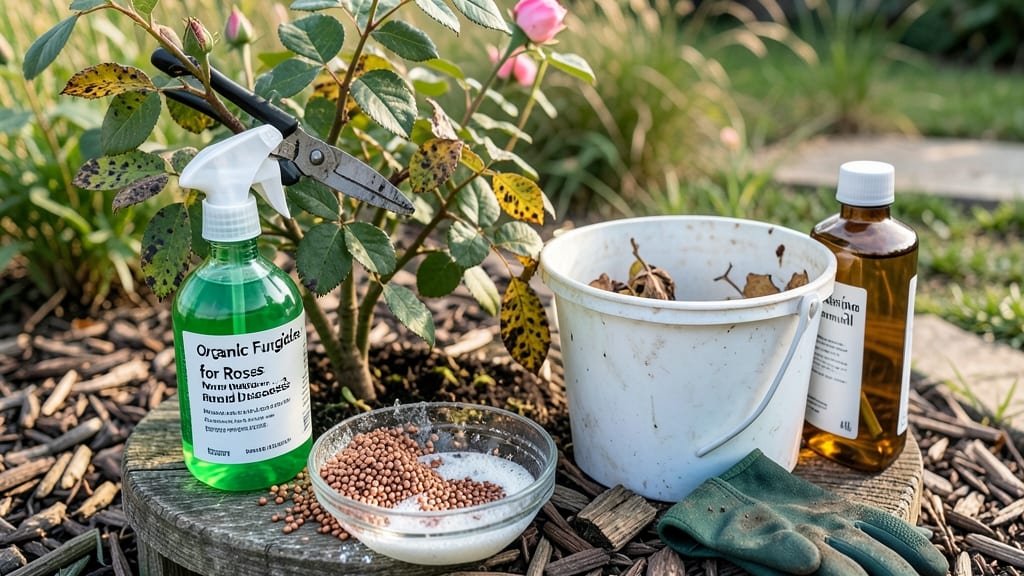
How to get rid of rose fungus? That neem oil spray I discovered last summer saved my bushes from looking like Swiss cheese. The key is acting fast—before the fungus spreads to every leaf—and using the right mix of organic treatments and smart pruning.
Most people wait too long, thinking it’ll go away. I learned the hard way that black spot thrives in damp, shaded conditions, so I now prune for airflow, water at the base (never the leaves), and spray neem oil every 7-10 days during outbreaks.
The results? Roses that stay lush and disease-free, not a skeleton of bare stems.
You’ll see new growth within 2-3 weeks of consistent treatment, with fewer spots appearing each time. The spray works because neem oil disrupts the fungus’s life cycle while being safe for bees and beneficial insects.
Combine it with copper fungicide for stubborn cases, and you’ll have roses that bloom like they’re in a catalog.
Works for powdery mildew too, and the timing matters—treat early morning or evening to avoid burning leaves. Preventative sprays in spring keep roses healthy all season long. Let’s get those bushes back to their best!
The Hidden Triggers Behind Fungal Spread
Rose fungus—especially the dreaded black spot—doesn’t just appear out of nowhere. It thrives because of specific conditions that turn your garden into a fungal buffet. Understanding these triggers is the first step to stopping the spread before it ruins your roses.
Let’s break down the science behind why your roses are becoming a fungus magnet.
Fungi love moisture—think of them as aquatic invaders. When your roses sit in soggy soil for too long, spores germinate and spread rapidly. Here’s why:
- Oxygen starvation: Waterlogged soil cuts off oxygen, weakening rose roots and making them easier targets for fungal pathogens like Diplocarpon rosae (black spot).
- Spores thrive in dampness: Fungal spores need 48+ hours of leaf wetness to infect. Overhead watering (especially in the evening) keeps leaves damp, creating the perfect petri dish.
- Root rot connection: Poor drainage often leads to Phytophthora or Pythium, which compromise plant health, making roses more susceptible to black spot.
Actionable fix: Water at the base of the plant in the morning, and ensure soil has 30–50% porosity (amend with compost or perlite if needed).
Roses that are stressed or overcrowded can’t fight off fungal attacks. Here’s how it happens:
- Limited airflow: Dense foliage traps moisture and spores. Fungi spread 10x faster in stagnant air compared to open, airy gardens.
- Nutrient competition: Overcrowded roses compete for resources, leading to weakened immune responses and slower recovery from infections.
- Physical damage: Pruning wounds or pest bites (like aphids) create entry points for spores to invade.
Actionable fix: Space roses 3–4 feet apart and prune for open canopies. Remove dead or diseased leaves immediately—they’re fungal spore factories.
Fungi aren’t picky—they just love warm, humid conditions. Black spot, for example, peaks between 60–80°F (15–27°C) with high humidity. Here’s the breakdown:
| Condition | Why It Helps Fungi | Risk Level |
|---|---|---|
| 60–80°F (15–27°C) | Optimal spore germination and growth. Black spot spreads fastest in this range. | ⚠️ High |
| Humidity >70% | Slows evaporation, keeping leaves wet longer. Fungi need moisture to infect. | ⚠️ High |
| Frequent rain or dew | Washes spores onto leaves and activates latent infections. | ⚠️ Extreme |
Actionable fix: Monitor your garden’s microclimate. Use fungicide sprays (like neem oil) before humidity spikes, and avoid mulching too close to stems (keep 2–3 inches away).
Your soil’s chemistry plays a huge role in fungal resistance. Here’s how pH and nutrients affect roses:
- Acidic soil (pH <6.0): Encourages soil-borne fungi like Armillaria (root rot) and weakens root health.
- Excess nitrogen: Promotes lush, soft growth that’s easier for fungi to penetrate. Over-fertilizing = fungal buffet.
- Lack of potassium: Weakens cell wall integrity, making roses more vulnerable to infections.
Actionable fix: Test your soil’s pH (ideal: 6.0–6.5 for roses) and amend with lime (to raise pH) or sulfur (to lower it). Use a balanced fertilizer (10-10-10) and avoid high-nitrogen feeds in summer.
Now that you know the root causes of rose fungus, the next step is disrupting its lifecycle—and neem oil is your secret weapon. Stay tuned for how to apply it effectively to stop black spot in its tracks!
Step-By-Step Fixes for Rose Fungus
Now that you know the causes of rose fungus—like black spot, powdery mildew, or rust—it’s time to tackle it head-on. The good news? With the right approach, you can restore your roses to full, vibrant health.
Below, we’ve mapped out practical solutions for each common fungal issue, plus prevention tips to keep your garden fungus-free for good.
Cause: Marssonina rosae thrives in damp, shady conditions, causing dark spots with yellow halos.
Fix It:
- 🔥 Prune & Clean – Snip off infected leaves (sterilize shears with rubbing alcohol) and remove fallen debris. Never compost infected plant material!
- 🍳 Neem Oil Spray – Mix 1 tbsp neem oil + 1 tsp mild soap in 1 quart water. Spray undersides of leaves (where spores hide) every 7–10 days until spots disappear.
- 🌡️ Improve Airflow – Space plants 2–3 feet apart and thin crowded canes. Use a fan on low for 10 mins/day in humid climates.
- ✨ Fungicide Boost – For stubborn cases, apply a copper fungicide (like Bonide Copper Fungicide) every 2 weeks.
Prevent Relapse: ✅ Water at soil level (not overhead) in the early morning so leaves dry by noon. ✅ Mulch with gravel or straw (not wood chips) to reduce soil moisture near stems.
Cause: Erysiphe necator loves hot, dry days with poor airflow, coating leaves in chalky white film.
Fix It:
- 👨🍳 Baking Soda Spray – Mix 1 tbsp baking soda + 1 tsp soap + 1 gallon water. Spray every 3–4 days until mildew clears.
- 🥘 Hydrogen Peroxide Dip – Soak severely infected leaves in 3% hydrogen peroxide (1:10 ratio) for 10 mins, then rinse.
- 🔪 Prune for Light – Remove shaded lower leaves and thin branches to let sunlight hit all foliage.
- 🌿 Companion Planting – Interplant with garlic, thyme, or marigolds (natural mildew deterrents).
Prevent Return: ✅ Space roses 3–4 feet apart to improve airflow. ✅ Avoid overhead watering—use drip irrigation instead.
Cause: Phragmidium spores spread via wind/rain, creating pustules on upper leaf surfaces.
Fix It:
- 🍳 Sulfur Spray – Apply wettable sulfur (2 lbs per 100 sq ft) every 2 weeks. Test on a few leaves first—sulfur can burn in direct sun!
- 🥘 Organic Fungicide – Use potassium bicarbonate (2 tbsp per gallon water + 1 tsp soap) weekly.
- 🔪 Remove Infected Leaves – Toss rusty leaves in the trash (not compost) to stop spore spread.
- 🌡️ Adjust Watering – Water deeply 2x/week (early morning) instead of daily light sprinkles.
Prevent Future Outbreaks: ✅ Rotate fungicides (e.g., sulfur one week, neem the next) to avoid resistance. ✅ Plant resistant varieties like ‘Knock Out’ roses.
| Problem | Quick Fix | Long-Term Prevention |
|---|---|---|
| Overwatering | Let soil dry 1–2 inches between waterings | Install a soil moisture sensor |
| Poor Drainage | Amend soil with perlite or sand | Raise beds or add gravel layers |
| Crowded Growth | Prune to open up the center | Plant low-growing ground covers |
| High Humidity | Use a dehumidifier in greenhouses | Space plants 4+ feet apart |
💡 Pro Tip: Rotate treatments every 4–6 weeks to prevent fungus from building resistance. And always sterilize pruners between cuts to avoid spreading spores!
By combining immediate action (sprays, pruning) with smart prevention (airflow, watering habits), your roses will bounce back stronger than ever. 🌹💪
Frequently asked questions
What’s the fastest way to stop black spot from spreading?
Act immediately with a neem oil spray—mix 1 tablespoon neem oil with 1 teaspoon mild soap in 1 quart of water and spray both sides of leaves. Prune infected leaves (sterilize shears with rubbing alcohol) and water at the base in the morning instead of overhead. Repeat every 7-10 days until new growth appears.
Can I use household items like baking soda to treat rose fungus?
Yes! For powdery mildew, mix 1 tablespoon baking soda with 1 teaspoon soap in 1 gallon of water and spray every 3-4 days. For black spot, hydrogen peroxide (3% solution, 1:10 ratio) works as a leaf dip for 10 minutes before rinsing. Always test on a small area first to avoid leaf burn.
Why does my rose fungus keep coming back even after treatment?
Fungal spores survive in soil and debris, so remove all infected leaves (don’t compost them) and improve airflow by spacing plants 3-4 feet apart. Overwatering or poor drainage also reactivates spores—water only at the base in the morning and amend soil with perlite if needed. Rotate fungicides (e.g., neem one week, copper the next) to prevent resistance.
Is it safe to use chemical fungicides on roses?
Chemical fungicides like copper or sulfur can work fast, but they may harm beneficial insects and require careful handling. For organic gardens, stick to neem oil, potassium bicarbonate, or baking soda sprays. Always follow label instructions and avoid spraying when bees are active (early morning or evening). Test on a few leaves first to check for sensitivity.
How do I know if my rose has fungus or just nutrient deficiency?
Fungal issues like black spot show dark spots with yellow halos, powdery mildew creates a white chalky coating, and rust produces orange pustules. Nutrient deficiencies cause uniform discoloration (e.g., yellowing between veins for nitrogen deficiency). Check undersides of leaves—fungus often starts there. If unsure, snap a photo and compare with online symptom guides.