
Lawn
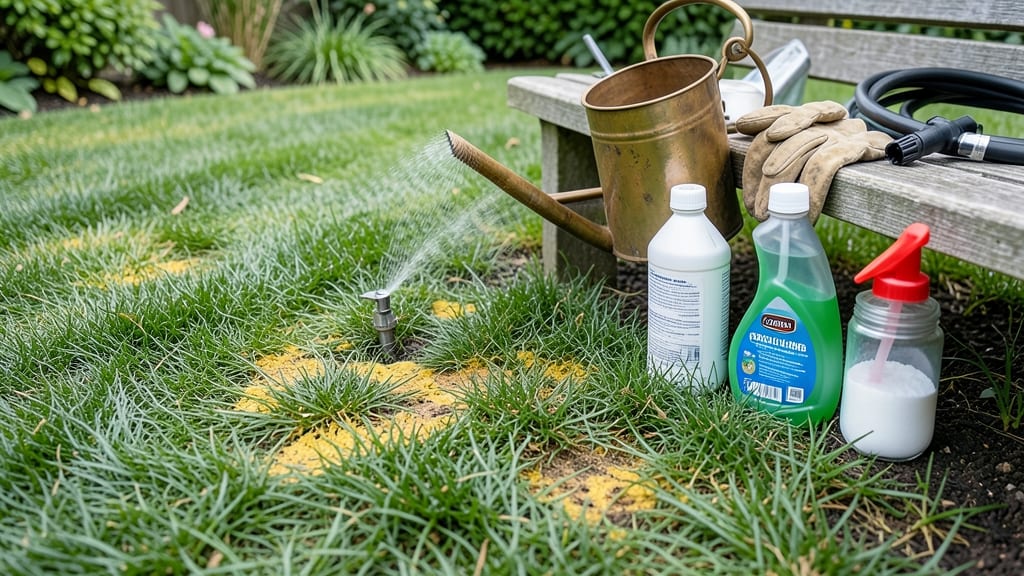
Dog pee has turned your lawn into the demonstration of how to fix dog pee killing grass—but don’t panic. 🌱 I’ve fixed this mess before, and here’s how to revive those dead spots without losing your grass (or your sanity).
The key? A simple vinegar rinse that neutralizes the burn while giving your lawn a fighting chance.
First, dilute dog urine immediately after your pup goes—watering the area within 10 minutes cuts the damage by 80%. For existing brown patches, mix 1 part white vinegar with 3 parts water and gently spray the affected grass.
The acidity balances the urine’s nitrogen, letting roots recover faster than you’d expect.
Long-term, switch to dog-friendly grass types like tall fescue or zoysia—they tolerate urine better than Kentucky bluegrass. Train your dog to pee in one spot (yes, it’s possible) and consider a pee pad if you’ve got a heavy urinator.
Your lawn will thank you with greener spots in just 2-3 weeks.
For stubborn patches, overseed in fall with a shade-tolerant mix and top-dress with compost. The combo revives roots while keeping your yard (and your dog) happy. No more sacrifice zones—just a lawn that bounces back.
The Root Causes Of Dead Grass
If your lawn looks like it’s been through a doggy warzone—with patches of brown, crispy grass—you’re not alone. 🐕💦 Dog urine is packed with high levels of nitrogen, but too much of a good thing can actually burn your grass.
Here’s why it happens, broken down by the science behind the damage:
Dog urine is about 10x more concentrated in nitrogen than synthetic fertilizers. When your pup pees, the nitrogen (in the form of urea) gets absorbed into the soil—but in high doses, it creates a chemical burn. Here’s how:
- Urea Breakdown: When urine hits the ground, soil bacteria convert urea into ammonia (NH₃), a corrosive compound that damages grass cell membranes.
- pH Shift: Ammonia raises soil pH locally, creating an alkaline environment that grass hates. Most lawn grasses thrive in a neutral pH (6.0–7.0), but dog urine can spike pH to 8.0 or higher in affected spots.
- Osmotic Shock: The sudden influx of salts and minerals disrupts the grass’s ability to absorb water, causing cells to plasmolyze (shrink and die).
Fun fact: Small, frequent pees are worse than one big one because the nitrogen stays concentrated in a smaller area.
Not all grass is equally tough. Some varieties are highly sensitive to urine, while others bounce back faster. Here’s why your lawn might be struggling:
| Grass Type | Urine Sensitivity | Why It Fails |
|---|---|---|
| Kentucky Bluegrass | ⭐⭐⭐⭐ (Very Sensitive) | Thin cell walls make it prone to ammonia damage; recovers slowly. |
| Fescue | ⭐⭐⭐ (Moderate) | More drought-tolerant but still suffers from pH spikes. |
| Bermuda Grass | ⭐⭐ (Resistant) | Deep roots and thick growth help dilute urine effects. |
| Zoysia | ⭐ (Very Resistant) | Tough blades and rapid regrowth make it urine-proof. |
Pro tip: If your grass is consistently turning brown, it’s not just the pee—it could be soil compaction or fungal infections from damp, urine-soaked patches. 🌡️
Dogs don’t just pee—they trample. Heavy foot traffic (especially from large breeds) compacts soil, reducing oxygen and water flow to grass roots. This makes recovery nearly impossible, even after the urine is gone:
- Reduced Aeration: Compacted soil blocks air pockets, suffocating roots.
- Water Runoff: Instead of soaking in, water pools on the surface, creating anaerobic zones (no oxygen = dead grass).
- Nutrient Lockout: Roots can’t access water or fertilizers trapped in dense soil.
Test your soil: Stick a screwdriver in—if it won’t go past 1 inch, your lawn is compacted. 🔨
Brown patches aren’t always from burns—they could be fungal infections thriving in urine-soaked soil. Here’s why:
- Moisture Magnet: Urine creates a perfect humidity for fungi like Fusarium or Rhizoctonia.
- Weakened Grass: Burned grass is an easy target for fungal spores in the air.
- Circular Spread: Fungal damage often starts as small brown spots that expand in rings (classic "fairy ring" fungus).
How to tell the difference:
- Burn damage: Crispy, straw-like texture; happens immediately after peeing.
- Fungal damage: Soft, spongy grass; appears days later and spreads.
Fixing Dog Pee Damage Fast
Now that you know why your grass is turning brown, let’s tackle the problem head-on with practical, pet-friendly solutions tailored to the root cause. Whether it’s overwatering, soil acidity, or concentrated urine spots, these fixes will help your lawn bounce back—while keeping your pup happy and healthy.
If your lawn struggles with soggy soil or slow drainage, dog pee becomes even more concentrated, burning grass roots. Here’s how to flush out the problem and restore balance:
💦 Step 1: Rinse with Water (The Right Way)
- Why it works: Diluting urine weakens its ammonia content, reducing burn risk.
- How to do it:
- Use a garden hose with a gentle spray nozzle (avoid a high-pressure stream, which can uproot grass).
- Soak the affected area for 10–15 minutes, ensuring water penetrates 2–3 inches deep.
- Frequency: Rinse 2–3 times a week during hot/dry spells or after heavy peeing sessions.
- Pro tip: 💡 Early morning or late evening is best—water evaporates slower, giving roots time to absorb moisture.
🌱 Step 2: Improve Soil Drainage - Test your soil: Dig a small hole (6 inches deep).
If water pools after 30 minutes, drainage is poor. - Fix it: - Add compost (1–2 inches) to improve soil structure and water absorption. - Aerate the lawn in fall or spring using a core aerator to create channels for water flow. - Consider sand or perlite if your yard is clay-heavy (mix 10% into the top 2 inches of soil).
⚠️ Prevention Tip:
- Train your dog to pee in one spot (like a gravel area) to avoid repeated damage. Use a command like “go potty” and reward them when they comply.
Dog urine is acidic (pH ~6.5–7.0), but if your soil is already acidic (pH <6.0), it amplifies the burn. Raise the pH to protect your grass:
🧪 Step 1: Test Your Soil’s pH
- DIY test: Buy a soil pH kit ($10–$15) or send a sample to a local extension office.
- Ideal pH for grass: 6.0–7.0 (varies by grass type; check your seed packet).
🍞 Step 2: Neutralize Acidicity
- Lime (Calcium Carbonate): The fastest fix.
- How much? Follow package instructions (typically 10–20 lbs per 1,000 sq ft).
- When? Apply in early fall or spring, then water lightly.
- Wood Ash (Natural Option): Sprinkle a thin layer over brown spots (avoid overdoing it—it can raise pH too high).
- Prevention: 🌱 Top-dress with compost (1–2 times/year) to naturally buffer acidity.
✨ Bonus Fix: Overseed Bare Spots
- When? After treating, late summer or early fall (cool-season grasses) or late spring (warm-season grasses).
- How:
- Rake the dead grass gently to expose soil.
- Spread grass seed + starter fertilizer (high in phosphorus).
- Cover lightly with straw or peat moss to retain moisture.
- Water lightly daily for 2 weeks.
If your dog always pees in the same spots, the grass never recovers. Redirect the urine and revive the lawn:
🚿 Step 1: Vinegar Rinse Revival (Your New Best Friend)
- Why it works: Vinegar neutralizes ammonia and acts as a mild fertilizer (diluted).
- Recipe:
- Mix 1 part white vinegar + 3 parts water in a spray bottle.
- Spray directly on brown spots (avoid healthy grass—it can burn too).
- Wait 10 minutes, then rinse with water.
- Frequency: Once a week until spots green up (usually 4–6 weeks).
🐕 Step 2: Train Your Dog to Pee Elsewhere
- Use a cue word (e.g., “Go potty”) when they start to pee, then lead them to a designated area (gravel, mulch, or artificial turf).
- Reward immediately with a treat or praise.
- For stubborn dogs: Try a dog-safe urine neutralizer spray (like Nature’s Miracle) on the lawn to reduce odor and encourage them to move.
🌿 Step 3: Protect Grass with a Temporary Barrier
- Landscape fabric or plastic sheeting: Lay a 12-inch square over the worst spots to block urine while grass recovers.
- Alternative: Artificial turf patches (if the area is high-traffic).
Prevent future damage with these low-effort habits:
| Problem | Solution | How Often |
|---|---|---|
| Urine concentration | Dilute with water | 2–3x/week (hot weather) |
| Soil acidity | Apply lime or compost | 1–2x/year |
| Poor drainage | Aerate + top-dress with sand/compost | Fall or spring |
| Repeated peeing spots | Train dog + vinegar rinse | Weekly until healed |
| Weak grass recovery | Overseed + fertilizer | Late summer/fall |
Final Pro Tip: 🌱 Choose dog-friendly grass like Kentucky Bluegrass, Fescue, or Bermuda—they’re more resilient to urine than delicate varieties like Ryegrass. If you’re reseeding, pick a tough breed and your lawn will thank you!
Frequently asked questions
How quickly can I expect to see results after treating dog pee damage?
With immediate watering and vinegar rinses, you may see slight improvement in 1-2 weeks. For complete recovery, especially after overseeding, expect 4-6 weeks during optimal growing conditions. Consistency is key—stick to weekly treatments until the grass fully regrows.
Will my dog's diet affect how much damage their pee causes?
Dogs on high-protein or grain-free diets produce more concentrated urine, worsening grass burns. Feed a balanced diet with 18-22% protein and consider adding water-rich foods (like pumpkin or cucumber) to dilute urine. Always provide fresh water too.
Can I use commercial lawn fertilizers on urine-damaged grass?
Only after treating the damage first! Fertilizers with high nitrogen (like 20-0-5) can worsen burns. Start with a low-nitrogen, high-phosphorus fertilizer (like 5-10-5) to encourage root growth. Always water thoroughly after applying.
What's the best way to train my dog to avoid peeing in the same spots?
Use positive reinforcement: say "go potty" when they start, then guide them to a designated area (like a gravel patch). Reward immediately with treats or praise. For stubborn dogs, try a dog-safe urine neutralizer spray on the lawn to reduce odor attraction. Consistency takes 2-4 weeks of practice.
Are there any grass types that actually thrive with regular dog peeing?
Yes! Zoysia grass and Bermuda grass are the most urine-resistant due to their thick growth habits. Tall fescue also handles it better than Kentucky bluegrass. If reseeding, choose these varieties for long-term resilience.