
How To
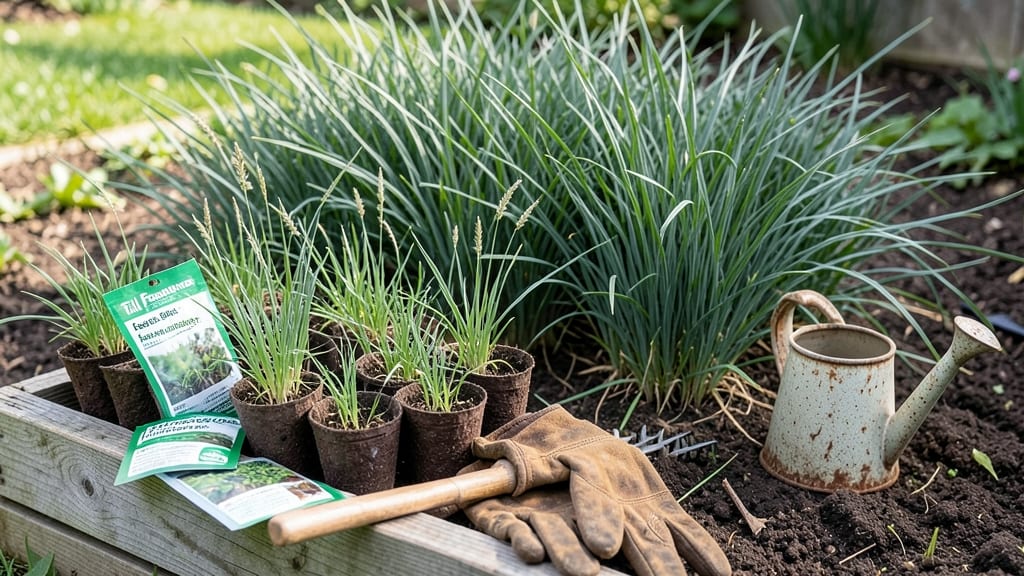
How to grow tall fescue grass transforms bare patches into a dense, drought-resistant lawn in just 30 days. 🌱 I’ve struggled with patchy grass before, but this shade-tolerant variety thrives where others fail—even in my high-traffic backyard. The secret? Proper soil prep and consistent watering (no guesswork). Start with a clean, loosened soil bed—no clumps, no weeds. Scatter seeds thinly (about 6-8 pounds per 1,000 sq ft) and lightly rake them in. Keep the soil moist but not soggy for the first two weeks, and you’ll see sprouts in 7-14 days. The key is patience—once established, it outcompetes weeds and handles foot traffic like a champ.
📚 In This Guide
- What you need
- Instructions
- Tips and common mistakes
- Wrapping up and next steps
What you need
- ● Tall fescue grass seed: 10–20 lbs per 1,000 sq. ft. (Choose a high-quality blend for durability and color.)
- ● Lawn soil or topsoil: 2–3 inches deep (Ensure it’s well-draining and free of weeds.)
- ● Starter fertilizer: High in phosphorus (e.g., 10-20-10 ratio) (Apply ½ lb per 100 sq. ft. before planting.)
- ○ Lawn roller (optional but helpful): 100–150 lb weight (For firming soil and ensuring seed-to-soil contact.)
- ● Garden rake: (For leveling soil and breaking up clumps.)
- ● Hose with sprinkler attachment: (For consistent watering—gentle mist is key!) 💦
- ● Lawn mower (or reel mower for eco-friendliness): (Set blades to 3–4 inches once established.)
- ● Soil test kit: (Check pH—ideal range: 6.0–7.0 for tall fescue.)
- ● Compost or peat moss: (Mix into soil for better moisture retention.)
- ● Pre-emergent herbicide: (Apply after seeding to prevent weeds.)
- ● Lawn aerator: (For compacted soil—rent or buy for deep root growth.)
- ● Shade cloth (if planting in partial shade): (30–50% coverage to protect young grass.)
Step-by-Step instructions for establishing a tall fescue lawn
Here's the straightforward method I've used to transform bare patches into dense, drought-resistant turf.
🌱 Step 1: Prepare the Soil for Optimal Germination
Start by removing all existing vegetation, rocks, and debris from your lawn area using a sod cutter or shovel. Tall fescue thrives in well-aerated soil, so till to a depth of 4-6 inches to break up compacted layers. The goal is to create a loose, crumbly texture that seed can easily penetrate.
Test your soil's pH—tall fescue prefers a range of 6.0-7.0. If your soil tests higher or lower, amend with lime or sulfur respectively, following package instructions. Work these amendments into the top 3 inches of soil and let them integrate for at least 24 hours before seeding.
💧 Step 2: Spread Seed Evenly for Uniform Growth
Use a broadcast spreader set to the recommended rate for your seed package—typically 5-8 pounds per 1,000 square feet for new lawns. Walk in a crisscross pattern to ensure even coverage, overlapping passes slightly. You'll know you've done it right when the seed looks uniformly distributed without bare spots.
Lightly rake the area with a stiff-bristled rake to press seeds into the soil just enough to ensure good soil contact. This prevents seeds from blowing away while still allowing sunlight to reach them. Avoid raking too deeply—you want seeds buried no more than ¼ inch.
☀️ Step 3: Water Strategically for Germination
Keep the soil consistently moist for the first 2-3 weeks—this is critical for germination. Water lightly twice daily (morning and evening) for 10-15 minutes each time to maintain surface moisture without creating puddles. You'll see germination begin in 7-14 days, with small grass blades appearing first.
Once seedlings reach 2-3 inches tall, reduce watering to 1 inch per week, delivered either through rainfall or irrigation. Deep, infrequent watering encourages deep root growth, which is essential for tall fescue's drought tolerance. Use a rain gauge or tuna can to measure water depth accurately.
✂️ Step 4: Maintain Through Establishment Phase
Wait until the grass reaches 3-4 inches tall before your first mowing—this usually takes 4-6 weeks. Set your mower blade to 3-4 inches and never remove more than ⅓ of the blade height at once. Tall fescue grows best when maintained at this height, as deeper roots develop in response to shade from taller grass.
Apply a starter fertilizer with a 20-20-20 NPK ratio at half-strength once the grass reaches 2 inches tall. This provides essential nutrients without burning tender new growth. Avoid high-nitrogen fertilizers during establishment—they promote leafy top growth at the expense of root development.
🪴 Step 5: Transition to Regular Care Routine
After 6-8 weeks, when your lawn has developed a dense, uniform stand, switch to a slow-release, low-nitrogen fertilizer designed for cool-season grasses. Apply in early spring and late fall, following package instructions. This timing supports root growth while minimizing environmental runoff.
Continue mowing regularly at 3-4 inches throughout the growing season, removing clippings to prevent thatch buildup. Tall fescue's deep root system makes it naturally resistant to most pests and diseases, but monitor for signs of brown patch or fungal issues—these typically appear when soil moisture is inconsistent or mowing height is too short.
Tips & tricks for perfect tall fescue establishment
The secret to a thriving tall fescue lawn lies in the details—small adjustments that prevent common pitfalls and set your grass up for long-term success.
Soil Preparation is Everything: When tilling to that 4-6 inch depth in Step 1, focus on breaking up hardpan layers without creating a powdery texture. Think of it like fluffing a pillow—you want aeration, not dust. A garden fork works wonders for compacted areas where tillers struggle. The goal is to mimic natural soil structure, which helps roots penetrate easily later. After tilling, run a level across your work area to ensure the surface is uniform—uneven areas will lead to water pooling and patchy growth.
Seed Distribution Matters More Than You Think: For Step 2, the 5-8 pounds per 1,000 square feet recommendation is your baseline, but don't rely solely on the spreader settings. Walk the area afterward and visually inspect for thin spots—you should see seed distributed like confetti at a parade, not like someone dropped a handful in the center. Pro tip: Overlap your passes by 10-15 inches when using a broadcast spreader. This ensures consistent coverage, especially around edges and corners where seed tends to accumulate. If you're seeding a large area, consider dividing it into sections and working methodically from one side to the other.
Watering Strategy Prevents Common Failures: During those critical first 2-3 weeks in Step 3, the twice-daily 10-15 minute sessions should leave the top inch of soil damp, not soggy. I've seen countless lawns fail because people either underwater (leading to desiccated seed) or overwater (creating anaerobic conditions that prevent germination). Here's a visual cue: After watering, the soil should look like a wrung-out sponge—not bone dry, not dripping wet. In hot climates, you might need to increase to three sessions per day during peak heat, but always check moisture by hand before assuming more water is needed.
Fertilizer Timing is Non-Negotiable: The 20-20-20 NPK ratio at half-strength in Step 4 might seem counterintuitive—why not go full strength? Because young tall fescue roots are delicate. Think of it like feeding a newborn: you want balanced nutrition, not a sugar rush. Apply the fertilizer when grass reaches 2 inches tall, but don't let it touch the seed or seedlings directly. Use a spreader set to the lowest setting and work quickly to avoid creating bare spots. The key is to support root development without encouraging rapid top growth that can stress the young plants.
Pro Tips for Grow Tall Fescue Grass
- The secret to a thriving tall fescue lawn lies in the details—small adjustments that prevent common pitfalls and set ...
- Soil Preparation is Everything: When tilling to that 4-6 inch depth in Step 1, focus on breaking up hardpan layers wi...
- Seed Distribution Matters More Than You Think: For Step 2, the 5-8 pounds per 1,000 square feet recommendation is you...
Frequently asked questions
Got questions about growing tall fescue grass? You’re not alone! Here are answers to the most common concerns—so you can tackle your lawn with confidence.
How long does it take for tall fescue to establish fully?
Tall fescue typically takes 3–4 weeks to germinate and 6–8 weeks to establish a dense lawn. For faster results, overseed in early fall when conditions are ideal. Be patient—consistent watering (1–1.5 inches per week) speeds up the process!
Why is my tall fescue turning brown or patchy?
Brown patches often mean underwatering, overwatering, or fungal issues. Check soil moisture (top 2–3 inches should be damp), improve drainage if needed, and avoid mowing during wet conditions. If disease strikes, apply a fungicide or adjust mowing height to 3–4 inches for resilience.
Is tall fescue more expensive than other grass types?
Not necessarily! Tall fescue seeds cost $0.50–$2 per pound, similar to Kentucky bluegrass but cheaper than Bermuda or zoysia. It’s also low-maintenance, saving money on water, fertilizer, and pest control long-term. Compare local seed prices for the best deal.
Can I grow tall fescue in hot or cold climates?
Tall fescue thrives in USDA zones 4–9, handling both heat (up to 95°F) and cold (down to -20°F). It’s drought-tolerant once established but needs regular watering in extreme heat. For cooler regions, it’s a top choice—just avoid seeding in frost.
What’s the best alternative if tall fescue fails?
If your soil or climate isn’t ideal, consider:
- Perennial ryegrass (faster germination, great for overseeding)
- Kentucky bluegrass (soft but needs more care)
- Fine fescue (shade-tolerant, low-maintenance)
Wrapping up and next steps
Growing tall fescue grass is totally doable—even for beginners! 🌱 With the right soil prep, seed selection, and a little patience, you’ll be rocking a thick, green lawn in just 30 days.
Remember, consistency is key: water wisely, mow at the right height, and tackle weeds early to keep your grass lush and healthy.
Now that you’re armed with all the tips, roll up your sleeves and start planting! Track your progress, adjust as needed, and soon, you’ll be the envy of the neighborhood with that perfect tall fescue lawn. Happy growing! 🌟