
Watering
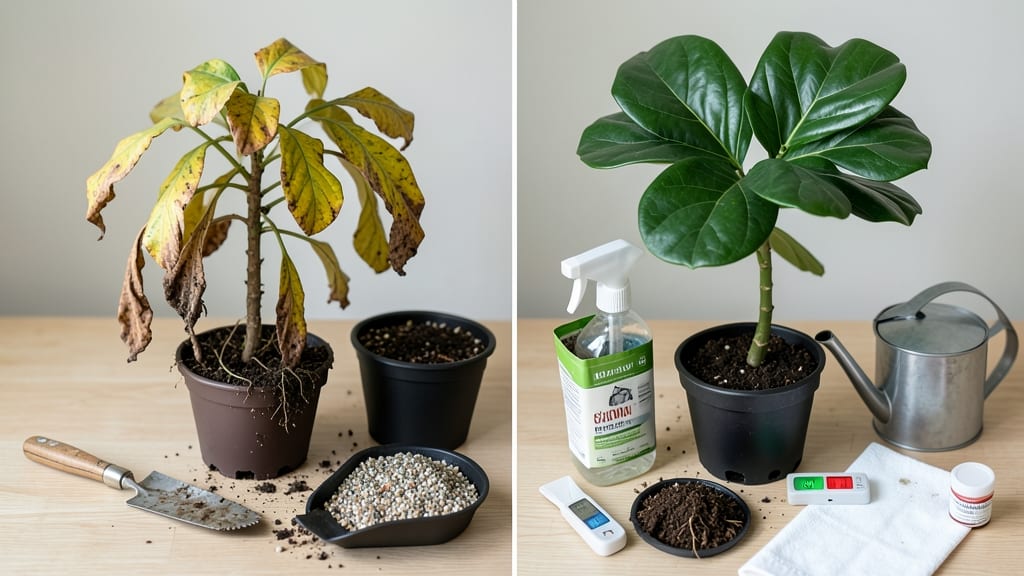
How to fix an overwatered fiddle leaf fig—drooping leaves and yellowing foliage scream "overwatered." I've nursed more of these plants back from the brink than I'd like to admit, and the key always starts with stopping the water. The moment you notice mushy stems or soil that smells like a swamp, you've got a 48-hour window to act before root rot takes over for good.
First, yank the plant from its pot and inspect the roots. Healthy roots are firm and white; rotten ones are brown, slimy, and smell foul. Trim away the bad ones with clean scissors, then repot in fresh, well-draining soil—one-third perlite or orchid bark mixed in prevents future disasters.
This isn't just a quick fix; it's a reset for the plant's entire system.
After repotting, hold off on watering for 5-7 days—yes, really. Let the roots dry out completely before giving even a sip. Place the plant in bright, indirect light and watch for new growth within 2-3 weeks.
The first sign of recovery? Crisp, upright leaves instead of those sad, wilted fronds.
Long-term, you'll need to change your watering habits. Stick your finger an inch into the soil—if it's damp, wait. Fiddle leaf figs prefer to dry out between waterings, and a moisture meter (about $10) becomes your best friend.
Trust me, this one adjustment saves more plants than any other trick I know.
Root Causes of Overwatering
Your fiddle leaf fig (Ficus lyrata) might be drowning in more love than it can handle—but why does this happen? Overwatering isn’t just about pouring too much water; it’s a mix of environmental, human, and plant-specific factors.
Understanding these causes is the first step to saving your leafy friend. Let’s break down the science behind the soggy soil.
Fiddle leaf figs thrive in well-draining soil, but many commercial potting mixes retain moisture like a sponge. If your plant’s container lacks drainage holes or uses heavy, clay-based soil, water pools at the roots instead of draining away.
Over time, this creates an anaerobic (oxygen-deprived) environment, where roots suffocate and rot.
- Why it matters: Roots need oxygen to respire and absorb nutrients. Without proper drainage, they drown, leading to yellowing leaves, wilting, and eventual leaf drop.
- Actionable clue: Stick your finger 2 inches into the soil—if it’s still damp after 3–4 days, drainage is likely the issue.
Many plant owners water based on a calendar rather than the plant’s actual needs. Fiddle leaf figs are tropical but still need time to dry out between waterings. Overzealous watering—especially in low-light conditions—tricks the roots into thinking they’re always wet, halting nutrient uptake and promoting fungal growth.
- Why it matters: Consistently wet soil disrupts the plant’s natural hydration cycle, leading to Phytophthora (a deadly root fungus) and nutrient deficiencies.
- Actionable clue: Weigh your pot! If it’s lighter than expected, it’s time to water. If it’s still heavy, wait.
Fiddle leaf figs love humidity (think 40–60%), but if your home is dry and the plant isn’t getting enough bright, indirect light, its leaves transpire (release moisture) at a slower rate. The soil stays soggy longer because the plant isn’t “drinking” enough to balance the moisture.
- Why it matters: Low light + high humidity = a recipe for root rot. The plant can’t evaporate excess water fast enough, trapping it in the soil.
- Actionable clue: Check for crispy leaf edges (low humidity) or mushy stems (overwatering). Move the plant to a brighter spot and use a hygrometer to monitor humidity.
Cold drafts (from AC vents, windows, or doors) slow down root activity. When roots “hibernate” due to chilly temps, they absorb less water—but if you keep watering on schedule, the soil stays saturated. This creates a double whammy: the plant isn’t using the water, and the cold stresses the roots.
- Why it matters: Roots in cold soil are more susceptible to rot because microbial activity (which breaks down organic matter) slows down, leaving excess moisture stagnant.
- Actionable clue: Keep your fiddle leaf fig away from drafts and aim for a consistent 60–75°F range.
Fiddle leaf figs need airy, chunky soil that mimics their native African forest floor. Heavy, compacted soil (like garden soil or cheap potting mixes) doesn’t allow oxygen or water to move freely. When you water, the excess lingers, creating a swampy environment where harmful bacteria thrive.
- Why it matters: Compacted soil reduces porosity, trapping water and cutting off oxygen to the roots. This leads to Pythium infections, a common waterlogged plant killer.
- Actionable clue: Repot into a mix with perlite, orchid bark, and coco coir (e.g., 40% potting soil, 30% perlite, 30% bark).
Fertilizer salts attract and retain water in the soil. If you’re fertilizing while the soil is already damp—or using too much fertilizer—you’re essentially creating a saline, waterlogged soup that burns roots and prevents them from functioning properly.
- Why it matters: Excess salts lower the soil’s water-holding capacity, making it harder for roots to absorb moisture. This leads to osmotic stress, where the plant can’t take up water even if it’s present.
- Actionable clue: Flush the soil with water every 2–3 months to leach out built-up salts.
Now that you know why your fiddle leaf fig is drowning, the next step is fixing it—starting with a drainage reset. Stay tuned for actionable solutions to revive your plant’s roots and leaves!
Revive Your Fiddle Leaf Fig Now
If your fiddle leaf fig is drooping, yellowing, or sporting sad, mushy leaves, it’s time to take action. Overwatering is a common issue, but the good news is that with the right steps, you can nurse your plant back to health.
Below, we’ve mapped out the most effective fixes based on the root cause of the problem—whether it’s soggy soil, root rot, or poor drainage. Let’s get your plant thriving again!
If your fiddle leaf fig’s soil is perpetually damp (or worse, waterlogged), the first step is to stop the water stress immediately.
🍳 Step 1: Let the Soil Dry Out
- Pause watering for at least 1–2 weeks. Yes, really—your plant can survive without water for this long if the roots aren’t severely damaged.
- Check moisture levels by sticking your finger 1–2 inches into the soil.
If it’s still damp, wait longer. - Pro tip: 💡 If your plant is in a pot without drainage holes, repot it ASAP—this is a non-negotiable fix.
👨🍳 Step 2: Improve Soil Aeration
Overwatering thrives in compacted, heavy soil. Lighten it up:
- Mix in perlite, orchid bark, or pumice (20–30% of the soil volume) to improve drainage.
- Avoid peat-heavy mixes—they hold too much moisture.
Opt for a well-draining cactus/succulent blend or a chunky, airy potting mix. - Fluff the soil gently with a fork or your fingers to break up compaction.
🥘 Step 3: Adjust Your Watering Routine Fiddle leaf figs hate "wet feet."
Follow this rule: - Water only when the top 2–3 inches of soil are bone-dry (stick your finger in—if it’s dry, it’s time). - Water deeply but infrequently: Drench the soil until water runs out the drainage holes, then empty the saucer to prevent sogginess. - Season matters: In winter, reduce watering by 50%—growth slows, and roots need less moisture.
If your plant has black, mushy roots or a foul smell, root rot may have set in. Don’t panic—you can still save it!
🔪 Step 1: Trim the Damaged Roots
- Remove the plant from its pot and gently rinse the roots to assess damage.
- Snip off black, mushy, or slimy roots with sterilized scissors (healthy roots are firm and white).
- Pro tip: 🌡️ If more than 30% of the roots are rotten, your plant may need a stronger recovery plan—consider root hormone powder to help regrowth.
⏰ Step 2: Repot in Fresh, Dry Soil
- Use a clean pot (sterilize with a 10% bleach solution if reusing).
- Choose a slightly larger pot (just 1–2 inches bigger in diameter) to avoid overpotting, which traps moisture.
- Fill with a fast-draining mix (cactus soil + perlite + charcoal) and let it dry completely before watering again.
💧 Step 3: Recovery Care
- Place the plant in bright, indirect light (no direct sun yet—it’s stressed).
- Water lightly every 2–3 weeks until new growth appears (signs of recovery!).
- Avoid fertilizing for at least 2 months—roots need time to heal.
Once your fiddle leaf fig is back on track, keep it happy with these habits:
📊 Choose the Right Pot & Soil
- Pot: Terracotta (breathable) or a container with drainage holes—non-negotiable.
- Soil: A chunky, airy mix (e.g., 50% potting soil + 30% perlite + 20% orchid bark).
- Pro tip: ✨ Add a layer of charcoal at the bottom of the pot to prevent bacterial buildup.
💪 Master the "Soak & Dry" Method
- Water thoroughly until it drains out the bottom.
- Wait until the soil is completely dry before watering again (use a moisture meter if unsure).
- Winter slowdown: Reduce watering to every 3–4 weeks—overwatering in low-light conditions is a fast track to root rot.
🌿 Monitor & Adjust
- Yellow leaves? Often a sign of overwatering—trim them to redirect energy.
- Drooping? Check soil moisture before watering—sometimes it’s just thirst!
- New growth? That’s your reward—keep up the good care!
With these steps, your fiddle leaf fig should bounce back in 4–8 weeks. Patience is key—overwatered plants need time to recover, but they’re resilient!
Once you’ve reset the drainage and adjusted your routine, you’ll be well on your way to keeping your fiddle leaf fig lush and happy for years to come.
Frequently asked questions
How do I know if my fiddle leaf fig has root rot?
Check for black, mushy roots that smell foul when pulled from the soil. Healthy roots should be firm and white. If you see brown, slimy roots or the soil smells like a swamp, it's a clear sign of root rot. Act fast by trimming the damaged roots and repotting in fresh, dry soil.
Can I save a fiddle leaf fig if all the leaves are yellow?
Yes, but act quickly! Yellow leaves often signal overwatering. First, stop watering entirely for 1-2 weeks and let the soil dry completely. Trim any yellow leaves to help the plant focus energy on new growth. With proper care, new healthy leaves should appear within 4-6 weeks.
What's the best soil mix to prevent future overwatering?
Use a chunky, airy mix that drains well: combine 50% potting soil, 30% perlite, and 20% orchid bark. This prevents compaction and allows excess water to escape. Add a layer of activated charcoal at the bottom to absorb impurities and improve drainage.
How often should I water my fiddle leaf fig after recovery?
Water only when the top 2-3 inches of soil are completely dry. In summer, this might be every 1-2 weeks, while winter care requires watering every 3-4 weeks. Always use the soak-and-dry method: water thoroughly until it drains, then wait until the soil is bone-dry before watering again.
Will my fiddle leaf fig grow back if I've had root rot?
With proper care, fiddle leaf figs are resilient. After treating root rot, place your plant in bright, indirect light and avoid fertilizing for 2 months to let the roots heal. You should see new growth within 6-8 weeks. Just be patient—recovery takes time, but your plant can bounce back beautifully.