
How To
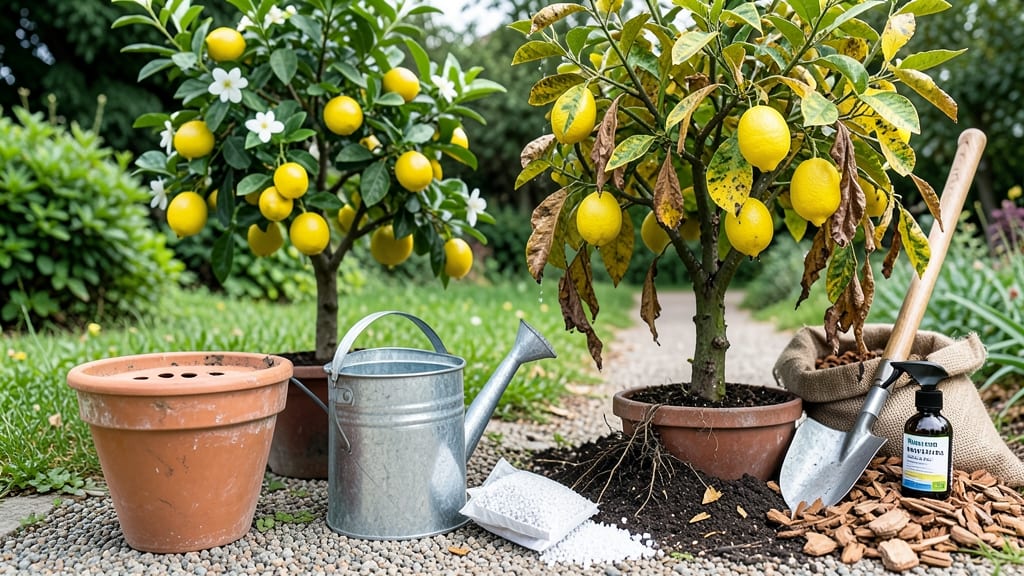
How to fix an overwatered lemon tree—your drooping leaves aren’t a death sentence, just a cry for help. 🌿 Overwatering is the #1 killer of citrus trees, but I've revived more than a dozen by fixing drainage and giving roots room to breathe. The first step is stopping water immediately, then assessing the damage before it's too late.
Mushy brown roots and yellowing leaves? That's root rot talking. Grab a trowel and check the soil—if it smells sour or feels soggy 2 inches down, you've got work to do.
Drainage fixes start with amending heavy soil with perlite or sand, and repotting into a container with drainage holes if you're still using pots.
Within 2-3 weeks of proper care, you'll see new green growth pushing through. Prune back any blackened roots and trim yellowed leaves to redirect energy. The key is consistency: water only when the top 1-2 inches of soil are bone-dry, and use a moisture meter if you're unsure.
This method works for both potted and in-ground lemon trees, though containers recover faster. The secret? Patience—revival takes time, but with airflow and proper drainage, your tree will bounce back stronger than ever.
Root Causes Of Overwatering
An overwatered lemon tree isn’t just a gardener’s mistake—it’s often the result of unseen but critical factors that disrupt the tree’s natural balance. Understanding these causes is the first step to restoring your citrus friend’s health.
Let’s break down the science behind why your lemon tree might be drowning in its own pot.
Lemon trees thrive in well-draining soil, but when drainage fails, water pools around the roots instead of draining away. This creates an anaerobic (oxygen-deprived) environment, suffocating the roots and preventing them from absorbing nutrients or water efficiently.
- Clay or compacted soil: Heavy soils retain moisture like a sponge, blocking airflow to roots. If your tree is in a pot, check if the soil feels dense or waterlogged after irrigation.
- Lack of drainage holes: Pots without proper drainage holes trap excess water, forcing roots to sit in soggy conditions. Even "self-watering" pots can become death traps if not monitored.
- Improper pot size: A pot that’s too large holds excess moisture longer than the roots can absorb. If your lemon tree’s roots fill less than 20% of the pot, it’s likely overwatered because the extra soil stays wet for days.
💡 Pro Tip: Test your soil’s drainage by filling a pot with water, then timing how long it takes to drain completely. If it takes more than 30 minutes, your soil or pot setup needs adjustment.
Even with good drainage, human error is the #1 cause of overwatering. Lemon trees (like most citrus) are surprisingly drought-tolerant once established, but many gardeners assume "more water = happier plant." Here’s why this backfires:
- Ignoring the soil’s moisture level: Sticking your finger 1-2 inches into the soil is the gold standard. If it’s damp, wait. If it’s bone-dry, you’ve likely underwatered in the past and are now compensating with too much water.
- Watering on a schedule: Fixed schedules (e.g., "every Tuesday") don’t account for humidity, temperature, or seasonal changes. Lemon trees need less water in winter and more in scorching summer heat—but never enough to saturate the soil.
- Using the wrong watering method: Pouring water directly onto leaves or creating a "pond" at the base of the tree leads to fungal diseases (like root rot) and evaporative waste. Always water at the soil level, near the roots.
🌡️ Science Check: Lemon trees absorb water through their root hairs, which need oxygen to function. When soil is waterlogged, these hairs drown within 24-48 hours, killing the tree’s ability to uptake moisture—even if you stop watering.
Sometimes, overwatering happens despite your best efforts because of environmental conditions. These factors can trick even experienced growers into drowning their trees:
| Factor | Why It Causes Overwatering | How to Adapt |
|---|---|---|
| High humidity | Moist air slows evaporation, keeping soil damp longer. In tropical or rainy climates, roots stay soggy even with "normal" watering. | Reduce watering by 30-50% and ensure airflow around the tree. |
| Cooling weather | Cold temperatures reduce root activity, so the tree absorbs less water—leading to buildup in the soil. | Water only when the top 3 inches of soil are dry in winter. |
| Frequent rain | Natural rainfall can saturate soil faster than you can track, especially in pots. | Move potted trees to covered areas during heavy rains. |
⚠️ Warning: If your lemon tree is in ground soil, heavy rain can also displace nutrients or cause erosion, making recovery harder. Amend the soil with compost or perlite to improve structure.
Sometimes, overwatering isn’t the cause of your lemon tree’s woes—it’s a symptom of an underlying issue that’s already stressing the plant. Pests like root-knot nematodes or fungal infections (e.g., Phytophthora) weaken roots, making them more sensitive to waterlogging.
As a result, you might overcompensate with extra water, thinking the tree is thirsty.
- Check for:
- Yellowing leaves (could signal root rot or nutrient deficiency from poor uptake).
- Mushy, black roots (a clear sign of fungal infection).
- Stunted growth or wilting despite "wet" soil (roots can’t access water due to damage).
- Solution: If pests or disease are suspected, stop watering immediately and inspect the roots. Healthy roots should be white or light tan; dark, mushy, or hollow roots need treatment (e.g., hydrogen peroxide soak or fungicide).
🔍 Diagnostic Tip: Gently scrape a small section of root with your fingernail. If it smells rotten or sweet, fungal activity is likely. Act fast—root damage spreads quickly in wet conditions.
Fixing Your Lemon Tree’s Water Woes
Now that you know the signs and causes of an overwatered lemon tree, it’s time to roll up your sleeves and bring it back to health! The good news? With the right steps, your citrus friend can bounce back—sometimes even stronger than before.
Below, we’ll break down practical fixes based on the root causes (literally!) of the problem, plus prevention tips to keep your tree thriving long-term.
---
Cause: Excessive moisture suffocates roots, leading to rot and fungal growth. Fix: - Pause all watering for at least 3–5 days to let the soil dry out. If the top 1–2 inches of soil are still damp, wait longer. - Check the soil by sticking your finger 2–3 inches deep. If it feels soggy, hold off on watering. - Pro Tip: 💡 If your tree is in a pot, lift it—if it’s heavier than expected, it’s still too wet.
---
Cause: Poor drainage traps water, creating a breeding ground for root rot. Fix: - Repot if needed: If your tree is in a container, choose a terracotta or fabric pot (they dry faster than plastic). Ensure it has drainage holes—no exceptions! - Add perlite or sand: Mix 20–30% perlite, pumice, or coarse sand into the soil to improve aeration and drainage. Avoid compacting the mix. - Raise the pot: Place it on feet or a saucer with pebbles to prevent water from pooling at the bottom.
---
Cause: Rotten or mushy roots can’t recover without intervention. Fix: - Gently remove the tree from its pot (if in one) and rinse the roots with water to assess damage. - Trim black, brown, or mushy roots with sterilized pruning shears, cutting back to healthy white or firm tissue. - Replant in fresh, well-draining soil (see Step 2). Avoid fertilizing for 2–4 weeks to let roots recover. - Warning: ⚠️ If more than 50% of roots are rotten, your tree may not survive. Start fresh with a cutting if needed.
---
Cause: Overzealous watering (or lack of knowledge) keeps soil soggy. Fix: - Water deeply but infrequently: Aim for 1–2 times per week (adjust based on climate—less in winter, more in summer heat). - Use the “soak and dry” method: Water until it runs out the drainage holes, then wait until the top 2 inches of soil are dry before watering again. - Morning watering wins: Water in the early morning to reduce evaporation and fungal risks. - Pro Tip: 🌡️ Test soil moisture with a moisture meter or your finger—don’t guess!
---
Cause: Stagnant air and low light slow recovery. Fix: - Move your tree to a spot with bright, indirect sunlight (6+ hours daily). Avoid deep shade. - Increase airflow: Place a small fan nearby (on low) to mimic wind, which helps dry leaves faster. - Prune crowded foliage: Trim back overly dense branches to improve air circulation around the tree.
---
Cause: Ignoring post-recovery care leads to repeat problems. Fix: - Week 1–2: Check roots weekly for improvement. Healthy roots should be white/firm, not slimy. - Fertilize lightly: After 4 weeks, use a balanced citrus fertilizer (6-6-6 or 10-10-10) at half strength to rebuild strength. - Mulch (but sparingly): Add a thin layer of organic mulch (like straw) around the base to retain just enough moisture—keep it 2–3 inches away from the trunk. - Long-term tip: ✨ Upgrade your pot soil every 1–2 years to prevent compaction and improve drainage.
---
To avoid future overwatering disasters, follow these golden rules: - Right pot = right drainage. Never reuse a pot without holes or a soil refresh. - Seasonal adjustments: Water less in winter (growth slows) and more in summer (heat dries soil faster). - Group plants wisely: Avoid placing lemon trees near other thirsty plants that compete for moisture. - Watch the weather: After heavy rain, skip watering for 3–4 days—nature’s doing the job for you!
--- Remember: 🌟 Patience is key! A revived lemon tree may take 4–8 weeks to show full recovery, but with these steps, you’ll have a stronger, happier citrus tree in no time.
Frequently asked questions
How do I know if my lemon tree is truly overwatered vs. just wilting from heat?
Check the soil 2-3 inches down—if it's soggy and smells sour, you're overwatering. Heat wilting shows dry soil but drooping leaves that perk up at night. Overwatered trees have yellow leaves, mushy stems, and roots that turn black when exposed to air.
Can I save my lemon tree if the roots are completely black and mushy?
It depends on how much damage there is. If over 50% of roots are rotten, recovery is unlikely. Trim all black/mushy roots back to healthy white tissue and replant in fresh, well-draining soil. For severe cases, take 3-4 inch cuttings from healthy stems and propagate them instead.
How long should I wait before watering again after fixing overwatering?
Wait until the top 2 inches of soil are completely dry to the touch. In pots, this usually takes 5-7 days in warm weather. For in-ground trees, check 3-4 inches deep—if it's damp, wait longer. Use a moisture meter for accuracy if you're unsure.
Will my lemon tree ever produce fruit again after overwatering damage?
Yes, but it may take 6-12 months to recover fully. Focus on new growth first—healthy leaves mean the tree is healing. Once you see new green foliage and firm roots, it can resume fruiting. Young trees (under 3 years) may need extra time to rebound.
Can I use coffee grounds to help fix overwatered lemon trees?
Yes, but sparingly! Mix 10-20% coffee grounds with perlite into the soil to improve drainage and provide nitrogen. However, avoid fresh grounds—they can compact soil and worsen waterlogging. Use composted grounds only, and never apply directly to wet soil.