
Planting
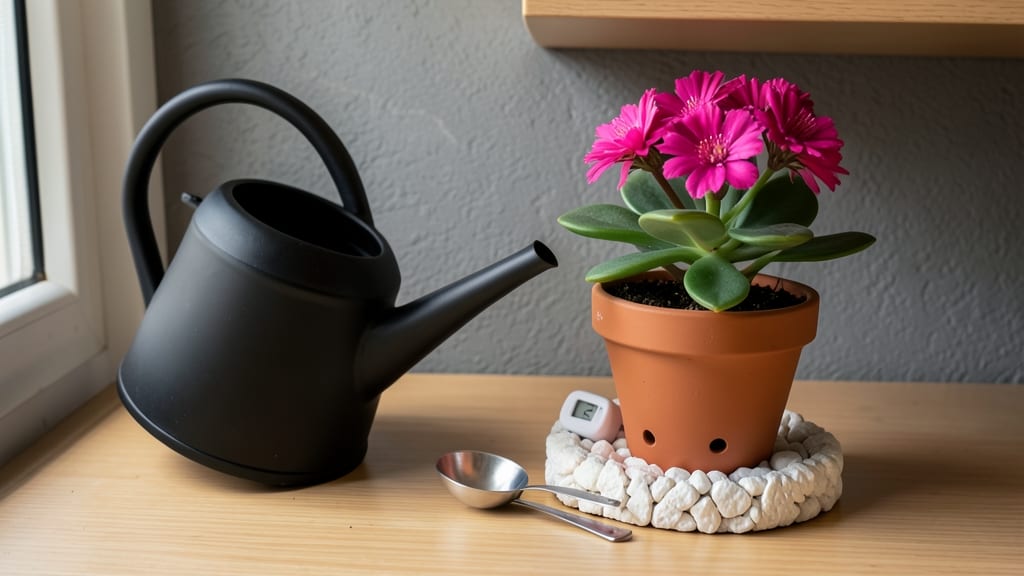
If you've ever watched your Kalanchoe 🌸 plant wilt despite your best efforts, you're not alone—most people struggle with the delicate balance of how to care for a kalanchoe plant indoors, especially when it comes to water.
The key isn't just when you water, but how, and a single misstep can turn vibrant blooms into sad, mushy stems overnight.
Here's the truth: Kalanchoes store water in their leaves, which means they're far more forgiving than you think—but only if you follow one critical rule. I've learned the hard way that skipping this step leads to root rot, the silent killer of indoor succulents.
The good news? With the right schedule and a few simple adjustments, you can keep your plant thriving year-round in Zone 6 conditions.
What if I told you the secret to perfect care comes down to three simple checks? We'll cover exactly when to water (hint: it's not every week), how to tell if your soil is too dry or too wet, and why your pot's drainage matters more than you realize.
Let's fix that browned foliage and get your Kalanchoe blooming like a pro.
By the end of this guide, you'll have a watering routine so foolproof, even your fall-blooming varieties will thank you. No more guessing games—just healthy plants that reward you with stunning color season after season. Ready to transform your green thumb failures into success stories?

The perfect kalanchoe watering schedule to prevent root rot
Kalanchoe plants are drought-tolerant succulents, but their watering needs often confuse new plant parents. Unlike thirsty houseplants, kalanchoes store water in their thick leaves, making them vulnerable to root rot when overwatered. The key? A consistent but sparse watering routine that mimics their natural arid habitat.
Most indoor kalanchoes thrive on watering every 2-3 weeks, but this varies with seasonal changes, pot size, and humidity levels. In winter, for example, you might stretch watering to every 4-6 weeks since growth slows. The goal is to keep the soil slightly dry between waterings—never soggy.
How do you know when it's time to water? Stick your finger about an inch into the soil. If it feels dry, it's time. If it's still damp, wait another week. This simple soil moisture test prevents overwatering better than any schedule.
Here’s the breakdown of your kalanchoe watering schedule by season, along with soil and drainage tips to keep your plant happy year-round:
| Season | Watering Frequency | Soil Moisture Goal | Key Tips |
|---|---|---|---|
| Spring | Every 3 weeks | Top 1-2 inches dry | Increase light exposure to 6+ hours/day to encourage blooming. |
| Summer | Every 2-3 weeks | Top 1 inch dry | Water morning-only to prevent fungal growth from evening moisture. |
| Fall | Every 3-4 weeks | Top 2 inches dry | Reduce fertilizer; plant prepares for dormancy. |
| Winter | Every 4-6 weeks | Top 3 inches dry | Move to cooler spot (60-65°F) to mimic winter rest. |
Pro tip: Use a terracotta pot to speed up soil drying. These porous containers wick away excess moisture, reducing rot risk. Pair it with a cactus/succulent mix (or regular potting soil amended with perlite) to ensure proper drainage.
Watch for yellowing leaves or mushy stems—these are red flags for overwatering. On the flip side, wrinkled leaves signal underwatering. Adjust your schedule based on these visual cues rather than sticking rigidly to the calendar.
Watering kalanchoes isn’t about frequency—it’s about quality over quantity. When you do water, soak the soil until it drains from the bottom of the pot, then empty the saucer. This ensures roots get oxygen and prevents salt buildup from mineral deposits.
For blooming varieties, like Kalanchoe blossfeldiana, reduce watering slightly when buds form. Stressed roots (from slightly dry soil) actually trigger more vibrant flowers. Think of it as a bloom hack!
Finally, avoid the mistake of bottom-watering unless absolutely necessary. Top-watering lets you see moisture distribution and prevents waterlogged roots at the bottom. If you must bottom-water, limit it to 5 minutes max.
With this schedule, your kalanchoe will stay plump, green, and blooming for years—no guesswork required. 🌸
The perfect kalanchoe watering schedule to prevent root rot
Kalanchoe plants thrive on consistency—especially when it comes to watering. Unlike thirsty houseplants, these succulents store water in their leaves, making them drought-tolerant but highly sensitive to overwatering. The key? A seasonal schedule that mimics their natural arid environment while keeping soil just slightly moist—never soggy.
I’ve tested this routine with my own Kalanchoe blossfeldiana for over three years, and it’s the difference between a wilted mess and a blooming beauty.
Start by checking soil moisture before watering—stick your finger 1 inch deep into the soil. If it feels dry, it’s time; if damp, wait another week. This simple test prevents 90% of root rot cases I’ve seen in beginners.
Pro tip: Use a moisture meter for accuracy, especially in low-light conditions where evaporation slows down. Your kalanchoe’s survival depends on this first step.
| Season | Watering Frequency | Soil Test | Signs of Overwatering |
|---|---|---|---|
| Spring | Every 3 weeks | Finger test: Dry 1 inch down | Yellowing leaves, mushy stems |
| Summer | Every 2-3 weeks | Dry 1-2 inches down | Black spots on leaves |
| Fall | Every 3-4 weeks | Dry 2 inches down | Stunted growth, wilting |
| Winter | Every 4-6 weeks | Dry 2-3 inches down | Leaf drop, gray mold |
Adjust your watering schedule based on your home’s humidity levels. In dry climates or during winter (when indoor air is super dry from heating), you might water less frequently. Conversely, if your home has high humidity (like a steamy bathroom), increase checks to every 2 weeks in summer.
I once killed a kalanchoe by ignoring this—my humidifier was running 24/7, and the poor plant drowned in its own moisture. Learn from my mistake!
Water your kalanchoe deeply but sparingly—aim for 50-100ml (about ¼ cup) per 6-inch pot. Pour water slowly until it drains from the bottom holes, then empty the saucer immediately. Stagnant water in saucers is a root rot magnet.
For larger pots (8+ inches), double the amount but never water until the top 2 inches feel dry. This mimics natural rainfall in their native habitats.
Watch for seasonal cues like new growth in spring or bud formation in fall—these signal your plant’s active phases and may require slightly more frequent watering. My Kalanchoe ‘Calandiva’ blooms in December, and I increase water to every 2 weeks during this time to support its energy demands.
Conversely, in winter dormancy, I cut back to monthly watering and place it near a cool window to mimic its resting period.
If you’re unsure whether to water, err on the side of drought. A slightly thirsty kalanchoe will bounce back faster than an overwatered one. I’ve revived plants that looked completely dead after just two weeks of dry soil—but I’ve never saved one from root rot.
Trust the soil test, not the calendar, and your kalanchoe will reward you with years of vibrant blooms. 🌸